Jack Boger Interview Transcript
Oral History
February 24, 2023
86 pages
This item is featured in:
-
Interview with Jack Boger for the Legal Defense Fund Oral History Project,, conducted by Seth Kotch on February 24, 2023 Conducted in collaboration with the Southern Oral History Program at University of North Carolina at Chapel Hill.
Copied!
    Legal Defense Fund Oral History Project


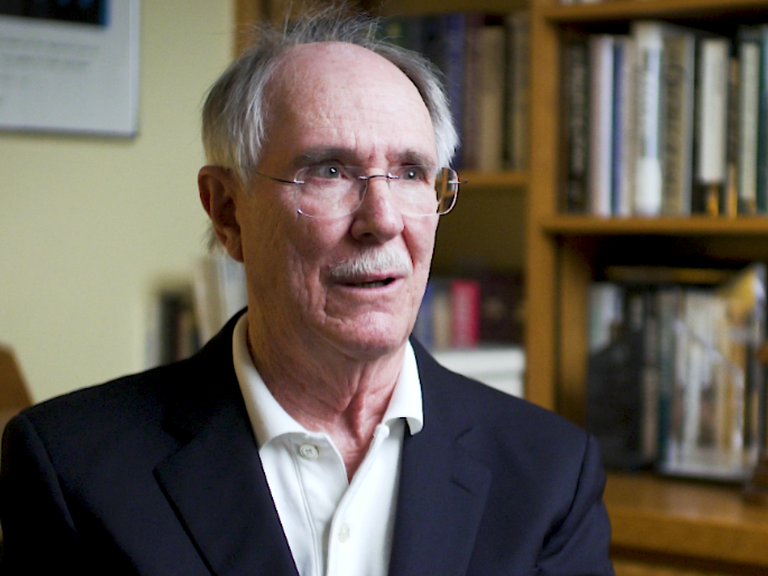
John (Jack) Boger

Interviewed by Seth Kotch

February 24, 2023

Chapel Hill, North Carolina

Length: 02:47:59


Conducted in collaboration with the Southern Oral History Program at University of North

Carolina at Chapel Hill

LDF Archives, Thurgood Marshall Institute, NAACP Legal Defense & Educational Fund, Inc.


2


This transcript has been reviewed by Jack Boger, the Southern Oral History Program, and LDF.

It has been lightly edited, in consultation with Jack Boger, for readability and clarity. Additions

and corrections appear in both brackets and footnotes. If viewing corresponding video footage,

please refer to this transcript for corrected information.


3


[START OF INTERVIEW]

Seth Kotch: This is Seth Kotch from the Southern Oral History Program at the

University of North Carolina at Chapel Hill. It is February 24th, 2023, and I am here in

Chapel Hill, North Carolina with John Charles Boger at John Boger’s home in Chapel Hill

to conduct an interview for the LDF Oral History Project. Thank you very much for being

here and sharing your story.

John [Jack] Boger: It’s a pleasure.

SK: I’d like to ask you to introduce yourself.

JB: Sure. I’m Jack Boger, John Charles Boger. And from 1978 to 1990, I was a Staff

Attorney with the NAACP Legal Defense Fund. Came to Chapel Hill thereafter and became

a law professor, teaching in some of those areas, and eventually became the Dean from 2006

to 2015. Retired in 2017 and have tried to stay active in some things and in touch with LDF,

but it’s a pleasure to do this.

SK: Well great, we’re done. That was good.

JB: [laughter] Okay.

SK: So, you were born in Concord, North Carolina, not far from Charlotte?

JB: Right.

SK: Can you talk a little bit about your upbringing?

JB: Sure. I was born in 1946. I was a twin, first baby boomer generation, and grew

up in the 1950s there. It was a little mill town of 16,000 people. My parents, my mother was

a Roosevelt Democrat, and really more progressive, to use a contemporary term, than a lot

of her friends were. And my father was a small businessman. And looking back on it, one

thing that has struck me is that, for a variety of reasons, sort of personal and religious, I was


4


always sort of puzzled by the racial divide that I noticed growing up. You know, you read

that everyone was supposed to be equal, child of God, and the rest, and yet it was clear

during that time of rigid segregation that Black folks didn’t come downstairs in the movie

theaters. They stood in separate parts of the bus stations. They weren’t working in any of the

stores, et cetera. [00:02:00] And from the time I was a sixth, seventh, eighth grader, that was

something I was troubled by. Then, of course, the Civil Rights Movement began to come

visible in 1956, [19]57, [19]58. And while it was not covered very well in the local papers,

the Charlotte Observer and Raleigh papers were clear that they didn’t want to highlight the

sit-in movements and any of the rest, it was hard for a 10, 11, 12-year-old to avoid that. And

I do remember, looking back, that in the ninth grade, I wrote a couple of essays. We had to

write an essay once every two or three weeks and one on the status of the Black caddies at

the local golf club and how poorly they were treated. How harshly, and inhumanely. And

another little vignette that was terrible, fourth-rate Flannery O’Connor, about some Black

woman on a bus, hearing that her son, who had been in a demonstration, had been killed and

et cetera. And at the time, I didn’t think much about it one way or another, but it’s clear that

was part of a developing sense that these issues mattered to me. I got to Duke as an

undergraduate in 1964, and that first fall, Martin Luther King came, shortly after he had

received the Nobel Prize and gave a standing-room-only talk about justice and civil rights. It

was terribly moving to many of the students, including myself. And then, my senior year, I

was in, I was a religion major, thinking about Divinity School. And I was at a conference

with a German theologian, on the “theology of hope,” Jürgen Moltmann, and somebody

came down the aisle and said, “Dr. King has just been shot in Memphis.” And the notion of

the theology of hope sort of receded pretty quickly. I went and conferred with a lot of my


5


friends and eventually we started an effort to try to get the president of the university to

acknowledge the role of all of us in this. [00:04:03] And maybe to address the issues of the

non-academic workers, who were being paid sub-minimum wages. To make a long story

short, that turned into a 1,600 person four-day sit-in on the Quad, nonviolent, that ultimately

had the trustees all fly down from where they were and initially say, “We’re going to throw

all those kids out of school,” [laughter] only to learn that, 1,600 out of [Duke’s] 4,000

students, they decided they weren’t going to throw us all out. But that was obviously a racial

justice sort of thing. I went on to Divinity School at Yale, thought I might become a minister

or something, but then I realized what I really wanted to do was civil rights work.

SK: That realization, just pulling you back towards when you were a middle

schooler, a high schooler, you presumably could have avoided a lot of what you were seeing

as a white kid who could move comfortably in your space. Were you getting messages from

your parents, from your church, that you should be paying attention to what was going on

around you?

JB: My parents were certainly sympathetic to what was happening, but there was not

any kind of conversations about “you really should,” — when I would speak, they would

say, “You’re right about that,” and a couple of ministers in our church, our youth ministers,

were also supportive, but it was a Methodist Church in this little town and while it was not

overtly racially hostile, it was not uncomfortable in the highly segregated world. One of the

things I realized later, much later, is that I went all the way through grade school and middle

school and high school and college, and I almost never encountered a single Black student.

There were none in the high school or below. And I think Duke, when I went in [19]64, had

12 students out of 1,000. And that was up from five the year before, up from zero the year


6


before that. [00:06:00] So, it was a very segregated world, and I didn’t have a lot of

interracial contacts, because I didn’t know many Black folk except a couple of yard men,

you know, and cooks, and people that were domestics or workers.

SK: Right. And that’s part of maybe North Carolina’s gradualism and desegregation

that we would see in other elements at other places that you may have litigated at some point

in the future. Just trying to push the needle just slightly faster in one direction. So, you did

end up getting a Master’s in Divinity at Yale?

JB: Right.

SK: Can you talk a little bit about what inspired that other than [inaudible]?

JB: Well, I was principally drawn by issues of social ethics. That would have been

true, both as an undergraduate and when I came there. There was a professor, Jim

Gustafson, who taught my very first class, it was about abortion, I remember. I had never

thought about it at all, and he was the first person that brought that up. But issues of racial

justice there— but it was a time when there was so much going on in the area of both racial

justice and also, of course, the anti-Vietnam issues which were very, very prominent. And at

one point, I left school to go try to lead the Southern Regional Office of the Vietnam

Moratorium [laughter], only to find out there was nobody in Atlanta with whom to — I

remember going to Washington. They said, “Find the leaders in Georgia who are against the

war and start to work with them.” And I found one woman named Linda Jenness who was a

perennial communist [Socialist Worker] candidate for Governor, and that was it. [laughter]

So, I came back to school because there really wasn’t anybody with whom to build a

movement. But so, all those issues pulled me. And I had not ever thought about law as an

undergraduate. I knew some people that had. But then I saw what lawyers were able to do,


7


and the changes they were able to make after the Civil Rights Act of [19]64 and what was

following, I thought, “I’d really like to do that,” so I came to Chapel Hill where there were

some wonderful people, like Dan Pollitt and others who were sensitive to those issues.

[00:08:13] And took all those courses, but ironically at the time I graduated in 1974, it was

such an unusual period. All the top students at Harvard and Yale and Columbia and Stanford

wanted to do either poverty work or civil rights work. So instead of going to the big firms in

New York or Washington, they were all fighting over these jobs in civil rights, and I didn’t

have a chance. So, what I did as an alternative when I graduated, was to go to a firm in New

York City, Paul Weiss, Rifkind, Wharton & Garrison, which had a reputation as being the

“progressive Democratic” law firm, which is, of course, a contradiction in terms. It was still

a Wall Street firm [laughter], represent — in fact, my first client was a financier who had

embezzled $30, $40 million, back when that was a lot of money, was living in the Cayman

Islands or something and we were trying to defend him. On the other hand, they were

perfectly happy to see me get involved with some cases in Harlem and low-income tenants

and that sort of thing.

SK: And you clerked for Justice Samuel Silverman?

JB: It was an odd thing, yeah. They had had a guy who had been their head of

litigation department, who had gone down to the New York State appellate courts to prepare

[as a state judge] for going on the U.S. Court of Appeals for the Second Circuit. Bobby

Kennedy had said, “When I’m President, Sam, I’m going to make you an Appellate Judge.”

Only Bobby Kennedy, of course, never survived, and Silverman decided he liked being a

judge, and so he would take somebody from Paul Weiss, who, quote, “had never clerked but

should have.” And I got picked one year as the person who had never clerked but should


8


have and spent some time working with him in the system, which was very valuable to see,

from a judge’s point of view, how law is made.

SK: [00:10:05] And did that clerkship contribute to your sense that you wanted to do

the kind of work that you were headed towards?

JB: Less the clerkship. The luckiest thing professionally that ever happened in my

life is that one day I was found by the assigning partner, who assigned cases, only to be

working about 45 hours the couple of previous weeks. And he said, “You need another case,

and we’ve got a pro-bono case from the NAACP Legal Defense Fund. It’s a death penalty

case.” It was in 1976, in July, and the [Supreme] Court had just decided five cases, Gregg in

Georgia and Proffitt in Florida, and so forth. One of them was Jurek in Texas, and they said,

“We need help with volunteer counsel from a big firm. Would you be interested?” And

[laughter] it was the easiest thing I ever had to say, I didn’t want to tell [Paul, Weiss], “If I

can, I would love to leave you and go work for the Legal Defense Fund,” [laughter] but I

said, “Yes, I’d love to do that.” And so I jumped right in, and there was a wonderful partner,

Jay Topkis, who was himself an ACLU [American Civil Liberties Union], LDF, sort of

person on the side, so he was a wonderful [corporate] litigator as a private matter, but his

heart was definitely in those kinds of [public interest] cases. So, he let me spend four or five

hundred hours going down to Texas, and meeting Jurek and trying to figure out what kind of

issues there were. And then I worked with the people at LDF, who were happy to have some

earnest young lawyer who was interested to augment their work at a time when all of a

sudden, things had exploded. They had held everything together, hoping the Supreme Court

would declare the death penalty unconstitutional, and instead the Court had said, “It’s all


9


right to go forward [with capital prosecutions] in Georgia and Florida and Texas.” And the

dam had burst and they [LDF] needed help from the private firms to man the cases.

SK: Can you talk a little bit about that moment in death penalty jurisprudence, what

things were looking like, because I think the progression that you were talking about might

be moving from Furman, in 1972, when it appeared that the door was open, either to a

blanket ban or to reinstatement? And then Gregg, which appears to have shown right

through the door.

JB: [00:12:16] Right. I’ve written about that before and a lot of other people have

too. Mike Meltsner wrote a wonderful book from the LDF perspective about the effort. The

Legal Defense Fund began really in the early 1960s to ask the question whether they wanted

to get involved in opposition to capital punishment, principally because of its adverse effect

on Black men in rape cases. And the Supreme Court had indeed invited a brief to the court

at that time. Arthur Goldberg had issued an opinion, a denial of certiorari that sort of said,

“Maybe there’s an issue about whether the death penalty is unconstitutional.” Alan

Dershowitz was his [law] clerk at that point and the two of them had invited it. And Jack

Greenberg, who ran the LDF, at that point said, “We might ought to think about getting

involved in this area.” To make a long story short, they [LDF] got a few people involved,

and began to think about it, and said, “You know, a lot of the issues against capital

punishment for African Americans aren’t just about rape, although there’s a huge disparity

in the death sentencing of Black men who have raped white women and others, but murder

as well. And once we think about that, it’s true not only about Black defendants, but white

defendants as well. And there are a couple of other major issues about the way capital

punishment is administered that have constitutional dimensions. And maybe we ought to


10


oppose the whole process of capital punishment.” Instrumental to all that was a guy [law

professor] named Anthony Amsterdam, Tony Amsterdam, who had been at Penn, later went

to Stanford, and then came ultimately to NYU [New York University], who was one of the

three or four certifiable geniuses that anybody I have ever talked to, me included, had seen.

[00:13:59] And Tony threw himself into that effort and he became almost like a silent

partner to all the LDF work. And they helped build a series of cases that led up to what was

going to be the ultimate challenge: the death penalty was cruel and unusual because it was

so capricious and arbitrary and infrequent. And the [Supreme] Court initially looked like

they weren’t going to accept that, and then ultimately did accept it in 1971. And it was

argued, and the case came down, Furman v. Georgia, in which the court, in what was then

the longest decision it had ever written, nine different opinions, five-to-four said the death

penalty, as it is currently operating, is unconstitutional. Amsterdam had, in fact, argued the

case brilliantly. One of the things he had said, though, is, “The death penalty is really an

atavism. It’s running of its own accord, and if you stop it, if you turn the lights back off, it

won’t revive.” Which was, it turns out, very false. Once the death penalty was struck down,

the states in the South particularly said, “What can we do to revise the structures of death

penalty sentencing to make it constitutional?” And they made some adjustments. And then

LDF came in and said, “Well, let’s attack those [revised] statutes in Georgia and Florida and

Texas and Louisiana.” And one other one, it slips my mind immediately. And so, that

second wave of major litigation came back to the Court in 1975, and then in 1976, a

plurality of the Court said, “You know, we think the death penalty can be administered

constitutionally and the infirmities that we’d found in Furman appear to have been

corrected. And we’re not going to assume that they [those constitutional flaws] have not


11


been successfully eliminated from the penalty.” And so, they let the big states of Georgia,

Florida, and Texas go forward, and other states got the signal, “You too, if you’re like those

statutes, you too, can go forward.”

SK: [00:16:16] I know that one effort North Carolina made, and maybe some other

southern states as well —

JB: North Carolina was the other state.

SK: — was to restore a mandatory death penalty upon conviction. That was not the

route that was ultimately deemed appropriate. Can you talk a little bit about how the

landscape was remade in order to create a death penalty that could be constitutional?

JB: Well, there were several [constitutional] critiques to be made by LDF. One of

them was that many of the statutes, pre-Furman, didn’t have a separate penalty phase. The

issue of whether the person was guilty of the crime, and whether they deserved death was all

decided in the same jury room, at the same time. The [LDF] argument that was made was

that sometimes, the issues that bear critically on whether somebody should receive a death

sentence would actually hurt them on the question of guilt or innocence. They did it, but

they were acting under a compulsion. They did it, but their IQ is so low, or they’ve been so

abused as a child, that they have irrational — so you [defense attorneys] were forced to a

choice, “Do I tell the full truth, almost assuring the conviction, as a lawyer, in order to try to

help on the sentencing phase?” And so, the argument is that you [courts] should bifurcate

that out and have one [proceeding] to decide guilt or innocence. And then, only if the person

is [found] guilty, do you raise the question of what’s the sentence. A second big issue is

whether the jury needs guidance on that question. And the arguments were made, you know,

there’s some factors, what they call aggravate a homicide. I mean, every homicide is


12


terrible, but some homicides have qualities in them — you’ve done it out of deliberate

cruelty, you’ve done it as part of a felony, kidnapping somebody and then killing them, or

you’ve killed a police officer or vulnerable old person, et cetera. And then there are other

qualities that are mitigating. [00:18:01] The defendant in fact was the subject of child abuse,

himself or herself, or they were actually the lookout and somebody else actually fired the

weapon, et cetera. So, the argument was made is that the jurors needed to be instructed by

the law, by the judge, on aggravating and mitigating factors to help guide their

determination. And some, the states that did that were the ones that the Supreme Court

approved. As you say, North Carolina took another approach. They said, “We won’t have

any arbitrariness if everybody who is convicted of murder automatically gets the death

penalty.” But the Court looked at that and said, you know, there’s some homicides that truly

are of much less culpability and severity. Two people arguing over whether the Eagles or

the Kansas City Royals or the Chiefs should win the Super Bowl, are both drunk, et cetera.

A different kind of question if one slams the other one with a glass and the person dies than

if somebody plans the murder of their wife for insurance purposes, for example. So, saying

all of those people deserve death was considered not individualized enough a determination.

So, anyway, all of those issues had been addressed by the Court in 1976. And to some

extent, I think some of the prosecutors and attorneys general thought, “Well, this is now all

over.” But it really wasn’t all over. One of the reasons for that, God bless him, is

Amsterdam, because apparently, and this was right before I got there a year or two later.

After Gregg, and Proffitt, and Jurek were decided, Tony went off in a period of about 10

days, meditating, and came back with a document that was 8.5 by 14 [inches] times 50 or 60

pages. [00:19:57] It was later called the “Ridiculous Memo,” because every page would


13


have something at the top saying “Here’s the name of the claim.” “Death Qualification.”

“What’s the Nature of the Claim?” “The claim is that the people who are being selected for

sitting on death trials should not be ‘death qualified,’ should not be asked about the reason

of their sentence while they’re still deciding guilt or innocence.” “What’s the constitutional

basis?” “What are the citations and quotes within the Supreme Court’s own jurisprudence

that suggests that that’s right?” “What are the major issues that need to be raised?” “In the

other direction, what’s the evidence it would need?” And that was Issue One. And you go to

Issue Two, and you go to Issue 12, and you go to Issue 20. And when I was at LDF, we

would say, 1989, Arkansas was raising number 26 of Tony’s list of issues. It was a brilliant

feat of imagination about what still remained to be done. And one of the crucial issues, of

course, was whether the death penalty, in fact, was still being applied in a racially

discriminatory manner.

SK: There’s a lot to discuss there. One thing I want to briefly ask you about, I think

that some people who watch or read this interview in the future might be surprised to learn

that rape was even part of the conversation when we talk about capital punishment in the

United States. Can you talk a little bit about that story?

JB: The rape story.

SK: Yes.

JB: Yeah. It had been noted, and indeed I said LDF got involved because it saw that

the incidence of death sentencing for rape, and particularly of execution, after the sentence

had been imposed, had become hugely disproportionate. From I think the [19]30s through

the [19]60s, there were 350 or so people who were put to death for the crime of rape. And I

think all but 10 or 12 were Blacks who had raped white women. And it was pretty clear that


14


was not the pattern overall of rape. [00:22:04] It was enforcing a post-Civil War, pre-Civil

War, code that Black folks are not supposed to have sexual relations with white women, and

that was really one of the questions that Justice Goldberg and his colleagues invited

attention to, but it actually didn’t come to the Court in that form until the year after the

Gregg, Proffitt, and Jurek cases came up. And [LDF staffer] David Kendall had a case that

he brought that raised the residual issue of whether the death penalty for rape was racially

discriminatory. Now that actually had built upon the first social science body of evidence

that LDF helped to create. Because I told you that in the mid-1960s, LDF decided “We’re

going to go after the death penalty,” and what it did at that time, Tony Amsterdam [and Jack

Greenberg] recruited Marvin Wolfgang, who was a sociologist and criminologist, I think at

Penn. And they decided to do an empirical study of the incidence of rape in 10 or 12

southern states using exemplary districts. You wouldn’t pick every district in North

Carolina.  You’d pick six, or eight, or 10, and see how many people were charged with rape,

how many people were convicted, how many people with death sentences, and what were

their races. And what other attendant factors were involved that might make it more or less

aggravated. And that litigation went forward ultimately in an Arkansas case, Maxwell v.

Bishop, and the Supreme Court denied cert, it wouldn’t hear the racial evidence. And

indeed, in the Eighth Circuit— which the case was brought in habeas corpus in [the federal

district court in] Arkansas and moved up to the [United States Court of Appeals for the]

Eighth Circuit. The [deciding] judge who wrote the opinion saying, “I don’t think the

statistics will ever be the salvation of Mr. Maxwell,” was Harry Blackmun. [00:24:04] And

so, [Justice] Blackmun, who later becomes an anti-death penalty person and joins the dissent

in McCleskey, as an earlier period, very smart guy, Harvard math person, said, “I’m not sure


15


these statistics convince me.” So, when the [Supreme] Court decided Furman, it did not

have the issue of race before it. Although a couple of the Justices said, “My particular

reasons for it, or my sense,” — I think Douglas said that, and I think Marshall did as well —

“that race is so attendant as a factor in who gets death for it.” But anyway, David Kendall

then brought it up in 197[7] in the Coker case and interestingly enough, Kendall had clerked

for [Justice] Byron White. And so White was basically his mentor. And he argued the case

in front of the Court, and White wrote the opinion outlawing death penalty for rape of an

adult woman without ever mentioning race. He says it’s disproportionate and something

else, but it’s a feature I’m going to bring up if we talk further about race and the death

penalty — the reluctance of the Court as a whole to candidly face the extent to which race

influences juries’ sentencing outcomes. And so, while all that [racial] evidence was below

the surface, he [Justice White] ultimately says, “No, killing a person through execution for a

nonlethal crime, even a crime as terrible as rape, is disproportionate.” But it ended, now it

didn’t end it for rape of children. That was left open, and there were a couple of other

attendant factors, but by and large, that was the end of it.

SK: [00:26:00] So, by the time you begin your formal career at LDF in 1978, we’re

over this hump nationally, in terms of making decisions about how capital punishment will

be administered, and we appear to have maybe, and correct me if I’m wrong, established

some degree of legal language that is getting towards the idea of disparities of some kind but

is avoiding directly engaging with race or at least is taking some opportunities to side-step

it.

JB: Well, there were a couple of things that were happening at the same time, and I

agree with everything you’ve said. There was a nascent effort post-Gregg, post-1976, by


16


social scientists, to once again look deeply into, not just at the rape cases, but all the

homicide cases in various states and see whether they could find any continuing evidence of

discrimination. It’s as if you’d launched out from Southport in boats, going out to the Gulf

Stream, and say, “We’re going to go down deep and see if we can still catch these big fish,

whether they’re still there.” But that wasn’t, it was happening so slowly, it takes a long time

to collect that evidence. That wasn’t the very first thing the Legal Defense Fund was doing.

It was looking for arguments that there are disparate times where death is too grave, indeed

there was a case called Godfrey v. Georgia where a husband and wife got in a [verbal] fight

and then, I think, there was a drunken brawl. The husband killed the wife, I believe I’ve got

the circumstances right. And the Court held, “That’s not a serious enough form of homicide,

in Georgia, to regularly receive death.” They [the Court] weren’t making the judgment for

themselves. They were saying “Georgia juries don’t usually give death for that, and

therefore it’s disproportionate in this one case that, that by lightning, Mr. Godfrey winds up,

subject to possible execution.” The other thing that was happening, though, the Court, the

LDF was trying to suggest that there was a “special need for greater reliability” in capital

cases. [00:28:10] The Court had said as much when it wrote, well, Furman and the Gregg

plurality decisions. And so, we [LDF] were saying, and at that point I was there, “That

means that in all sorts of areas where the criminal justice system previously has allowed an

amount of leeway” — in prosecutorial closing argument, for example — “you can’t do that

anymore in the death cases because you can’t allow that kind of arbitrariness or

capriciousness. You’ve got to be procedurally more careful. These cases require special

care. Put your mask on. Put your gloves on. They are special cases.” And so, they were

trying to make that argument and then carry that forward into a lot of situations.


17


SK: This idea that death is different.

JB: Death is different. Exactly. Now when I got to LDF, it was February of 1978,

and it was wonderful. I was delighted to have gotten the opportunity, and David Kendall had

been my predecessor, the person who argued Coker. But I remember walking into the office

the first day at 10 Columbus Circle, right at the southwest corner of Central Park. And there

on his [Kendall’s] desk were like, 12 cases from different states, from Georgia and Alabama

and Louisiana. And — I looked it up, and I was referred, on the first month I was at work, to

18 different capital cases in eight different states with people calling saying, “What do we

do now?” And I had to learn, I already knew something about the overall LDF strategy,

which if you’d like I’d be — what they had done in the 1960s and had recurred after

Furman and then again after Gregg was to realize that there were going to be thousands of

people across the country who received death sentences. [00:30:14] And their cases would

move up from trial to the state supreme court, to a request to have the Supreme Court of the

United States hear them. And then they would go through two subsequent sets of processes.

They would go through state-level post-conviction processes. The states all had statutes that

said if something couldn’t have been raised at trial that may bear on the justice of the

outcome, you can bring that before a state trial court [in post-conviction proceedings]. For

example, if a lawyer had been ineffective, the trial lawyer in trial doesn’t get up and say, “I

want to let you know, I’m ineffective.” It’s somebody else who later says, “I can’t believe

he didn’t do that, that — everyone does that. That’s ineffective not to have done, so let’s go

into habeas corpus in the state [post-conviction] system and raise that claim.”

SK: Can I ask you to just pause and define what you mean when you say, “go into

habeas corpus?”


18


JB: Sure. People [criminal defendants who are indigent] were given court-appointed

counsel at trial. Gideon v. Wainwright and the rest. People were given court-appointed

counsel at the state supreme court level. After that, they were on their own. To go to the

Supreme Court of the United States saying, “Something that was done at one of these two

lower levels is wrong constitutionally,” was up to a volunteer lawyer. Then, if you wanted to

take advantage of the state post-conviction system or the parallel federal habeas corpus, the

federal post-conviction system, you had to file a document, a “writ of habeas corpus.” Or a

request for a writ, a petition for habeas corpus, and say, “Madame Trial Judge, my client’s

trial was not fair because of the following eight reasons.” And you’d lay those reasons out,

and you’d say, “And I want a hearing on those reasons.” [00:32:02] And then the judge

would have to rule on that. And that’s what I mean by going into post-conviction. Well, to

get back to where I started, you’d have 1,000 people or more who were at trial [facing

capital murder], 700 of whom may have gotten death sentences. Three hundred of whom

may be on appeal in various states. A hundred of whom may be in state post-conviction

[courts]. Fifty of whom may be in federal habeas. As you moved your way through this.

LDF’s strategy was to say, “Let’s go to the states that have the most active capital

punishment dockets — ” Georgia and Florida and Texas were the biggest examples, but

North Carolina had some, Oklahoma had some. “ —and let’s be sure that either LDF itself

or allies, as lawyers in whom we repose great confidence, have those lead cases. Because

those are the cases in which the judges at the appellate levels impose conviction. And

ultimately the Supreme Court are ultimately likeliest to decide what we call “systematic

issues” or “system issues.” Now in a post-conviction case, you could raise the claim, for

example, that your particular client was manhandled by the police officer, or the lineup was


19


terrible. And that might be enough to save your client’s life, but it would have no bearing on

the next case. But there are other issues. Saying, for example, “The state of Georgia’s statute

is structured in such a way that something, that death is not given the special procedural

protection that you’ve promised, court.” And that’s a systemic claim. If that’s true about

your client and you win, then every other Georgia person who has that problem also wins.

So, what you do is to build issues, you think of issues that will have that kind of systematic

effect, and then you run to every single volunteer lawyer in the state and say, “Please, put

this issue in your written filing, or amend your filing that you’ve made, to add this issue.”

[00:34:10] And say to the judge, “Judge, I’d really like to have a hearing on this, but

actually, there’s a case two steps ahead of yours and they’ve raised that issue, and probably

Judge Jones is going to hear that, and maybe you want to go ahead yourself and do it or

maybe you just want to wait for Judge Jones to decide it.” And in effect, the tendency was

for judges to say, “Well, I’ll let somebody else do that.” And so there you are in control of

the cases that are the furthest advanced.

SK: How do you square what I assume was your human desire to be helpful to

people who were in urgent need, people who are waiting on death row, or are moving

through the system somehow with the more systematic and strategic move to gather cases

under this umbrella in order to create change on a larger level?

JB: Well, LDF couldn’t have begun to do it alone. We had three, sometimes four

[LDF staff] lawyers at most for the whole country. And so, what we were was kind of a

backup center, and we would look in every state for somebody. In Georgia, there was a

woman [at the Georgia ACLU] named Patsy Morris who was just unbelievably fine. She

was the daughter of a blue stocking, Manhattan, sort of rich person, who had come South [to


20


live in Atlanta]. Patsy was heart and soul into this, and you’d call her, and she’d say, “Jack,

here’s where every one of the fifty-five cases are, because I’ve called every one of the

lawyers, and here’s who doesn’t have a lawyer, and here’s what happened in every court last

week, and here’s what we need to do next.” And so then, if you had one of those in Georgia,

and you had one of those in North Carolina, where Tye Hunter and Adam Stein and those

people were working, you need somebody, it’s almost like a manufacturing firm. You’ve

got the manufacturer at one level, but then you need wholesalers at the state level who are

aware of what is happening, and then you need retailers who are actually delivering, if you

would, the “death penalty product,” in every one of the courts. [00:36:11] And the most

precarious thing were the places where you didn’t have that person at the state level,

because we [LDF] couldn’t handle, over the transom, 55 people [capital defendants] calling

from Mississippi saying, “Help me with my case.” You just — the first, as I said, month I

was at LDF, I had 18 different clients. You got to know the case, got to know what the

issues are, got to know who’s the lawyers and who’s not the lawyers.  If that would have

been the case every month, it would have been impossible. So, you tried to build the

structure. And, of course, that meant that you were constantly offering to come to do

conferences. We’ll do a conference in Atlanta, we’ll do a conference in Jackson, we’ll do a

conference in New Orleans, et cetera. We want all of the [criminal defense] lawyers from

Louisiana to come, we want them to hear what the latest sort of strategies are, what we’ve

heard in the courts. Even though you’re in the Fifth Circuit, you need to know in the Eighth

Circuit the judges are doing this or that, and that might be something possible that we could

take over from the Eighth [Circuit] and put it into the Fifth [Circuit]. So, you were

constantly refining the claims that you were trying to make and trying to recruit [new


21


lawyers to take cases]. Now, it was hard in the South to get [private] lawyers in some states

— North Carolina was better than many — who would agree to do this. Because they were

highly unpopular cases. One of my clients had gone into a little 7-Eleven type place on a

Sunday morning and had taken a sort of poor clerk in the cooler and killed him. Nobody in

that little town wanted to defend that person. So, one of the other things that LDF did was to

begin to look, particularly at the major law firms in places like New York and Washington

and eventually in the South, but it took a while, and sort of say in the litigation departments,

“You got any young people who are sort of restless like I was at Paul, Weiss? [laughter] We

can give you a case that is really a pretty big deal. [00:38:19] Here’s a case in North

Carolina of a client who’s got these and these and these facts.” Well, it turned out that the

partners in a lot of these firms saw how useful this was. They were important cases in their

own right. If things really began to happen, the partners could jump in and argue the matters

before the judges.  But to send some young associate down and say, “Why don’t you go

down to Sanford, North Carolina, and root around and figure out what went on and find

some witnesses, and see who else is involved,” was the thrill of a lifetime for many of these

young associates. And they were doing high quality work, as compared to indifferent people

who weren’t, and they were not at all afraid of what the local judge would say because they

live in Bethesda. [laughter] They live in Queens, or whatever. So, we developed 100 or

more relationships with people. Jenner & Block in Chicago. And I look back now, Seth

Waxman was one of the very first people I got involved in a Georgia case, and Seth later

became attorney — Solicitor General of the United States, and right now is one of the

leading advocates before the [Supreme] Court. But Seth was this young guy who came


22


down from D.C. and jumped into Jack House’s case and worked it. So, another part of your

effort was to try to court and bring in all these folks who were doing this stuff.

SK: How was that even possible for someone who had only left law school four

years previous?

JB: [laughter] Well, if Tony Amsterdam hadn’t been in the background, I’d have

been totally over my head. [00:40:02] Even with the work of LDF, because the problem is

the lawyers who really knew the death penalty—except for two I want to mention, Jack

Greenberg knew it very well, but was obviously otherwise very engaged, and Jim Nabrit,

who was the number two, lovely human being and wise, and you could come and sit down

with Jim and he would understand all of these things, but couldn’t stay current with what

just happened in the Fourth Circuit, et cetera—was Amsterdam, I mean, who was

unbelievable. You’d — Tony, you’d take a call from Tony, “Jack, I understand you’ve got

something going on in Georgia. I suppose you’re going to have to write a brief, I mean,

probably say something like — ” And then he’d start quoting, not only cases, but the

language from cases, out of his head, and put together something. And you’d write it up. I

mean, you’d obviously add a fair bit to it, but the skeleton had been built. Or else you’d

write it the other way. You’d write a brief. And I’ve heard hundreds of people say this to

me, not just dozens, “I wrote a [draft] brief for Amsterdam and sent it to him, and it got

turned around four days later, and it’s written like a calligrapher. Every little thing, it comes

out with every little letter perfect.” And it, you [your draft] might say, “Your Honor, we

believe that the plaintiff—” And you’d have three lines and Tony would X those three lines

out. But he would find something down below to come back in. And then he’d put a little

thing on the side. And the little thing on the side was the best prose you’d ever read in your


23


life. [laughter] And yet it’s like he didn’t say, “Your brief is no good.” He would find the

places in your brief that were okay and build it with that. So, he would do 10 of those a day,

sometimes. I mean, “Jack, do you have a time to talk between three and four?” I’d say yeah,

“I can.” He’d say, “No, I mean between three or four in the morning.” And you’d say,

“Well, no Tony, actually I’m, I kind of sleep during that time.” “Oh, okay, well, we’ll do

something else.” So, anyway, that was part of what you had. [00:42:05] And then some

people were given to, and I probably was one of them, to being able to sort of meet a lot of

other people [lawyers working on their own capital case] and listen to them. You had to be

relatively patient because some people would have very strong, wrong ideas about what they

should be doing. But you had to know when you needed to intervene and say, “We cannot

let Jones do this. Jones would really ruin everything if he does it. We’ve got to have some

other way to get to him, to have him not jump ahead of all of those other people I told you

were lined up behind the big case.”

SK: This a human management issue, dealing with people who are local on the

ground, in the places where the defendants are, but also with people who are quite remote

from it, parachuting in productively, but —

JB:  Yes, yes.  I had a slight advantage in being from the South, working in the

South, although I do remember one case in Georgia where we were before a judge about 20

miles south of Savannah. I’ve forgotten the county’s name now. And he [the judge] said,

“Now we’ve got a number of ‘Yankee lawyers’ from Savannah come here.” And you

thought, “Oh, my gosh, if he thinks Savannah is ‘Yankee!’” Then he said “Counsel, where

are you from?” And I said, “Well, I grew up in North Carolina, your Honor, but I’m actually

now in New York.” “New York. You’re from New York City.” And I said, “Well, I don’t


24


live in the City,” but — so you try to moderate. But the other thing, to be honest, Seth, is

that, I would say in 60 percent of the courts we went into, we were treated with surface

cordiality, but that’s all. They knew. Indeed, I had one judge who was actually pretty

gracious in saying, “Mr. Boger, I’m going to tell you what I’m going to do.” And he [his

courthouse] was actually near one of the prisons in one of the states. [00:44:01] He said,

“I’ll let you put on any evidence you ever want to put on. [But] I’m never going to rule for

you, no matter what your evidence is. And you need to understand that. I get elected in this

district and the prison is in this district.” And I said, “Well, Judge, I really appreciate that.”

And instead of saying, “That’s an outrage, law shouldn’t be done that way,” you think,

good, if I can make my [factual] record in your court and you don’t cut me off, I can then go

to a higher court where they [the judges] don’t get elected in that district, et cetera. But

yeah, then there were times that they [the judges and the State’s attorneys] were just really,

really mad to see you come in. They didn’t like us. And particularly when you came back a

second time. “Didn’t we see this case three years ago?” and you’d say, “Yes, your Honor,

but we’ve learned something that we didn't know then and we’re trying to come back to

you.”

SK: I think “they didn’t like us” is a wonderful epigraph for this period.

JB: [laughter]

SK: [00:44:57] So maybe I’ll, maybe we’ll talk about this a little bit more. We were

just chatting about the idea that is sort of shocking to a layperson that a judge or another

person in a court setting where we have a reasonable expectation of the performance of

impartiality, would tell you, “You can bring your, whatever you’re going to bring forward

here and we’ll let the process play out, but it’s not going to go your way.”


25


JB: Yeah, no. I encountered all kinds and qualities of judges in these cases, from

people who were forthright like that to people whom you knew were so hostile that that

would be the outcome, but they wouldn’t say it. And then you’d have— you realize that law

as it’s distributed out from the centers of learning about law is unevenly distributed. There

was a county in rural Georgia where the judge, I cited one of the leading confession cases

that the Supreme Court had decided in the 1950s. [00:46:04] And not an obscure case at all.

And he said, “Was that decided in this district?” And I said, “No, your Honor, that’s a

[United States] Supreme Court decision.” And he said, “We don’t have any of the Supreme

Court reporters [the set of lawbooks reporting the Court’s opinions] in our county” — to

wit, there is nowhere you can go, in a pre-social media, pre-Internet age, in our county to

even see what the Supreme Court of the United States has written on anything. You go,

wow, okay. That tells you something. Again, you want to put those [citations] in your case

because, sometime later, somebody [another judge in a higher court] will say, “You didn’t

present this at the timely manner before Judge Kotch.” But if Judge Kotch doesn’t have any

federal reporters in his life, he’s plainly not going to be affected by it.

SK: And this speaks to the power of, firstly, a broad educational mission, period,

that we see playing out in the news every day today, but also to the specific educational

mission maybe that you had to bring attorneys in the South and in other places where you

were doing litigation support to inform them?

JB: Well, sure, we did a lot of that, although the only people that worked with us

were already willing, for the most part. I mean, we had a few people who had been trial

counsel who stayed in the cases who really didn’t have much either aptitude for, or interest

in, this post-conviction process. Because the other thing I guess I didn’t clarify is when you


26


get to state post-conviction and federal post-conviction, unless you have a sleeping or

“silver bullet” sleeping issue — you find out that the prosecutor has done something wicked

and illegal — most of the claims are constitutional claims. And so, they’re claims about

what the Fifth or Sixth or Eighth or Fourteenth Amendment of the Federal Constitution or

their state equivalents require [under new or varied circumstances]. Lots of lawyers can be a

good trial lawyer, and never think about those issues at all. [00:48:04] They operate within

the framework that those constitutional assurances have provided, but they don’t raise that

[“new” or “alternative” claims] in court. They’re looking to see whether somebody looks

like they’re nervous, and you can cross-examine them in a particular way. So, that’s their

expertise. Now, if they wanted to stay on in the capital cases, yes, we would often do a lot of

teaching, so to speak. We started a series of annual [summer death penalty] conferences, at

Airlie House in Virginia. LDF had done that more generally for civil rights since the 1950s.

But we started one, I think in about 1981 or [19]82, where we’d bring lawyers from all over

the country for three or four days to this residential place in rural Virginia, and talk about

what the latest [death penalty] law was, what the latest social science was, and send them

back out. So, it was like a summer school, if you would, for these lawyers. And the other

dimension of it is that we’d be talking with the press. Now, the big division of

responsibility, when I first joined LDF, was at the National ACLU, which did work on

capital punishment issues, primarily worked on public policy and advocacy and legislation.

They were not [involved in capital litigation] at the national level in many cases. Some of

the state ACLUs were deeply involved in their state, but not at the national level. On the

other hand, they’d [the national ACLU] be talking to Congress, or they’d be talking — but

LDF found itself doing a lot of talking. I remember people at the Time magazine or


27


Newsweek back when those were important journals. [laughter] Or The New York Times,

which is still important. And sitting down with somebody from The Washington Post and

saying, “Let’s go to lunch. Now, let me tell you what we’re doing and explain to you why

this is important,” not so they’d write a story, but so they would have the breadth of

understanding to see where things were going. [00:50:05] And that was another kind of

teaching responsibility that we would have.

SK: And the educational connection too really speaks to some of the similarities

between the ongoing Civil Rights Movement and your litigation and support work. I’m

thinking of southerners returning home, having left to come back to their area to sort of do

the good work where they started out. I’m talking about the partnerships between national

and regional, local organizations, and people. People getting on buses and going south to do

work. Local education campaigns. Did you see the work that you were doing as part of a

movement?

JB: Oh, I definitely thought there was an anti-death penalty movement. I did, and I

did think it was centered out of LDF and a couple of other places, the national ACLU, in

terms of its litigation domain. But a lot of the movement in the sense of opposition to it and

support for anti-death penalty work was local. There were people in Virginia, a woman

named Marie Deans and some other folks in North Carolina and South Carolina [and

Georgia, Texas, Florida and California]. We didn’t have to stir them up. They were stirred

up about it, at least in the criminal justice area. Now it was a different cut of LDF’s cadre of

what they used to call “local counsel.” LDF in the 1950s and [19]60s had had largely

African American folk who in the different states were willing to bring the school

desegregation suits, the early employment discrimination suits, the voting rights suits, that


28


no white person would touch. And they were heroic, and their places would get firebombed,

and they’d get threatened with arrest. And that cadre of people was a generation, really,

older than the one I knew well. But they would come to those [LDF’s] annual Airlie

meetings and sit there and play poker or whatever. [00:52:02] And they had been great

heroes in the earlier part of the Civil Rights Movement. But the death penalty movement

had its own quality, and some of those people were connected to the Legal Defense Fund,

but some of those people were working absolutely independently on their own. And I had

enormous admiration for them. And frankly, it was easier in some respects to fly in from

New York and do two days’ worth of a hearing and then fly back than to be the person

sitting there with folks in synagogue or church, Saturday or Sunday, [with their neighbors]

saying, “I don’t know what in the world you’re doing [representing these killers], and I

don’t know why we should take you seriously anymore,” or whatever, and saying, this is

important.

SK: Absolutely. How did you feel your work fit in in LDF offices, when you’re

there in the late [19]70s, early [19]80s? You are working these capital cases — because

death was different, did your work feel different than other areas?

JB: Well, I had great friends at LDF and still do, but there were a fair number of

people who thought the death penalty project was the outlier [at LDF]. It was not the, it was

not going to advance anybody’s housing opportunities. It wasn’t going to get anybody

employment. It wasn’t going to bring children to school. Indeed, there was a sense in which

a lot of the work, appropriately, was for deserving African Americans who had been

repressed. We were representing people, [almost] all of whom committed a homicide, at

least. Some of whom were white, some of whom were not. And the [staff’s] attitudes toward


29


the death penalty [work] were somewhat charitable. But not necessarily enthusiastic by

everybody. Indeed, Jack Greenberg had to fight the [LDF] board. The board would regularly

say, “I think we ought to cut back on something. We don’t have enough money. And maybe

the death penalty [work] is the first thing to go.” And he just wouldn’t let that happen. But it

was cordial. I never worked with a group of people — some 20 or so lawyers at a time, with

a slightly changing cast of characters — who were more fun to be with. [00:54:04] I mean,

they had all given themselves over to the kind, not just the issues, but you’d be there

Saturday night and it’d be eight or nine or 10 people there, because things had to get done

and nobody was there [at LDF] because they were making the top money in New York.

[laughter] Nobody was there because their children were there, their families were there.

They were there because they really believed in what they were doing. And that’s a

wonderful group of people to work around. I guess I’ve heard some military people say, “I

developed a family there in, wherever, Afghanistan, World War II.” I felt that about the

LDF people.

SK: And I want to ask about who some of those family members were. One small

question first, though, is you mentioned that you weren’t living in the city, so you were

commuting in from somewhere else. What were your daily routines like in those early

years?

JB: Well, it’s funny because we bought a house in Montclair, New Jersey, which is

about a 40-minute, 50-minute train, bus ride out, about a month before I joined LDF. So, I

would be taking a bus in whatever the time of day or night it was and then walking from

42nd Street, where the bus terminal came into New York, about 10 blocks through the

raunchiest part of Eighth Avenue with the sort of sex stores and all the rest up to 10


30


Columbus Circle. Jennifer, my wife, was incredibly generous. But there was a lot of time

away. And I actually looked at my old notebooks to see. And in 1983, I took 22 overnight

trips and was away 77 days. Seventy-seven is a big fraction of a year. And it’s not like that

every time I was not away, I was at home, because we would write, I think we talked about

it among ourselves, on average about 20 50-page [legal] briefs [or pleadings] a year.

[00:56:07] So, you’d write about one and a half [briefs] a month. And all the other stuff

you’re doing, the telephone calls and the hearings and the [conferences] — you’re still

writing a formal legal brief with footnotes and all the rest. Fifty pages’ worth, every two or

three weeks. And getting those things in, and some of those were under stays of execution.

In other words, a death sentence would be set for Jones, and you had to get something [filed]

into a court that was credible enough that the court would say, “We’ve got to hold up that

death, hold up that execution [pending further review of these papers],” et cetera. So, it was

a lot of, it was nonstop.

SK: I bet. I’m going to ask you some more about that just in a moment. But I do

want to hear first, if I can just ask you about some of the people who were in the office in

those early days.

JB: Well, the people in the death penalty unit, I mean, as I say, David Kendall

overlapped with, and — and he went on later, as you may remember, to defend Bill Clinton

in the Senate on his impeachment. And has had a brilliant career, and [I] stayed in touch a

little bit with David — but Joel Berger, who was a former prisoner’s lawyer and prison

conditions lawyer in New York, was [initially the senior LDF lawyer on the scene], he had

Texas. And Joel was kind of a Groucho Marxish sort of guy with a big mustache and a kind

of ironic New York attitude. There was a woman named Bonda Lee, who was African


31


American, and she had been the one who had been my [LDF] liaison before I came to LDF

on the Jurek case [while I was at Paul, Weiss]. And she went off to teach eventually, at , I

think, NYU. And Peggy Davis, a woman named Peggy Davis as well, but then a woman

named Deborah Fins, who had the Florida cases.1 [00:58:01] And she was involved in one

of the very first executions that we had [experienced as a team], where John Spenkelink was

executed in Florida. She [Debbie] was a very warm and sensitive person and extremely

useful. And then a bunch of other folk. I’m still talking about the death penalty squad.2 One

of the other interesting things, we wound up recruiting, as summer clerks or semester clerks,

a number of people [to LDF] who later became pretty well-known. Deval Patrick, who later

became Governor of Massachusetts, worked for LDF [as a young Harvard Law graduate],

and indeed was at LDF at the counsel table [with me] when McCleskey was argued. Tim

Kaine, who became Governor of Virginia and then [United States] Senator and then Vice-

Presidential candidate so unsuccessfully, God bless him, was a regular person that we were

involved with and some other sort of people like that as well. Across the office, it was just a

range of people. I did one case with Lani Guinier, who was the great voting rights person,

and it had to do with a person [a former associate of Dr. King] who’d been charged with

[federal] voter fraud in Alabama. And it was a criminal charge. And she knew the voting

law, but she didn’t know the criminal stuff. And I knew the criminal things. Nobody was

going to “execute” Spiver Gordon, but I knew about the criminal [issues]— so, we worked

together on a brief and flew down [to Montgomery] and jointly argued that case [before the


1 During transcript review, Mr. Boger clarified that Bonda Lee had the Florida docket before Peggy
Davis, who inherited it and was then his LDF liaison on the Jurek case.
2 Mr. Boger noted that LDF’s death penalty team “later changed to include Jim Liebman, Dick Burr,
George Kendall,  Steve Winter, and for a year or more, Vivian Berger from Columbia and Julia Boaz, a
Yale Law student. We had two wonderful paralegals, Carol Palmer and later, Tanya Coke, who published
a ‘Death Row USA’ update on all cases nationwide and did dozens of other things every week.”


32


Eleventh Circuit]. And so, you’d do that. But then, there were just many other lawyers

around, Ron Ellis and Clyde Murphy [in employment law], I think.3 A whole slew. Or Jim

Liebman is of course, a person who worked with us, who was a brilliant lawyer, who later

became a professor at Columbia and wrote “the book” on habeas corpus. In fact, when Jim

came out of a Supreme Court clerkship, I said, “Jim, I want you to write a 30-page little

memo on how habeas procedures work, because there are a lot of good lawyers who just

don’t know that.” And Jim wrote like a 500 page, [laughter] instead of a 30-page, he wrote a

500-page thing, says, “How’s this?” And you said, “Well, it’s certainly full.” [01:00:06]

And you could tell that he was headed for academia. And he did some wonderful work as

well. But I, well, let me mention something else. We were so blessed with [our non-legal]

staff. There was a guy, Oscar Fambro, who was a Xerox operator [and mail room specialist]

from rural Georgia, who knew one of the counties. And I worked with him on one of the

[capital] cases where he knew the local people and would tell me, “You need to go talk to

so-and-so back home down in — ” And Earl Cunningham and others and Donna Gloeckner

[our librarian], who would be there at any time of day or night.4 You need them at three

o’clock in the morning on a weekend, they would be there, et cetera. So, it was a wonderful

working environment.

SK: So, you talked about arguing a case jointly with co-counsel with Lani. You

served as co-counsel on a number of cases before the Supreme Court. You then went on to

serve as Counsel of Record on a number of cases in front of the Supreme Court. I do want to

ask you about the experience of arguing in front of the court, because I feel like outside of


3 During transcript review, Mr. Boger added the names of Steve Ralston and Norman Chachkin.
4 During transcript review, Mr. Boger added: “And Velma Harris, the gracious receptionist and telephone
operator.”


33


the LDF circle, it’s not all that common for Americans to have that opportunity. Can you

just illuminate just a little bit what it means to be a co-counsel versus Counsel of Record and

what those roles entail?

JB: Well, it varies. The co-counsel role varies a lot because the first time I did that

was in 1981, in a case called Eddings versus Oklahoma. And a young guy [Oklahoma

lawyer], Jay Baker, had raised a claim that his client shouldn’t be executed because he was

underage when he committed the crime, under the age of 18. And the Court agreed to hear

his case, the Supreme Court of the United States. He’d never written a brief in the Supreme

Court before. And so, he called us and said, “Can you help me with that?” Well, I threw

myself into it and wrote a very extensive draft. [01:02:00] We were going up to Fordham

Law School, which was the nearest place we had lots of materials. And worked with Jay to

frame that and with Tony Amsterdam. But then Jay was going to argue it [orally]. We

weren’t going to take it over from him, so we would help prepare him [by] doing moot

arguments. We would try the case as if we were the justices and he was the lawyer, and then

stop him and say, “No, Jay, that one doesn’t work very well, does it?” Or he would say, “I

don’t like what we’re saying here,” so you’d try to get yourself, it’s like practicing football.

SK: Is this strategy or professional courtesy or both or neither?

JB: Oh, anytime a [capital] case went to the Supreme Court, if we had a chance to be

part of it, we wanted to be. We didn’t want a lawyer to go into the Court and give away an

issue, or argue it in a way that, in our judgment, was likely to lead to a defeat where there

was a chance — so, we were always thrilled to ghost or co-write and certainly always

thrilled to do the moot arguments with people. I think I did five or six of those where, and

most of those I will say, other very fine counsel had the case, but I was helping them do the


34


final parts of the draft and then we would [moot the oral argument] — David Brock in South

Carolina and John Carroll, who had been head of the Southern Poverty Law Center and then

became a federal magistrate. And I’d sit at the counsel table with them. But I wasn’t doing

the argument. Then, when you’re Counsel of Record, that term really means often, most

often, that you’re the person who’s going to do the 30-minute oral argument in front of the

Court. And I did four of those over my time there.

SK: [01:04:03] I think a lot of people would be surprised to learn that you are

limited to 30 minutes.

JB: Well, you’re not anymore. The current Court with Justice Roberts has let cases

go on for [much longer]. But all the time that I was there [at LDF] and, indeed all the way

through until the most recent COVID period— but yeah, 30 minutes total and you can parse

it out. [01:04:03] You can say, “I want to take,” if you’re the first advocate, “23 minutes and

reserve seven.” And so, you’ll get 23 and then they tell you to sit down and I do remember

[Chief Justice] Rehnquist at one point saying, “Counsel, your time has expired,” in the

middle of a sentence. And he meant, “I don’t want you to finish the sentence.” Now there

would be other judges or justices who would say, “Finish up what you’re saying,” but yeah,

it was very circumscribed.

SK: When you first entered the Supreme Court in 1981, 1982, you’d been at LDF

for three or four years. That’s not that long. Did you feel prepared? How did you prepare?

JB: Well. The first time I argued, yeah. It was in 1982. And it was a case, John

Eldon Smith, oh, Stephens, I’m sorry. Zant v. Stephens. Alpha Otis Stephens. Sure, I felt

prepared because I’d never prepared as much for anything in my life. I went to our little

church on Fridays or Saturday mornings sometime and stood in the pulpit, this little, tiny


35


congregation of about 100 with nobody there, and would ask myself questions and answer

questions for myself. And then LDF had a long-standing tradition, going well beyond the

days before the death penalty, of doing these moot courts, would get people from Columbia

and NYU and other lawyers, ACLU and LDF faculty. And they’d sit there and run you

through four or five hours [of questioning]. You’ve only got [3]0 minutes in front of the

Court, but they’d do four or five hours’ worth and they’d try things out and you’d make an

argument and say, “You know, do you realize what happens when you do that? So-and-so is

going to ask you a question that will take you all the way over here and you want to be over

there. That’s where you want to spend your precious 30 minutes. So, don’t do it that way.

What about...?” And you’d just reframe the way you’d maybe do it.

SK:  I want to get to some of these cases, but I’m curious, too, maybe in a broader

sense. [01:06:01] You are in a space where maybe, I’m not quite sure how to phrase this.

You know, outside of the legal profession, we might think that this is about persuasion, and

certainly there must be some of that involved. But also, you’re dealing with Supreme Court

justices who are sitting where they’re sitting, in part because they have demonstrated to the

president who is appointing them that they share an ideology or at least a set of beliefs that

basically overlap. Did you feel like you were a persuader in the court?

JB: Well, what we would do is ask ourselves, “Okay. If even [Chief Justice]

Rehnquist or [Justices] White or O’Connor has a point of view on criminal justice issues

that’s different from what we would have preferred, is there still anything in this case, in this

argument where you can say, ‘Justice O’Connor, remember, you’re the one’ —  that is, and

you wouldn’t put it quite that crudely –- ‘you're the one that has said you want X, Y, Z.

Well, that’s just what would lead here to an outcome in our client’s favor.’” So, a lot of the


36


process of preparation was saying, in effect, “Given this hand that I’ve just been dealt with

very few aces and kings and a couple of nines and sevens, is there still a way to make the

argument that would let me prevail?” And sometimes you’d feel — I sat at counsel table for

John Carroll, who had a client called John Evans, who had gotten out with another person

from prison in the Midwest and committed some 20 to 25 armed robberies and a few

kidnappings and then had killed somebody, shot them on the floor as they crawled away and

then told the jury, “I want to represent myself and you should execute me. I want to be

executed.” And you’re now arguing that he shouldn’t be put to death? Well, that’s not a very

easy case to make in front of anybody. And poor John had that one. So, I’m not sure we had

any sense of where we could find five votes on that. [01:08:03] But the whole point is

finally a numbers game. “Are there five justices who, for one reason or another, will agree

with at least some parts of my argument?” And it may be that you have to stitch it together.

“I can get two people on everything I’m saying. I can get the third person on this other

thing, but maybe on these facts I can get one or two of the other justices to join it.”

SK: It’s a lot to do in 28 odd minutes.

JB: Well, that is one of the problems of doing that in 30 minutes is if you have a

justice whom you know doesn’t agree with you. And he or she is trying to take up all your

time, you’re mentally saying, “Every minute I spend doing this is wasted and no, I will not

persuade this justice and I really want to [move elsewhere].” So sometimes you might say,

“Justice Scalia, as Justice Powell has said...,” and then you try to turn toward Powell and

say, and you quote Powell on something that is related to what Scalia had said. And that’s

what’s part of the practice [of oral advocacy] is about, is to ask yourself, are there places in

their corpus of their writings and their pronouncements where you can find links? We called


37


them “flips,” where you can flip [the argument] from something you know is bad for you

towards something that some of the justices just think is at least plausible for you, et cetera,

and you’d try to think about that. And then, of course, whatever you had in mind when you

get into the argument, it winds up often being very different than you expected. You ask

about what it was like to do it [a Supreme Court argument]. I mean, I was nervous as a cat,

of course. I mean, you go down [to D.C.] the day before and then you have to go early in the

morning to meet with the Clerk [of the Supreme Court]. And just walking out from the hotel

we had, which was near the Capitol Hill where the Court is, it’s kind of like “I’m not sure I

can make it up the hill, I’m so nervous.” And you go in [to the Court building] and you’re

thinking, “Oh my God, I’m not arguing until 11 o’clock in the morning and it’s 8:15.”

[01:10:01] But I found, because I’m a person who didn’t do athletics, that all of that “fight

or flight” stuff really was true. About when your glands and what they produce. Because I

was just really terrified, I could hardly eat, et cetera. And then a moment would come, well

before argument, and you’d think, “I’m really ready to do this now. And by gosh, we’ve got

the right answers and let’s bring it on.” And I learned to really expect that. And it made it

less nerve wracking to go through the first part because you said to yourself — and it never

went away for me, I never was not nervous before a big argument. But then the nervousness

turned into the desire for action. And that was a relief.

SK: That sort of battle calm to keep the sword swinging, I suppose.

JB: There was a guy, wonderful guy who did capital punishment work in Georgia

called Millard Farmer. Notorious. Outrageous. Millard was hysterically funny, over the top

in some ways. But he told me that he went in the bathroom and vomited every single day


38


before a hearing. Every single day. And he was in his 50s, which to me at that time seemed

very old. [laughter] But that was how he got ready.

SK: You’ve worked on a number of notable cases. One of the best known is, has to

be McCleskey v. Kemp, which I believe was decided in 1987.

JB: Right.

SK: Can you talk a little bit about how you first encountered that case, if you do

remember those early moments and then we can maybe get into the weeds just a little bit?

JB: Sure. I, when I first came to the Legal Defense Fund in [19]80 or [19]78, a year

or so later, there was talk within the office that we wanted to bring a case about social

science showing that there’s a pattern of discrimination in death penalty sentencing.

[01:12:00] And the question was, “Who wants to be the point person at this point?” Not in

the Supreme Court. This is the “little red hen” [moment]. Nobody is saying, “Do you want

to argue in the Supreme Court?” “Do you want to go to all the social science stuff?” And I

said, “Sure, I’ll do that,” partly because I didn’t know anything about statistics or social

science, but it meant that I got involved with that and then got involved with an effort that,

you found out who the social scientists were around the country who were doing this work.

There was a guy, Hans Zeisel, was a refugee from the Holocaust with his family who was at

the University of Chicago, and there was Bill Bowers and Glenn Pierce at Northeastern, and

Mike Radelet [in Florida].5 And Barry Nakell in North Carolina. So, you knew that there

were these people doing studies. And one of them was David Baldus. And at some point,

[Jack] Greenberg said, “I want to try to get some serious money so that we can, in fact, fund,

underwrite, a good study, in one or more jurisdictions, that will be the vehicle that will let us


5 During transcript review, Mr. Boger added Welsh White at the University of Pittsburgh to this list.


39


come back to the Supreme Court saying, ‘Now we’ve done it. We’ve proved what you

thought was not happening anymore is still happening.’” And they got some money. They

got some from a Unitarian church on Long Island, [which administered] the Veatch

Foundation. And then they got a quarter of a million dollars from the Edna McConnell Clark

Foundation, which is equivalent to a couple million now, and began to talk about who might

be a person capable of doing a study and where we would bring it. And David Baldus came

to light early because David was already working independently as a University of Iowa law

person [professor], but had written a great book about statistical proof of discrimination in

employment cases. So, he had [the legal issues about] statistical proof in law down. And

then he turned his attention to the death penalty and was doing a study with other money in

Georgia. And David came in [to LDF] in July, I think, of 198[0], talked with us [Jack

Greenberg, Tony Amsterdam, and the death penalty staff], and we talked about the prospect

of his being our chosen vehicle for this. One of the reasons that Georgia was attractive [to

study], just, by the way, is that one of the [chief] difficulties of collecting the [criminal

justice] data is that in some states, it’s a question of going to every county courthouse, and

going in and saying to the clerk, “Can I get the records in case number one and two and

seven and nine and 41 and 62?” Georgia had actually collected, in Atlanta, in the [office of

the State] Board of Pardons and Paroles, [most of] the trial records — not just the

transcripts, but the prosecutor’s notes, the witness statements, et cetera — for all of the cases

[statewide] that had resulted in, not just death, but death or a murder [and manslaughter]

conviction. So, you could go to one place and sit down and gather records from [159] or

whatever there are counties in Georgia.

SK: Why would they do that?


40


JB: They were doing it for their own parole purposes. It was in the Board of Pardon

and Parole. God bless them. We never said, “This is a bad idea, don’t you know what we’re

going to do now that we’ve seen this?” So, David persuaded us that [Georgia] was a good

place [to study]. There was a time at which we thought about wanting to do a study in some

other states. But we, in a sense, underestimated the difficulty of finding a person willing to

do it and the amount of time and expense. And when the [Supreme] Court would take cases,

if the Court had not taken the Georgia cases, we might have wanted an Illinois study or a

study in California. But they didn’t. So, David began to work on putting together a study.

Now, the first one he had done [an initial study of Georgia murder cases in the post-1972

period], and I am in the weeds now, he’d only looked at two, what they called “decision

points.” He’d said, “We’re going to look at all cases in Georgia from after Furman in [1972]

to [1976-1977] or 6 in which there had been a murder conviction and then ask, ‘In which of

these cases did the prosecutor move on to a capital sentencing trial?’ [01:16:08] And then

we’re going to look, that’s the first decision point [studied by Baldus], at what the jury did.”

And we said, “David, you’ve got to know that some of the discrimination [that might exist

in Georgia] comes in much earlier. A pretty aggravated case involving a white person who

may have killed a Black person, comes to the prosecutor and they say, ‘You know, I think

this is a manslaughter case. I’ll plead this one out.’ And it never gets recorded as a murder

case, or vice versa.” And David was fully in agreement. He said, “Boy, if I had the capacity

to go back, I would go from the first moment there was a charging decision made by

anybody, the police, a prosecutor, and then look forward at everything we could get.” And

we said, “Let’s imagine you can do that.” And then we started to build. He built, with the


6 During transcript review, Mr. Boger corrected the dates to 1972 to 1976-77.


41


advice of us and some other people as well, a questionnaire that would ask every question

about why what looked like race [discrimination in a particular case] might not be. If, for

example, you could show that the cases involving Black defendants and white victims,

which turned out to be where the most racial discrimination was, that’s where you were

much more likely than ordinary to get a death sentence7— if those [Black defendant-on-

white-victim cases] all turned out to be multiple homicides, you killed two people, or

particularly bloody, you sliced people open and their bowels fell out or something horrible

like that [then maybe it was those factors, not race, that explained the sentencing outcomes].

So, you say, “Well, in order to address that, let’s have a question [in the questionnaires]

addressed to every possible thing we can think of — about the defendant, the victim, the

circumstances, the crime, other [prior] crimes that take place, the defendant’s past record, et

cetera.” Well, then all of a sudden, you’ve got a questionnaire that’s got 30 or 40 pages and

300 or 400 variables, as they call them. And what you’ve got to do is to collect data on all of

those. And then with the magic of computers and statistics, you can say what factors appear

to have made a difference [in whether a defendant received death or some lesser sentence],

and what factors appear not to. [01:18:07] And it’s possible at least, that what looked like

racial factors would “wash out,” would turn out to be something else. So, Baldus went to

work doing that. Meantime, what we had to do is to tell every lawyer doing capital work in

Georgia, “Make a claim there’s racial discrimination in capital sentencing in Georgia. You

want an opportunity to prove it. You want to bring in Professor Baldus or somebody else

like that to do it. And have that in your case. So that when the time comes, if Baldus’s

material is in fact accepted, and it prevails, all of you will have raised the claim.”


7 During transcript review, Mr. Boger added: “Baldus wanted to know whether that subset of cases was
also where other very highly aggravated factors appeared more often.”


42


SK: I hope this isn’t a crude way of putting it, but it sounds like there was a question

as to whether or not race was an aggravating factor, like other factors.

JB: Baldus’s book, right on my shelf, right now, says that race mattered more, race

of the victim in Georgia [in determining the eventual sentencing outcome], than whether

you had a prior murder or armed robbery conviction.

SK: Did you say race of victim?

JB: Yes, yes. And what Baldus ultimately found is that there was some race of

defendant discrimination — where the prosecutor would be more harsh on the case because

of the race, the defendant was Black — in rural Georgia. But that was kind of washed out in

the urban areas where there was a greater African American population and the prosecutors

were a little bit less — but in both places, the race of victim discrimination was very strong

and was not able to be “washed out” by anything else that was ever shown. And it was an

odd thing for some people. I think there were some Justices even who never understood why

that was discrimination. [01:19:59] But the argument is, if what we do is have a penal

system that especially, especially harshly punishes you if you kill somebody who’s white,

we’re really protecting white lives more than we are nonwhite lives. And if it’s a, they call it

‘Black on Black crime,’ who cares? Blacks aren’t politically powerful. So, whatever we do,

we’re not going to have anybody come and say, “How dare you [not prosecute capitally

someone who killed]?” Unlike the daughter of the [white] dentist or the doctor’s son or

whatever. So, we’ll just plea those cases down. It takes a lot of work to do a capital trial.

Don’t need much work. Just do a plea. Say “We could give you death, but if you’ll take a

life sentence, well, you could end right today.”


43


SK: It strikes me that what’s so powerful about making the race of the victim your

focus, whether you’re a litigator or whether you’re someone whose interest is in protecting

white victims, that every white defendant who receives a death sentence with a white victim

can actually strengthen your argument that the death penalty is fair. Whereas if there’s a

Black defendant with a white victim, it can strengthen your presumption that that’s the most

important kind of crime.

JB: Well, in what you’ve done though, by asking the question that way, I think is to

underline that LDF was ready to take the evidence where the evidence led, and indeed

Baldus’s deal with us was as follows: “If you give me this financial support, I will do the

work. If we find something interesting, I will testify for you. But if I find something that you

don’t like, I’m going to publish it, and you can’t restrain it. There’s no suppression of

evidence on this.” And we said, “Absolutely.” We’re betting, in effect, the bank, that what

we’re going to see is continued racial discrimination. And he came back. Indeed, we liked

him a little because he was a little bit skeptical of it. He said, “I really do think that some of

the [statutory] changes made since Furman are likely to make a difference in the fairness of

the system overall.” [01:22:00] And he was the one that came back and said, “Holy smokes,

to my surprise, this really is —”  The most convicted people you can get are the people that

start out skeptical and then are persuaded by the evidence. And that’s what Baldus turned

into.

SK: That’s so interesting. Would he have been looking at, forgive me if this is too

specific, between Furman and Gregg, there are not executions, although there are people

who are ending up on death row in that period. There’s another period after Gregg or maybe


44


Woodson where people are on and off death row again. When are people meaningfully

reentering death rows with the actual possibility of being executed?

JB: Well, the first execution that took place after Furman was 1977, and it was a

“volunteer.”

SK: This is Gary Gilmore. Right.

JB: Gary Gilmore [who gave up his appeals and sought his own execution]. Yeah.

But then there began to be one or two other volunteers. Steven Judy in Indiana, I think was

[19]79. And I was three or four years in before people — John Spenkelink in Florida was

not a volunteer. But I was three or four years in [to my work at LDF] before you started to

see people who had reached the end of their tether and didn’t have anything else [pending

constitutional claims] to protect them. And didn’t have another round [of claims] available

and started to see executions. I mean, over the course of my 12 years there, I think — I think

there were five people I represented who were executed. It is really, it was terrible. I saw

Warren McCleskey’s execution. I was present at, with the families for two of the other

executions, but not in the presence of the sad victim of that.

SK: And if you’re prepared to, I do want to ask you just in a moment about that

experience, because I imagine that that was one of the most difficult things personally,

professionally, you would have to do as part of this career. Just stepping back just a moment

to Baldus. So, you’re working with Baldus before you hear the name McCleskey?

JB: Yes. Oh, for sure, indeed. When you think about it, we put these claims [of

racial discrimination] into all of the cases. [01:24:03] It’s really one of the things I admired

about the Legal Defense Fund and subscribed to. They did not say, “If it were a civil matter,

we’re trying to decide whether some particular form of speech should or should not be


45


prescribed. We’re going to look for a very good case in which the facts underscore the

sadness or the outrageousness or the justice of what we’re doing.” And all public interest

outfits do that routinely. Now, that’s not what a local lawyer will do. A local lawyer might

take whatever case they get. But on the other hand, LDF said, “Look. If all these people are

facing death, we’ve got to basically put these claims forward not just in the ‘attractive

cases,’ but in every case.” And most judges in post-conviction are not obliged to hear your

claim. They can just say “denied.” You can give a 50-page argument and they can say

“denied” in one word. So, you’re rolling the dice. And McCleskey had a judge, Owen

Forrester, in Atlanta, who in May of 1982 said, “I think I’ll look further at that.” I originally

thought, when I wrote something earlier, a couple of years ago, that he had said at that point,

the new Baldus information is in. He [Judge Forrester] actually had an earlier version of

Baldus’s stuff and said, “That’s enough, that I want to hear it.” But by the end of the

summer [of 1982], in the fall, Baldus really had some of the results of the study that we had

helped him commission and do. And he [Judge Forrester] said, “I want to hear it.” Well, if

you were looking just coldly, without regard to the individual, you’d have said, “This guy

has two prior armed robberies, convictions. He’s alleged to have committed another armed

robbery and killed a police officer who tried to intercept him in the furniture store where

they were all gathered. That’s not the case we want to bring.” [01:26:05] We didn’t begin to

think of that. We just said, “It’s in that case. If that’s the case you want to call to a hearing,

that’s the case we’ll go to a hearing in.” So, that’s how — and Bob Stroup, who’s an

attorney in Atlanta who had been the local counsel for Mr. McCleskey, I had heard his

[McCleskey’s] name before the hearing, but I had not really met McCleskey because he was

just one of the 20 or 30 capital clients who were fairly far along in Georgia until after we


46


said, “We’re going to start to working in this, toward a hearing which may lead to the

Supreme Court.”

SK: How did you think about or plan to ultimately begin preparing for the specifics

of McCleskey as opposed to some other cases?

JB: Well, there were a lot of people working, of course. Baldus was the most

important and he was actually refining his data and doing what he could [to test every single

possible alternative explanation for the racial discrimination he was finding]. And [Tony]

Amsterdam and other people at LDF, and other social scientists. Sam Gross is a person I

failed to mention to this point, which Sam was a lawyer and social scientist who was very

instrumental in working with LDF on lots of its social science work, including McCleskey

and then the death penalty. And Tim Ford was a guy in Seattle who had done wonderful

work for us, and Tim was actually one of the Counsel of Records on the matter [during our

hearing before Judge Forrester]. We all began with Amsterdam and others looking at, “How

is this case starting to come together? What is Baldus showing and how can we put it

forward?” Now to get ready for a hearing like this, which is what the judge ultimately

ordered. He originally said, “We’re going to have a hearing in the fall of 1982.” And then

the party said, “Well, wait a minute, I want to hear what the state’s expert witness is going

to say. And I want to hear what Baldus is going to say.” [01:28:05] And you say, “Okay,

well, we’ll schedule a deposition where that can be done.” And as all those things are being

scheduled, Baldus is continuing to refine his data. So, to cut to the chase, it took until next

August, August of [19]83, before we actually got to a hearing. But we were refining what he

[Baldus] was coming up with. The problem, and ironically, with David’s research, is that

there were so many different ways to do the analysis, all of which showed racial


47


discrimination. A lot of people will look to a statistician and say, “I know you have six

different methods of doing your analysis. Can you find one that will show what we need?”

And will insist that one is the right one and the other ones aren’t right. Baldus was willing to

do all the different methods, and Baldus could have data sets that would have the 40 most

important, the 10 most important variables, the 20, the 40, the 80, the 200. So, in a sense, we

were troubled because it was a hard case to make because there was a lot of complexity to it

on the one hand, and yet it always came back, it always triangulated to the “no matter what

we do, race stands out.” Indeed, during the hearing we ultimately held in the summer of

1983, this was considered a big deal back at this time. We said to the judge, Judge Forrester,

“Judge, we’re hooked up in the courtroom to a computer back in Iowa. And you can tell us,

you’re a former strike force drug prosecutor, what factors you think explain the death

penalty in Georgia, the 10 or 20 or, just name one. Just give us a picture. Prior record,

aggravation of the crime, and we’ll put those in and we’ll send you back a report on whether

your factors make the racial discrimination worse or less worse.” [01:30:14] And he said, “I

don’t think you’re going to see any discrimination after you do what I tell you.” And we

took his factors and about 20 minutes later came back and said, “Actually, there’s more

racial discrimination under your model, as they call them, than there is under the model

we’re using.” So, rather than being less powerful, it was more powerful, and the judge was,

“Oh, okay.”

SK: So, is this effective? Did you get pushback from people when you tried to show

them that?

JB: This particular judge I liked as a person, I had worked with him on a couple of

other matters. He was a Georgia Tech engineering graduate. He was a former, as I said, a


48


DEA drug prosecutor, appointed by Reagan. He was the kind of guy who said, “Mr. Boger, I

don’t think we have any more racial discrimination in Atlanta. Andy Young has been named

the mayor, and once you’ve had a Black mayor, race is no longer a factor.” And I think he

meant it. So, he was also not a person that really relished complexity. And he looked at all

this stuff [our statistical evidence] and says, “My gosh, there’s all these factors. I don’t think

I see race here.” The one thing he did do for us twice, because McCleskey came to the

Supreme Court twice and it [the case] came through his court twice, he said, “You may not

have race discrimination here, but I find another reason to reverse his conviction and give

him a life sentence.” And the second time it came through, he found another reason and

gave him life. So, he [Judge Forrester], I think, had a sense that McCleskey wasn’t really

death worthy, but he was not going to go out on a limb and accept the statistical proof.

[01:32:00] The other thing we talked about very self-consciously is the teaching part of this

kind of case. How do you explain this stuff to people? And we had a little analogy, “Your

Honor, if there were a field and you were trying to decide whether a particular fertilizer

worked, what would you do? Well, you’d put fertilizer on half the field and not on the other

half, and you’d put the same seeds down. And maybe even if the field’s better at one part

than the other part, you’d checkerboard it and you’d put the fertilizer here and here and non-

fertilizer —” And that’s what social science evidence can do. And that’s what we mean by

“holding other factors” — the hillside, the amount of rain, the amount of sunshine — we’re

going to hold those to a constant. So, you’re trying to do that without being patronizing

[laughter] and say, “Little boy, let me explain this to you.” And so that was a major part of

getting ready.


49


SK: [01:33:03] Was there resistance to the idea of introducing statistical information

into the courtroom, whether at the state level or ultimately the federal?

JB: The judge was— that was the other part. The judge was receptive to hearing it.

He was kind of interested. The state was really exasperating, because they took a

[Muhammed Ali] rope-a-dope approach, “Oh, you can never use data to show anything like

this. This is completely impossible to do.” And you said, “Well, that’s funny, because every

prosecutor we have, to decide whether or not they’re going to charge a person capitally, they

look at, ‘Gee, is this a case of a person with a prior record? Is this a person who had a

codefendant?’” All the factors we’re talking about. That’s what they do. They just don’t use

math to do it. But they’re doing it intuitively all the time. And we’re trying to decide

whether it works or not. And if you can tell us there’s anything, if you ever give us one

model that would show that race washes out, we’d be in a lot of trouble. It’s now 2023. We

tried that case in 1983. I have never seen anything in writing or otherwise, by any social

scientist on the other side, disparaging the ultimate model that Baldus came up with.

SK: So, Baldus’s model has stood the test of time. In McCleskey v. Kemp, the Court

ruled that statistical evidence was not sufficient to save his life.

JB: Well, we had two different claims. We made an Eighth Amendment claim, the

death penalty is cruel and unusual [if it’s applied arbitrarily], and we argued you didn’t need

proof of intent for that. And then the Court itself, it held that in the Equal Protection Clause,

you show an equal protection violation not just by showing that people’s outcomes are

different, but that the government intended there to be a difference based on race or sex or

whatever. And so, the question was, what does it take to prove intentional discrimination in

that context? [01:35:10] And we argued, and the Court had ultimately, had earlier held that


50


there are certain circumstances in which you can make that inference. Indeed, there had

been a recent one [decision] in which North Carolina had had Black and white county

agricultural agents, extension agents who work with farmers [in each of the 100 counties in

North Carolina]. And each of the counties had county commissioners who had appointed

these people and paid them. And the pay for African Americans turned out to be lower, on

average, $300 or $400 [per year]. So, the argument was made that that was discrimination

and the response was, “No, it’s not.” And actually, that came up to the [Supreme] Court, and

the Court said, “We do find that you’ve taken into account their [extension agents’] prior

education, the amount of experience they’ve had, three or four other variables, and it

otherwise is not explained except as intentional discrimination.” And we thought, “If, gosh,

that case, Bazemore v. Friday, with four or five variables, the Court’s willing to accept them

— I think it was Justice Powell, in 1983 or [198]4 — surely our 400 variable multiple

[models in the Baldus study]— we’ve done it 15 different ways.” We also had experts from

MIT and Stanford and Carnegie Tech writing amicus briefs saying, “I don’t know whether

I’m for or against the death penalty, but this is the finest social science study I’ve ever seen

in the criminal justice area.” But the Court. No, the court didn’t accept it [that we had shown

discriminatory intent]. And there are a couple of reasons, I think. The most surprising to us,

one we learned later, was that the brand-new justice, Antonin Scalia, ultimately did write his

colleagues an internal memo in which he said, “I can’t say that I disagree with Baldus’s

methods or his conclusion. I think there is race discrimination, but I think it is inevitable in

our society, in criminal sentencing, and therefore I’m not disposed to do anything about it.”

Except for that last sentence you thought, we’ve got to, we’ve got — but he [Justice Scalia]

never wrote it [published his reasoning]. And it came out five, eight or 10 years later, from a


51


surprise source, because it didn’t turn into opinion, but “I think there is racial discrimination.

I think you’ve proved it. So, what? We’re not going to do anything about it.”

SK: [01:37:43] In other words, if racial discrimination is normal, it shouldn’t be

addressed.

JB: It shouldn’t be addressed. And you wanted to say, “First of all, you all are the

ones that said, ‘death is different.’ If there has been discrimination in hiring, in county

agricultural agents’ salaries, you’re ready to reverse. Hiring in General Motors, you’re ready

to reverse. Putting people through an electric chair versus giving a life in prison? ‘Oh, well,

it’s just part of the process.’” I think [Justice] Powell himself, who wrote the [majority]

opinion [in McCleskey], didn’t fully appreciate what he was looking at. Indeed, one of the

finest, there are a lot of fine analyses of it [the decision], but [death penalty lawyer] Steve

Bright wrote — or no, it’s Jim Liebman wrote and said, “Everything Powell wrote leads to

the conclusion exactly the opposite of the one that he made.”

SK: And just a few years later, Powell said that he regretted that decision.

JB: He was asked by his biographer, John Jeffries, had he ever issued an opinion, or

did he ever vote that he regretted. And he said only one time and that was McCleskey, and

he appeared to have gotten to a place where he didn’t believe the death penalty was

appropriate anymore. But of course, that was far too late for Warren McCleskey.

SK: Right. So, talk to me about Warren McCleskey. Did you come to know him

personally or are there recollections of him that you would like to share? I’d also like to hear

about the experience of having a client who was executed.

JB: Well, he was a lovely guy. There were, I would go see — okay, I’d leave

Newark Airport, fly to Atlanta and rent a car and drive an hour down to the Georgia


52


Diagnostic and Classification Center in Jackson, Georgia, where their modern, surreal sort

of looking prison was. And I would sort of say I’m there for two days and I’d go in at 10

o’clock and I’d see Roosevelt Green; at 11:30, I’d see Billy Mitchell. And at one o’clock I’d

see, and I’d do five of those. And then I’d go back the next day and do five more. And that

was how I stayed in touch with the eight or 10 clients that were really my clients in every

way. And Warren became one of those. [01:39:53] And he and another guy [death-

sentenced prisoner] named William Neal Moore, Billy Moore, were good friends, and very

religious and spiritual. And so, I could talk with them both legally. Warren, Warren

understood the legal stuff we were talking about, and I could talk to him about his own life,

and he was very reflective and not angry or judgmental. He had grown up in a very, very

tough situation, with some family that was involved in shot houses, and undercover, giving

people drugs and alcohol and gambling, et cetera. And so, his upbringing had been pretty

terrible and he’d done a lot of things that he regretted, but he had changed so that he and

Moore were people that the prison guards would actually tend to move near guys that had

come in who hadn’t settled down and said, “If you get under the influence of Warren

McCleskey and Billy Moore, you’ll be a better person.” So, I came to like him [Warren] a

lot. I didn’t go, I never did with clients, back and learn their early life histories in the way

that mitigation specialists would have if it were a trial. I just didn’t have time to do that. So,

I didn’t get to know his sister well. But I did know him. And yeah, it was terrible to see at

the end. Before we got to the end, I will say, and I won’t expand on it, I promise. We’ve

talked a long time. But once McCleskey was lost, a day later, I flew to Atlanta and went out

and saw him [Warren] and explained what had happened. And he said, “Is there anything

left?” And I said, “Well, Bob Stroup and I are going to look to see if there’s anything left.”


53


And to make a long story short, we found evidence that the state had suppressed a 21-page

“confession,” that they had ostensibly gotten from McCleskey from an inmate who was in

the cell next to his. [01:42:03] And then we started to ask the people in the prisons, the local

jail system, “Who was this guy?” And we found some old guy [jailor] who had retired who

said, “I know what happened there. The detective in the case had asked me to move this guy

next to McCleskey and told the guy, ‘Get something on him.’” Well, that’s at least two

different constitutional violations. You can’t actually have a person working for the state

after Miranda warnings have been given without telling the lawyer, “Your client is going to

be interrogated by an undercover agent.” And secondly, if there’s something that is like —

oh, and they ultimately then promise this guy some favor in exchange for it [his testimony].

Well, all that stuff came tumbling out, and we came back to the [federal] court and Judge

Forrester was horrified. “You’re kidding. You did [found] that?” And State tried to obscure

it, but there was no obscuring at all. So, he gave us relief, at which point the Eleventh

Circuit said, “You should have found that earlier. And you’ve waived the opportunity to

raise it.” And we said, “That’s funny because at trial, the lawyer [McCleskey’s] asked, ‘for

all written statements,’ and it [the 21-page statement] wasn’t given. On appeal, the lawyer

asked for anymore statements. In state post-conviction, they [Bob Stroup] asked the

prosecutor, ‘Is there any more statements?’ four or five times. ‘No, no, no, no, no.’” “Well,

you should have found it.” Well, the only way we found it is a guy named Ulysses Worthy,

who had retired from the jail system, remembered that the DA had done it.8 So, we got all


8 Mr. Boger clarified that “a Fulton County attorney, unrelated to the case, looked through McCleskey’s
criminal file and voluntarily turned it over to Bob Stroup after we had lost McCleskey’s appeal in the
Supreme Court in 1987. Then we used that document to locate Ulysses Worthy.”


54


the way back to the Supreme Court of the United States on that issue. And I argued that in

1990. And Justice Kennedy, I believe, wrote that we had waived the claim.

SK: Was that McCleskey v. Zant?

JB: Yes, yes.

SK: I think people would be surprised and maybe not at all surprised to learn that a

life-or-death decision comes down to minutia of timing.

JB: [01:44:05] And to us, I mean, I opened the argument [in the Supreme Court]. I

still remember saying, “We’ve been blindsided by the State.” The State has — they [the

Court] didn’t want to hear any of that talk at all. My real footnote to this, and I would get

back to the end of this. [Sidney] Dorsey, who was the sergeant, the police sergeant on this

case [who arranged the transfer of the jail inmate to ‘get something on McClesky’],

subsequently runs for Sheriff in DeKalb County, which is just northwest of Atlanta and

wins. Serves a term as sheriff, runs again, and loses. The night he loses, he has his number

two assassinate the winner.

SK: Wow.

JB: He is convicted of murder. Sergeant Dorsey is now doing a life sentence for his

murder. So, the person who, in fact, had done this secret action to try to get McCleskey

death sentenced is himself a person subsequently committed and convicted of murder. So,

the ironies are pretty rich.

SK: Oh, for sure. Two people, McCleskey and Dorsey, both of whom stood trial for

the murder of a law enforcement officer had different fates.


55


JB: Yeah, and there’s a long story about why McCleskey likely didn’t do the

shooting [of the police officer for which he received his death sentence], but I’ll leave that to

the side, unless you’re wanting —

SK: Well, I think, let’s talk about it just a bit. Again, I think people would be

surprised that someone who maybe didn’t actually commit the very serious crime that

they’ve been accused of actually ends up in the execution chamber. And this felony murder

might not be what you’re talking about, but I think a lot of people accept the idea that the

worst of the worst are the people who end up being executed.

JB: Well, McCleskey was one of four people who robbed the Dixie Furniture

Company. He was not the leader. There was another guy who was the leader, more

experienced than the rest of them. [01:45:57] Subsequently, they [the police] did an analysis

of the bullet that was used in the killing. And it was a Brazilian gun. I’ve forgotten, I’m sure

now, the name of it — the Rossi. And they asked the girlfriend when they picked up the

other people, and ultimately McCleskey, “Who had which weapons?” And she said, “My

boyfriend had the Rossi, McCleskey had a .38.” At trial, she switched and said, “My

boyfriend had the .38, McCleskey had the Rossi.”9 But when she didn’t know what the

consequences were, my boyfriend had what turns out to be the murder weapon. Number

one. Number two, the timing didn’t entirely add up. And number three, the guy who said, “I

heard McCleskey say it,” had been literally moved from one part of the jail to the other, told

[by an Atlanta police sergeant] to ‘get something’ [on McCleskey]. He [the jailhouse

informant] was semi-illiterate, and yet they had prepared a 21-page statement. He couldn’t

have done 21 pages on his whole prior life. So, they had obviously written something [for


9 In transcript review, Mr. Boger corrected this: the gun was a .45, not a .38.


56


him to sign], and then [the prosecutor] decided not to admit it because it was so preposterous

that he would have done it. It was about as, and McCleskey always said, “I was involved in

the matter [furniture store robbery]. I didn’t do the shooting [of Officer Schlatt].” So, I

really felt like that was the case.

SK: As a brief interposition at this point, by the late eighties or early nineties, you

have a son and a daughter. What’s your family life like? [01:47:35]

JB: I stole the moments I could when we were back home, and it was nice to see that

my calendars do have the, “Went to the park with Peter and Gretchen,” “Went out to see this

or that.” Part of the reason I stopped doing the work [at LDF] was that I realized that they

were getting to be sixth graders and ninth graders, and a year in which you’re away 77 days.

And then half the time you’re back, you’re writing briefs at the office. It was not conducive

to good family life. And it was my wife’s generosity that she realized how much this had

meant to me. But it was appropriate. I remember at one of the death penalty conferences, the

summer conferences, saying, “Maybe this is just me, but I want to tell you, I don’t think

we’re going to end the death penalty anytime in the next four or five years. Indeed, all of

you may need to think about your life and giving all that you can to it, but understanding

that it might go on longer than you will be able to pursue it.”

SK: That’s a remarkable thing to share with people who had dedicated countless

hours and years to doing this work.

JB: Well, it was actually not the moment I had decided [to leave LDF] myself

[laughter] and was just justifying [that choice]. But I really was saying, gosh — it was

related to something else that somebody had said about doing this work. And maybe this

will take us back to what happened with Warren that night [of his execution], and maybe it


57


was Greenberg or Nabrit, but they said, “You know, if you’re doing work at Sloan-Kettering

or Mount Sinai, you’re going to have lots of clients, patients, who are not going to make it.

And your job is not to be sure that they all survive, but to be sure they got the very best

medical treatment that anybody could give them. And legally don’t ruin yourself

emotionally over the fact that you lose some of these people. The courts are against you.

You know, the evidence is sometimes against you. You do the very best you can and it’s out

of your hands.” [01:49:49] So, I both believe that, I probably believe that religiously too. It

would be fairly grandiose to sort of say, “I can make everything different than it always

was.” And I saw that with other people at LDF who, it’s one of things, there was very little

ego there. They were doing it because they thought it was appropriate to do, but they didn’t

think they were going to be the fulcrum around which the entire country’s racial politics are

ultimately changed.

SK: So, let’s go back to Warren McCleskey.

JB: Yeah, we realize we got, we’re getting close to the end [for Warren]. And I had

never wanted to see an execution, but I wanted to be there [for Warren], because there was

nobody else who was local for him who was going to be able to be in that group of people

who watched. And so, I said— I also knew I was getting close to the end, indeed was at the

end of my time [at LDF] because it was 1991. And so, I said, “I’ll go.” And I met with

Warren earlier that day and he was more philosophic about it all in some respects than I

was. And we talked and talked about people he wanted me to contact and things of that sort.

And so, I did that. And I then went to this godforsaken little sort of one-story cinderblock

place behind the prison where they had their execution chamber. And it was late at night,

and it was out of a movie. It was raining heavily. And so, we went in and sat there with the


58


sound of the rain on the little roof. And on the other side of the glass panel comes

McCleskey and starts to issue a last statement in which he apologizes to the family of Mr.

Schlatt, the police officer, not for his own doing, but the fact that he was involved in the

process and the rest, and then all of a sudden, everything stops and there’s a stay of

execution that’s been granted. Some of the people who I’d known were working in Atlanta

had done one last-minute request, and he was taken out of the chair. [01:52:01] And 29

minutes later or something, he comes back and they sort of re-hook him up and he begins

his statement again and they don’t, by mistake, turn on the microphone. So, I didn’t think of

it at the time, but would later. It’s such a metaphor, that he’s trying to speak, and the State

has kept the microphone off. And then you go through this couple of horrifying minutes. It

was not as lightning bolts coming out of anywhere as I thought, but you’re still watching

somebody that you care a lot about, love in effect, being deliberately put to death, and that

was it. I mean, I had to actually go back to— it was the middle of the night, so it was like six

o’clock in the morning when I went, got back on a plane, went to D.C. where I was doing

something on the Poverty and Justice work that day with a Senate committee or something.

So, it was probably a good transition. I didn’t have to process my emotions quite as much

because I had something else I had to do.

SK: Right, the work goes on.

JB: Yeah.

SK: Between that moment of that execution and when you come on as Director of

the Capital Punishment Project in 1982, shortly before that moment in 1982, you said, and

sorry to pull a quotation on you.

JB: No, that’s fine.


59


SK: You said that you thought maybe in 1979 that the United States was sitting on

the verge of a significant period in capital punishment legislation. And it makes me wonder

if over the course of that 10, 12 years, that pronouncement, which could be read as hopeful,

if your read of that became more pessimistic.

JB: Well, I thought, for a while after 1976 the [Supreme] Court, if you look at it,

engaged in a series of decisions, the Coker decision on rape and the Godfrey decision on

disproportionality, and one or two others where it appeared to start saying, “You know, let’s

be careful.” [01:54:07] And we’re saying, “If they’re careful, and if we can have this other

social science evidence [of continuing racial discrimination], we can actually take this in the

other direction.” And then there began to be some briefs filed by a [conservative legal]

operation out in California that at first — now Tony, I’m sure, Jack Greenberg didn’t, but I

thought, “These are silly.” These briefs are saying, “You know, states want to execute

people. And you, the [Supreme] Court, you’re keeping them from doing it. All these damn

decisions you’re rendering are kind of cutting out [death sentences], not just for individuals,

but in some respects for whole states. You’ve got to stop doing that.” And you thought,

“That’s not a constitutional argument.” I’d fail a student who made that argument. It

worked. I think the Court said, “If the states want to do this badly enough, who are we?”

And maybe in their defense, although I wouldn’t defend them, they’d say, in a federal

system, maybe it’s the role of states and local authorities to make this judgment. I would

say, “Yeah, but you were the ones who said, if they do this [impose capital punishment],

they’ve got to do it in a rigorously fair way. And they’re not.” [01:55:15] But they began to

pull back and there’s some [19]83 decisions they did. And then obviously, McCleskey they

did. They came back [to strike down] in other circumstances. And what they tended to like


60


are the cases that were individual problems that could be fixed. There was a case called

Skipper vs South Carolina, I sat at a counsel table with David Brock, who’s a wonderful

lawyer, but his [sentencing] trial [Skipper’s] counsel had tried to put on some evidence. The

defendant, if he got a life sentence, would be okay in jail. And he had two jailers who were

going to say he [Skipper] was a good guy and they would feel okay with [seeing him live].

And the trial judge ruled it out. And then in closing argument, the prosecutor said, “If you

let him [Skipper] live, he’s going to rape other people in prison. You know, he’s a terrible

person.” And that got to the [Supreme] Court. And the Court kind of said, “Wait a minute,

you’re not going to have the evidence from real people that say, jailers, ‘He [Skipper] is

okay.’ But you allow the prosecutor to argue that he’s not? Reversed.” And I think they

probably felt good for themselves. And you go, that’s nice for Mr. Skipper, and it was a

wonderful victory for David. [Yet] that doesn’t begin to address some of these larger

questions. But there’s a series, and then they looked at, frankly, issues of juveniles and they

look at issues of [developmentally disabled] and began to say, "Maybe there are categories

of people who shouldn’t be eligible for the death penalty.” So, they were doing some of that.

On the other hand, they were letting [other] things just go nuts. And Georgia wasn’t the only

place where there was racial discrimination. Everywhere else subsequent to McCleskey that

there have been social science studies done, I say virtually everywhere else, North Carolina

among them, but Pennsylvania and Nebraska and Connecticut, people have found the same

kind of disparities, based on race of victim, that Baldus did in Georgia.

SK: Another name you mentioned when you were discussing Warren McCleskey

was William Neal Moore or Billy Neal Moore. Can you talk a little bit about him?


61


JB: [01:57:12] Yeah, he was not originally my client, but I was happy to fall in [as

co-counsel] with Dan Givelber from Northeastern, who was his lawyer, and ultimately get

involved in his case and ultimately do one of his Supreme Court arguments. Moore had been

a guy raised in perfectly terrible circumstances out in Ohio. His father was in prison for

most of his youth, and he [Moore] was helping to raise the family, and he went into the

military. And he went to Germany and got married and came back home, and his wife left

him. And he was trying to raise their child as a guy on base, in a fort just north of the

Georgia-South Carolina line. And a friend of his said, “Let’s come down [to Georgia]. My

uncle’s, my grandfather has got some money in his house.” And they came down and went

into the house and down came grandfather with a shotgun and started shooting in the dark

and Moore pulled a pistol and shot him. The next day, Moore confessed. He told them [the

police] where to find the pistol. He apologized to the family; he did everything you could

possibly do. He got a lawyer that waived trial, waived a sentencing trial in front of the jury

and said, “We’ll just do this in front of the judge.” And the judge gave him death. [His

lawyer] didn’t put on any of the evidence I’ve just told you. Didn’t tell about his childhood,

didn’t tell about his good military record, didn’t tell about [his secondary role in the crime].

So, Moore [post-conviction lawyers] struggled for a decade, as did most of them, to try to

find some other ground [to justify reversal of his sentence]. And ultimately a wonderful

woman with whom I worked, [Rev.] Murphy Davis, who ran a program for both death

penalty inmates and for people on the streets of Atlanta [Open Door Ministry], went down

and spent a week going to the county where Moore’s crime took place, to find whether we

could see the witnesses that would support him, not for a legal issue, but for clemency.

Everybody, including the family of the victim, including the mayor of one of the towns,


62


said, “Moore should live. Moore was not a bad guy. Indeed, he started writing many of us

and we’re now in contact with him.” [01:59:24] Billy had a correspondence with 50, 100

people around the country. It was — so ultimately, to cut to the chase. He got clemency, and

then the clemency board [Georgia Board of Pardons and Paroles] was so impressed that they

let him out of prison. And he’s been out for 25 years and is in Rome, Georgia, and speaks on

death penalty issues, et cetera. He’s a remarkable — But he’s an example of the redemptive

possibilities of people. And, of course, I don’t think his crime was really that aggravated to

begin with. A very bad choice made in the middle of the night. He was not out for the

money. The family was so mad at the guy who was actually the, instigator by the time we

got there, that’s the person they wanted to go after. And he was never charged with

anything. So, Moore has become a person who’s talked around the country on, I don’t know

if you’ve ever had a chance to hear him, but he’d be a great speaker to bring to, who can talk

about what it’s like to live on Death Row, and do that life and to come out.

SK: It’s a great idea, actually. He’d be a wonderful classroom speaker, I think.

JB: He’s been to Harvard and Yale and all sorts of other places.

SK: Maybe he can come slum it down in —.

JB: [laughter] No, no, no, no. North Carolina would be fine. But I mean, Steve

Bright’s had him up to Georgetown. [02:00:42]

SK: Right, exactly. Well, listen, let’s talk just a little bit more about the death

penalty. And then I want to hear about the Poverty and Justice Program, this is when you

moved at this crucial moment. We’re moving towards the discussion of death qualification,

which I think is important for us to talk about, because I do think that as much attention as

the death penalty receives, the idea of death qualification, which I’m going to ask you to


63


define and maybe gets short shrift, but first, so we’ll just put a pin in that. First, another case

that I just want to hear briefly you discuss is North Carolina vs. Rook. John William Rook,

decided maybe in 1981.

JB: Yeah, Rook was, —that was such a poignant case. I did less [death penalty]

work in North Carolina than I had expected to, because North Carolina had such a fine

roster of capital defense attorneys. But this was a case that David Rudolf was involved in

and involved a young guy who had, again, absolutely terrible home circumstances and had

committed a horrible killing of a young woman in Raleigh out in a field, where he had killed

her and then run the [his] car over her, up the hill, et cetera. And there was no question of

his involvement in it. No question. It was brutal. One of the things we got involved to look

at was how he had come to do it. And over the course of the 10 or 12 years I was with LDF,

at the trial level, [capital defense] lawyers were getting better and better at looking into the

backgrounds of the defendants at trial and telling the stories. But they had not been early,

and John was one of the cases where they hadn’t. Turned out he was from a family that was

so violent that it was almost beggars’ imagination. They were living in Raleigh, and the

parents would get drunk and take their three or four kids and tie them up naked in the

middle of the floor and with their friends would bet, “We’re going to throw an ashtray up,

which kid is it going to hit?” [02:02:43] And it would hit John, or it would hit his sister, that

kind of thing. He ultimately was moved into foster care and then was put in the state reform

institutions. And the argument that we wanted to make was that they had been so deficient

as a state in the foster care that they had given because all those were terrible placements.

And in the facility, the training school, which ultimately was closed down for its rape and

other things. And when he [John Rook] left at 18, they said, “Needs follow-up care, could


64


be violent unless he gets it.” And it was only shortly thereafter that this [crime] happened.

And so, we said, in effect, the state is [partially] culpable. This was “their child” taken from

these horrible parents, put in these insufficient facilities, et cetera, and we didn’t get much

purchase from that. And the day before he was executed, he told us, he said, “I want to make

a video,” which I still have somewhere, “And just tell people how foolish I was and how

terrible this all is and how much they said, listen to the people that are telling them to be

good.” And so, he was totally confessional about how sad his situation had been, but how

foolish it [he] was. And he said, “I don’t want other people to go through what I’ve gone

through and I’m sorry for it.” So, I remember the night, I didn’t see his execution, but we

were trying to get a stay [of execution], and I was in Central Prison and came upstairs to the

level at which he was being held. And he was being held on one side of an area with open

windows. They were the windows, but you could see across. And he just looked at me like

this [makes a “what’s happened?” gesture]. And I went like that. I put my thumb down and

said, “It didn’t, it didn’t work.” And he nodded and he was gone. But it’s so sad.

SK: [02:04:41] Yeah, that’s a remarkable story. I feel like there must have been

people who pushed back, and it might say something when you, for example, describe the

abuse that he suffered and the trauma that he suffered. And by the way, I just want to note

that I think that this is the first that I’ve heard of an argument that sort of—I’ll try to not add

too many parentheticals — that I haven’t heard of it doesn’t mean it hasn’t been done a

million times, but the first I’ve heard of an argument that goes beyond the idea of a difficult

childhood being a mitigating circumstance for someone and says, in fact, that the difficult

childhood was something that could have been addressed by state actors and the state, in

fact, bears a great deal of responsibility for what happened afterwards. But there must have


65


been people who pushed back and said, “Listen, I had a bad childhood, and I didn’t kill

anybody.”

JB: I’m sure there could be. But that doesn’t mean that death is the appropriate

punishment for the person. Certainly, this person is dangerous still and probably needs lots

of therapy and life sentence, but not necessarily death. Actually, the one dimension of state

responsibility I forgot. We got evidence that showed that the Wake County Department of,

what do you call it, Child Welfare [Social Services], said to McCleskey’s parents, “You’re

really not doing well by your children.”

SK: I’m sorry. Just to clarify, this is Rook or McCleskey?

JB: [02:06:05] Oh, no, this is Rook. “If you stay in Wake County, we’re going to

have to take this child away from you. There is a place renting now, about a quarter mile

away, outside Wake County. If you move there, then we’ve lost our jurisdiction.” And they

[the family] moved [and kept John in their custody]. And so, talk about really defaulting on

your responsibility.

SK: Wow. To say the least.

JB: Yeah, no. It was the progression of facts that we got that made us say, “We want

to hold the state culpable for this. They’re just as responsible for what happened, not for the

killing itself, but for the circumstances that led up to it, or at least enough responsible.” I

think we used a latches notion, so a notion that at a certain point you can’t legally make an

argument otherwise available to you because you had such a responsibility for it, that it’s

partly your fault.

SK: [02:07:00] Right. So, let’s talk a little bit about death qualification. These

capital cases are taking place before a jury that has signaled that they will be willing to


66


impose a sentence of death in that second sentencing phase of the bifurcated process you

described.

JB: Right. One of the things that was looked at early is whether, if you have two

phases of a capital trial, the guilt-innocence phase and the sentencing phase, it matters

whether you have removed from the guilt phase of the trial prospective jurors who say, “I

couldn’t give a death sentence.” Or likely couldn’t give a death sentence. And the argument

was, if that makes a difference in the deliberations on guilt or innocence, then you should

wait and do death qualification only at the penalty phase and make sure you have 12 jurors

who would [be willing, if the facts and circumstances justified it, to] give death. But you

don’t have to do that in order to decide the guilt or innocence question. There was an

enormous body of social science built up, 20 or so studies of increasing sophistication, that

would model what are the outcomes on guilt or innocence questions if you have a jury from

which all of those death opponents have been removed or not. And it turns out that the juries

are much more punitive on guilt-innocence questions, if in fact they’re willing to give the

death penalty. They’re not only more punitive, they are more likely to disregard the judge’s

instructions on careful issues of law. They’re more likely to believe police officers, but less

likely to believe lay witnesses. In other words, you can come in and show a variety of

ways— and the most sophisticated studies would have model [simulated] cases that would

be heard in front of jurors, that were very close on whether it’s a first-degree case or a

second-degree case or a voluntary manslaughter case. And behind a screen would sit the

social scientist and they watched the jurors do this 20 times, different jurors, and then find

out who was against the death penalty and who wasn’t, and then see what the outcomes

were. [02:09:19] And they showed there was a systematic difference, a meaningful


67


difference, between the likelihood that they would be more punitive or less punitive. So that

suggests that it really mattered. And of course, it shouldn’t matter to the guilt-innocence

determination what you think about capital punishment. So, those issues were put in some

case in California called the Hovey case, and all the social scientists testified. And to the

surprise of the people who brought those, the Supreme Court of California, which was

considered a liberal Supreme Court, rejected the claim. The issues were then sought to be

put in an Arkansas case. And I was involved in it. Sam Gross was the genius behind this.

Sam was one of the people from the university, first at Stanford, then at University of

Michigan, who was coordinating all this social science evidence. And Sam couldn’t come to

the hearing we held in Georgia, his mother had died or something like that.10 So, Jim

Liebman and I from LDF put on the case for two weeks before a federal judge, Thomas

Eisele, who was a Harvard-trained, smart guy. And ultimately, he bought the evidence. He

listened to the state’s experts. He listened to our experts, and he said, “You’re right. This

does make a difference [in guilt determinations]. It shouldn’t happen.” The case then went

up to the Eighth Circuit, which decided to hear it en banc, and it was the only time I’d ever

been to the Eighth Circuit. I’d never been to St Louis, but I flew out, I remember the day

before, and looked at the Arch and said, “Hi, Arch, I’m going in to do my work,” and

watched the court deliberate the day before and then argued in front of the court and we won

five to four. So, we had won at the District Court and we won at the Court of Appeals on

that this made a difference. And then the Supreme Court granted certiorari. And Sam

[Gross] argued it, and that wasn’t the reason, but we lost. We later have got [confidential]

notes that we found in [Justice] Lewis Powell’s file — because Lewis Powell put all of the


10 During transcript review, Mr. Boger noted that the state was Arkansas, not Georgia.


68


notes of his time on the Court, in many cases, in the Washington & Lee Law Library.

[02:11:27] And you can now go online and pull them out. And the response [of the Justices],

when they get this is, “This is another typical Tony Amsterdam thing.” That was what one

of the Justices said. And another Justice, I think it was [Chief Justice] Rehnquist sort of said,

“I don’t care what this [social science evidence] shows. This is okay. It’s what the jury, what

the states want. We’re going to go ahead with this.” And so, in a way, much as we found out

later in McCleskey, Gross walked into a Court that had already largely decided, "This social

science evidence is not going to keep us from doing what we think is a good thing, or at

least a permissible thing.”

SK: Which sort of suggests, and perhaps this is silly, but it suggests that bifurcating

sentencing was not the solution that it was purported to be or that it was offered as a solution

that wasn’t actually intended to solve a much bigger problem.

JB: Well, I think one of the things that ultimately built frustration against LDF,

which I think did emerge in the Court, is that, “No matter what we do, we struck all the

death sentences in Furman and Tony Amsterdam told us they wouldn’t reinstitute. They

reinstituted and in fact included some of the things they had argued should happen. Sort of

guilt-innocence [from the penalty phase of capital trials], and separation, aggravating and

mitigating factors. And then you come back and say, ‘That’s not good enough.’ Then, in

fact, you come in when we say we think this is all fair and say, ‘There’s race discrimination,

and there’s this.’ You’ll never stop. Your objective is to end the death penalty, not simply to

make constitutional issues.” And Tony actually withdrew from being an advocate in the

Court because he didn’t want to have any sense that he was there trying to pull one over on

them, or marshal, muscle them out or anything. And I think LDF lost some of its power in


69


the Court just because there was the sense, “You’re on a crusade and you may outthink us,

and you may out prove us, but we are still the Court and we’re not going to be prey to this.”

SK: [02:13:38] There’s no pleasing you people.

JB: [laughter] That’s right.

SK: I mean, that’s such a, it’s a fascinating look into maybe the culture of the world

that you were living in, or at least into the many kinds of considerations that you had to

consider.

JB: Well, and you also knew that — I’m not talking just about the Supreme Court

now, that the playing field was going to be really pretty tough. I didn’t tell you, in the

middle of the trial in McCleskey in the district court, federal district court in 1983, the

second week of that hearing, they [State of Georgia] set an execution date for one of my

clients, and I had to leave the hearing and drive down to Macon to get a stay. And then the

day we finished [McCleskey’s hearing], the stay was denied, and we had to work all

weekend. They [the state] did that several times to us. They’d say, “You guys think you’re

so smart. We’re going to set an execution date that’ll have you having to leave your own

capital hearing in order to go save another client.” There’s a fair bit of that.

SK: Acknowledging that things are so dire that they can structure your days and

weeks, putting out fires.

JB: Right. [laughter]

SK: That they can keep lighting—

JB: We can set another fire. [laughter]

SK: Right, exactly. On that, I suppose you’ve touched on this, and I don’t want to

ask you to repeat yourself if that’s not necessary. But as you’re working with your fellow


70


attorneys, with local counsel, with families and others, clearly this is exhausting work

physically because of the travel involved and your time away from your family and things

like that. I imagine this is also taking an emotional toll or perhaps not. Well yeah, I think

you’ve told me that.

JB: Yes. Although I didn’t find myself getting more and more disconsolate. You

really did sort of take heart from the sense of what had been done by earlier generations,

people in the [19]20s and [19]30s who were arguing for the NAACP and what became the

Legal Defense Fund at a time when you weren’t making any progress at all on school

desegregation or any of those things and said, this is a tough, tough battle. We’re not

mistaken about that. Really. It’s clear. [laughter]

SK: [02:16:21] And that’s the big question that I have. The stakes are so high, both

systematically and individually. And I’m curious how one copes as part of an advocacy

group or a litigation group and as an individual with this idea of exhausting oneself fighting

the battles, when it’s not clear if the war will be won, losing battles one week, winning them

the next. How do you rationalize who you are and what you do with that?

JB: Well, I think most of the people that I knew, the overwhelming number I knew,

were of the temperamental mindset that “I need to be doing what is just or right or helpful.”

But as I suggested earlier, I can’t control the outcome. All I can control is my participation

in it and feeling a certain kind of then reinforcement by others, who say, “You know, Steve,

you've done wonderful work on that,” or Millard or whoever it is, “That, that was a terrific

job you’ve done, whether you’ve succeeded or not. That’s, of course, the objective. But your

responsibility has been fully met by what you’re doing.” And I try, I really think I don’t


71


remember people — I can be deeply, very sad when we lost some client that we were close

to. But in the work, just continuing to feel, “This needs doing.”

SK: And as in the case of Warren McCleskey, there’s always more work to do as

part of that process. Yeah, speaking of more work, you step, step down, step aside as

Director of the Capital Punishment Project and move into Julius Chambers’s initiative, the

Poverty and Justice Program. [02:17:45]

JB: When Julius Chambers came up from North Carolina to succeed Jack Greenberg

as Director Counsel [of LDF] in 1984, I was delighted. I didn’t know Chambers but got to

know him over the course of the next year or so, and very different sort of personality. Jack

[Greenberg] was immediately articulate and fluid, and Julius was more ruminative and

thoughtful in asking more questions than he was [immediately providing answers], but he

was troubled by the persistence of inequity and really poverty among African Americans for

whom he had fought for school desegregation and for employment opportunities in textiles

and furniture, companies and other things that there was so much still structurally inhibiting

African Americans from full participation in life. The result, really, of decisions that had

taken place over decades that couldn’t be turned on a dime. If you’ve run the major freeway

through the Black center of Durham and destroyed the Black Wall Street, as it was called,

you can’t undo that. You might do something different. But so, Julius was saying, “Are

there things that we can do that will address both the problems of racial inequality and of

poverty, of economic inequality that have structured life for Black folks so that it’s very

hard to move toward full participation in society?” I was intrigued by that question. I also

was asking myself a little bit of the question that you asked earlier: “Can I adjust my life

pattern in a way that will give me more opportunity to stay, at least in the New York City


72


area, and still work with this organization that I’m so fond of and believe in so deeply?”

[02:19:45] And so I said to Julius, “I’d love to work on that at some point.” And I began by

about 1986 thinking we were going to move into that full time. Well, I’ve looked back at my

notebooks and 1986 and 1987 was when McCleskey was granted and a couple of other

things happened of that sort. And I lose a client or two when I’m down working on those

matters. But beginning in about [19]86 and [19]87, we begin to try to frame a set of

programs at LDF that would address those issues. And we were lucky to have a guy named

Jim Steyer, who had just come out of Stanford [Law School] and was a ball of energy and

had worked on one of our capital cases, a North Carolina case, Robert McDowell. And

Steyer said, “I might be interested in working on this matter for six months after law school

with you.” And we got Steyer, and what he would do is run around all over the northeast, to

M.I.T. and Harvard and Columbia and Georgetown, and talk to the contemporary social

theorists. These are not the statisticians, but the people that are saying, “Why is there a racial

underclass? Why is there so much under-participation in higher level employment by

African Americans? And what can be done about it, even if it’s not classic employment

discrimination where you say no to the qualified candidate?” And we began to try to

develop a program that would address those issues. And I recall coming up with at least four

areas in which we wanted to work. One was in education, but not with school desegregation,

but with the idea of looking at school finance inequities and school “adequacy” inequities

that it turns out there’s a lot, particularly in the northeast and north central states, and

increasingly now in the southeast, of school districts where Blacks are in one district and

whites are in the adjacent district or whatever, and they have very, very different outcomes.

[02:21:49] So, we’re asking ourselves as a way to start to address some of those matters. It’s


73


not just the classic Supreme Court decision in the [San Antonio v.] Rodriguez case in which

we ask whether the Equal Protection Clause of the Federal Constitution prohibits that. We

also were going to look at health care and noticed that there was a lot of evidence that health

care authorities were engaged in actions that were inimical to the African American

communities. For example, there’d be metropolitan hospitals in New York or Baltimore or

whatever that we were calling “runaway hospitals” that start to move out to the suburban

neighborhoods and say, “We’re still downtown,” but everything good is being built out in

the suburbs, where a predominately white population lived. So, we were going to look at

that. We were going to look at employment, although never did as much in that area as we

hoped. And it’s going to come to me, but there was a fourth area we were interested in. In

any event, we — oh, housing, of course. We hired a guy named Jon Dubin and said, “Jon,

we want you to help us think about ways in which we can address housing disparities that

aren’t about a real estate agent sending [Black] people home instead of, but about something

different.” And he [Jon] came up with a couple of cases, some of which were statutorily

based, showing, for example, in Huntsville, Alabama, and in Newark that housing

authorities were tearing down 200, 400 acres or 400 acres, 400 units of Black housing and

not replacing it with anything. And the federal statute said that’s got to be a one-for-one

replacement. But nobody was taking it seriously until we started suing and said, “No, you

can’t take down those 400 apartments for Black people in central Newark without putting

something else there for them. And we can enjoin you from doing that.” And so, it started to

say, “You’ve got to take seriously, these [federal statutory] housing things.” [02:23:52] He

[Dubin] did something in Florida, which was very interesting and got lots of social law

review interest. He showed that in Cocoa Beach, Florida, there was a traditionally Black


74


neighborhood, and it was near places that had become very chichi and popular, and they

wanted to get the Black people out. And so, they [the local zoning authorities] engaged in

what was called, we called, “expulsive zoning.” Let’s start to say, “You can’t have any auto

mechanic shop in this neighborhood.” And there was already one there. You look at what

the Black folks have and say “None of those things can be there. You all have got to leave.”

And so, we sued to try to stop that. In the education area, the biggest thing we brought was a

suit in Hartford, Connecticut. Hartford, turned out as the capital of Connecticut, to have a

school district that was 91 percent Black and Latino, 95 percent poor, free and reduced-price

lunch level parents, surrounded by 19 school districts, in the same metropolitan area, that

were overwhelmingly white and overwhelmingly middle and upper class. Now, they [school

officials] had not laid down those lines to avoid integration. They laid down those [town]

lines in 1680 or 1720. But what had happened after World War II, and particularly in the

1960s, that whites had moved out of the city and left these underfunded schools. Well, they

[Black Detroit area parents] had tried school desegregation claims, but the Supreme Court of

the United States, in 1974 had said, “I’m sorry, we’re not going to let inter-district transfers

of students take place, except under very exceptional circumstances,” which couldn’t be

proved because nobody had done this deliberately in the sense of government policy. So,

that was the Milliken vs. Bradley case. They [parents] had also won a school finance case in

Connecticut saying you’ve got to give more money to places that have bigger problems. But

we began to develop social science evidence and got people from Johns Hopkins [and

Columbia] and Miami, and all to say that one of the important ‘inputs’ for student education

are middle class students — of whatever race. [02:26:01] And so, that if you’ve got a place

that has extremely poor students, they will tend to do badly no matter how much they [and


75


their teachers] try. And ironically, if you deconcentrate them, the same students will do

pretty well if they’re in middle-class settings. And so, you, the State of Connecticut, have

the obligation to move these students around in the same metropolitan area, not nearly as big

as Charlotte-Mecklenburg, which was a single district, in order to do that. And we got the

American Civil Liberties Union, and the Puerto Rican Legal Defense Fund and the

Connecticut Civil Liberties Union and a bunch of other groups. And we built that case.

[Former LDF staffer] Jim Liebman was very important. One of the things that made it

possible, and I’ll stop here in a second, it was only in the mid [19]80s that states began

engaging in statewide testing of all their students. And in a way, you understood why they

did it and with the right reasons, but it all of a sudden gave us a lever. It would be one thing

to say, “I don’t think the students over in Asheville are doing as well as the students in

Charlotte.” It’s another thing to be able to say, “Seventy-eight percent of the students in

Asheville are at grade level and only 46 percent of the students in Charlotte are at grade

level. And that’s your test telling us that.” So, it [Hartford] was one of the earlier cases.

There now have been a whole raft of them that used student performance issues to try to say,

“You’ve got to do something to change this.” And that case [Sheff v. O’Neill] went on. It

was finally settled in 2022. It [the plaintiffs] won initial relief in 1996. I had left [LDF] in

1990 and it won in 1996. But getting effective relief was a much harder thing, even in a rich

state like Connecticut, because those white communities didn’t want lots of nonwhite kids

coming out or they didn’t want to be going themselves into Hartford. And it’s taken [a long

time], but it’s been a way to push on those structural issues. [02:28:04] One other thing I’ll

say and then I’ll stop. We realized pretty soon that we couldn’t do this or shouldn’t do this

alone. And Jim Gibson, who was a funding officer at Rockefeller [Foundation], said to me, I


76


can remember, “I’m giving money to you [LDF], I’m giving money to the ACLU, I’m

giving money to the Legal Services programs [Legal Services Corporation’s National

Housing Law Project and its Health Law Program] and none of you are even talking to each

other and you’re all working on the same issues. You ought to get together.” So, we

conceived the idea of having a new organization formed. We originally called it P-A-R-C,

PARC, and somebody said, “That sounds like you’re in neutral or worse. Why don’t we call

it PRRAC, the Poverty and Race Research Action Council, and bring together the leadership

of many of these social justice and legal services entities to talk about what can be done and

collectively or how they can use each other’s methods?” And it worked extremely well. We

got John Powell, who was [the national Legal Director of] in the ACLU, and one of the, he

was African American, one of the first people pushing the ACLU past the First Amendment

speech and religion and debate into racial justice issues. And some people at the legal

services organization, including the National Housing Law Project for Florence Roisman

and some other people, and a guy named Alan Houseman at CLASP [the Center on Law &

Social Policy] and then people from the Georgia Legal Services Program, the Tennessee

program, et cetera, about 30 of us, self-consciously with some Asian American people, and

some Latino people as well, and would meet every six months and say, “What should we be

doing about the intersection of race and poverty?”11 If it’s only about poverty, we should

talk in another time. If it’s only about race, we should talk at another time. How do we deal

with these joint problems? And who are the social scientists that can help us think this

through?” So, we developed a social science advisory board and began funding people who


11 During transcript review, Mr. Boger added: “Another key member was Jose Padilla, the Executive
Director of California Rural Legal Assistance, the legendary program that had represented Cesar Chavez
and the United Farmworkers in California.”


77


would help guide this sort of discussion. In the late [19]80s and early [19]90s, there was a

lot of stuff about the “urban underclass” and all of those sorts of issues, and we were trying

to be the legal participant in all of that. And I think some good work was done.

SK: [02:30:21] Did the Poverty and Justice program sort of get absorbed into the

PRRAC program?

JB: No, at some point and I don’t know when it was, I know Poverty and Justice [the

program at LDF] continued through at least the late [19]90s.12 And there’s a woman,

Marianne Engelman Lado who was a poverty and justice lawyer all the way, L-A-D-O. Oh.

And she’s now at Yale [Law School], I think. And John [Dubin] left. He’s now at Rutgers

and is the head of clinical programs at Rutgers. But other people took that on. And at some

point, I think it ceased to be the issue that people [LDF lawyers] pursued [full time]. And I

think they’re now back doing some economic justice work with some newer lawyers whom

I don’t know.

SK: You’ve mentioned a couple of times, not fundraising specifically, but the idea

of getting money from donations [laughter]. So, not to bring back any bad memories. I am

wondering about how this work is funded and sustained over time and the infrastructure that

was in place that maybe you were or were not part of to keep that money flowing.

JB: I saw it [LDF’s ongoing fundraising efforts] from the corner of my eye.

Greenberg had been great at fundraising, and while there was active outreach to individuals

and our small donors, the key to LDF was having been so preeminent in its world that Ford

[Foundation] and Rockefeller [Foundation] and some of the big foundations were providing

very substantial amounts of money, a million dollars when that was a lot and whatever. And


12 During transcript review, Mr. Boger added: “Dennis Parker was a key staffer for awhile, before he left
to lead the ACLU’s racial justice program.”


78


they would occasionally say, I mean, when we got Poverty and Justice [Program] money, I

went to Ford and Rockefeller, went with Julius [Chambers] once or twice— Let me tell you

a funny story. We went to see a mid-level Ford Foundation person who had previously been

a legal services lawyer. Her name is going to come back to me in a minute, and we made our

pitch. And at some point, she said, “When you’re done, can I come around the table, Dr.

Chambers, and just touch you? You know, you’ve been a hero of mine since I was a little

girl.” [02:32:40] When we got in the elevator and I said, “Julius, I think this is going pretty

well.” When your funder is saying, “I want to touch you” like a saint, we may get some

dollars here. So, he was great at it. And Jack Greenberg had been wonderful at it. And they

would say, “We’re going to cut you off.” And then when they got to the “cut off” time,

saying, no, we’re going to give you some more money, that we’re [LDF] doing work that

was good enough and well received enough that, until the funders turn their attention to

something completely outside of racial justice or poverty, you were going to be one of the

repeat players.”

SK: So, just a little bit curious. Just maybe one more word or two on Julius

Chambers. You, in discussing the Connecticut case and the inequities in educational

outcomes for different students in this packed district, you made a brief reference to

Charlotte as being a maybe relatable scenario to the city in Connecticut, it’s, of course, a

good reminder to all of us, especially in the context of the death penalty, that questions of

racially discriminatory outcomes are not limited to the former Confederacy. But are you

making a reference there to Julius Chambers bringing his experience from Charlotte, from

North Carolina, especially the Swann case to his national work?


79


JB: Well, I mean, he certainly did that. But Julius had, of course, had also been key

in two of the Title VI cases in which he represented previously excluded people working in

the yards of Duke Energy, Duke Power and some of the tobacco, who couldn’t get inside the

plant because they could never get seniority for it. So, Julius had a very strong, I think,

intuitive understanding of that economic subordination. I mean, indeed, his father, there was

the famous story. His father had been a mechanic and he had done some work once for a

white guy on his car or truck, and he came to get the truck, and Julius’s father asked for the

money, and he [the car owner] said, “I’m not going to pay you.” And Julius, looking at his

father, realized there should be something to be redressed there and there wasn’t going to be.

So, I think Julius just was incredibly sensitive to the other ways, besides the formal text of

statutes, in which Black people’s status had been held back over decades and millennia or,

not millennia. But yeah, centuries.

SK: [02:35:16] And of course, it makes me think of Concord and other mill towns

where African American workers were allowed in the building, but only perhaps after white

workers have gone home because they were employed as sweepers or—

JB: I worked one summer, before I got married to my wife, in a mill. It was a

finishing mill, and we did “napping,” which sounds like an easy thing to do, except what it

is, is taking the cloth and running it over these spinning sorts of cylinders, and each have

tiny pinpricks. And what you’re doing is creating sort of fuzzy stuff like the inside of a

jewelry case, or whatever or certain kind of fabrics. And the only Black people allowed, this

was 1970, in the mill were the people who came behind the big spinning machines to sweep

away the stuff and tried to keep their arms out of the way, because otherwise it’d be in the

machine. That was, it was the only position for any Black person. Yeah. So I remember


80


thinking. Later, looking back, that the only Black people I knew growing up in our

downtown area with a job were the men or women who work in the back of the cleaners

where they had steam stuff and they were, they were pressing the stuff in this 110 or 120

degree temperature. Not a single person in a store as a clerk, and that was with a college [an

HBCU], Barber Scotia, there that had, among other people, educated Mary Bethune, who

was one of [Franklin] Roosevelt’s just below cabinet-level people. She couldn’t have gotten

a job at the cash register.

SK: There are so many more questions to ask, but I’m going to try to limit myself to

just a few more. In 1990, you leave LDF and come back to North Carolina and you take a

position at the law school here at the University of North Carolina at Chapel Hill.

JB: [02:37:20] Right.

SK: And some years after that, at least the storyteller in me, such as they are

[laughter], wants to say that there is some sort of return to the question of the significance of

statistical evidence, of a pattern of racial discrimination unconnected to individual acts of

racial discrimination that you take up at UNC with some faculty members on the Chapel

Hill campus. Can you talk a little bit about the work that you did to initiate that?

JB: Sure. Sure. Happy to do that. With one aside, and you’ve gotten used to hearing

my asides, I’m afraid. When I got back in 1990, I was delighted to come home to the law

school I had actually been a student at. But it turned out that my expectation that I’d be

doing criminal justice work, capital work wasn’t going to be realized, because there were so

many good people already on the [UNC Law] faculty, Rich Rosen and Lou Bilionis and

others who were teaching it [criminal law] that there really wasn’t an open place. And law

schools are not places where they say, well, you can teach a section. There’s either a need or


81


there’s not. So, I didn’t do that. And so, I didn’t teach capital course either. I did start

teaching education law, which actually turned into a course about some of these educational

inequities [I’d investigated with the Poverty & Justice Program at LDF] and a lot on school

finance. And I did teach a course called Race and Poverty Law, which really drew directly

on my [LDF] work. But toward the late part of the 1990s, there were lawyers here in town

who were very interested in, and across the state, in whether there were racial inequities in

capital sentencing in North Carolina and wanted to do something about that. And there was

some private money from a rich guy from Atlanta who’d moved up here named Jim Crow,

who said, “I’ll give you $25,000 for a study.” And Tye Hunter and Ken Rose and other

people [capital defense attorneys] who were planning worked in general, and conferred with

Isaac Unah, who was a social scientist at the Department of Political Science [at UNC-

Chapel Hill], I think, undergraduate campus, and grabbed me and said, “You worked on

McCleskey. Would you be interested in working with this person?” And I thought it was a

great opportunity. I said, “Sure, I’d love to get back into looking at that.” [02:39:35] Called

David Baldus and said, “David, we’re about to do this. We would love to have you be, in

effect, the Tony Amsterdam, looking over my shoulder as I look over Isaac’s shoulder as we

gather data about what’s happening in North Carolina.” So, we spent a year and a half or

more doing that. And Isaac came up with some preliminary studies that showed that there

was racial discrimination in capital sentencing in North Carolina, and there was eventually

going to be some litigation around that. And then, I moved into other administrative tasks

and was not as involved in it. And I can’t remember when the Racial Justice Act, at the state

level, was an effort to have North Carolina statutes that authorized judges to hear that kind

of evidence and to grant relief to capital defendants if they could show that they had been


82


the victims of that kind of discrimination. And that was enacted, I think, in 2008 or [20]09

or something like that. And there were some cases [asserting racial discrimination, based

upon Isaac Unah’s data and upon more recent and comprehensive North Carolina sentencing

studies] that moved forward. By that time, I was a law school dean, and my days were

completely eaten up [with administrative matters]. So, I was delighted to see it happen. But

wasn’t myself directly involved in it. Only in those early days with Isaac.

SK: Understood. I realized I didn’t ask you why you left LDF. I figure I should

probably take the opportunity.

JB: Well, you did in a way, because I did say to myself, “My kids are getting to an

age where if I don’t leave [LDF] now, they’ll go off to college and I’ll hardly know who

they were.” And my mother [who was here in North Carolina] was getting older and I was

the only kid of four of us boys, and I was the only kid who could come South. The rest were

ensconced in Boston [or DC]. And so, I thought, “You know, maybe I’ll do this.”  And I had

started teaching. I had started teaching at Harvard [Law], a winter course on the death

penalty in 1985 – with a guy in the class named Bryan Stevenson as one of my students —

and enjoyed it and then taught a spring course [at Harvard] on habeas corpus, I would fly up

[to Cambridge] one day a week and do that with Betsy Bartholet, who was the professor.

And then taught at night at New York Law School, not NYU, but New York Law School,

which was just up the block from LDF. And found I liked the teaching piece. In a sense, it’s

almost like what I had said to the death penalty crowd at the Airlie conference. “You’re not

the only generation that’s going to be working on this.” There is real satisfaction in saying to

19 or 20 year olds, “Here, let me help you think about how you can think about these

issues.” And so, teaching looked pretty good. [02:42:15]


83


SK: I think there is a whole interview that, we’ll close this one down and then we’ll

reconvene in five minutes, focus on your career at UNC. We’ll put that one on pause for the

moment. But not unrelated was your interest in the idea of creating an archive at LDF. Can

you talk a little bit about that effort?

JB: Well, the one other thing I’ll mention that does relate both to the earlier things

we talked about and one of the great joys of my time at the law school was helping, with

Gene Nichol’s supervision, to create a [UNC] Center for Civil Rights at the law school in

2001, which replicated the kind of work that LDF was doing [in an academic setting], and

which was able to recruit Julius Chambers, who was a Chancellor at [North Carolina]

Central, to come over and be our [inaugural] director, and I became his deputy director and

so, until I became Dean. And then afterwards, in terms of support, was thrilled that we

created a mini LDF kind of thing that had a teaching component with Chambers, who had

been so central to LDF in New York and had been such a central figure in North Carolina.

SK: I love the framing of the Center for Civil Rights as a mini LDF. Can you just

talk a little bit more about what that center meant and what it did?

JB: It was meant to do three things. It was meant to identify important issues of race

and economic inequality, particularly in North Carolina, and reach out to some of those

communities and offer legal help. The straight LDF sort of thing. It was meant to try to

gather social scientists and others, not empiricists, and think about and address intellectually

issues of racial injustice. We did stuff on the re-segregation of southern schools. We did

stuff on health care inequities by race. [02:44:16] And then it [the Center] was meant to

gather young law students and say, “Here’s how you do this work. Here’s how you think

about this work. Here’s what you might do if you went out [as a full-time civil rights


84


lawyer].” And we had people who left [UNC] and have gone to LDF, and they’ve gone to

the ACLU. And Chris Brook, you know, became head [the legal director] of the [North

Carolina] ACLU and sat on the Court of Appeals. He was a summer clerk with the Center

for Civil Rights. So that was [satisfying]. It was. And then we had LDF people come down

[to Chapel Hill]. We would do joint things with them. It was a pleasure.

SK: You mentioned at the beginning of our conversation that a lot of the people who

were your law school peers in the elite institutions around the country, at least on the East

Coast, were all focused on not going to corporate law or entertainment law but going into

work on poverty and discrimination. When you many, not many, years later, when you came

back—

JB: [laughter] Many years later.

SK: —to a law school setting, were there differences in the student body and what

their goals were?

JB: There was receptivity. But that was the end of the Reagan years, in the late

1980s and early 1990s. And there was a lot more [student] interest in doing well

[financially] and going into big firms. And, but Chapel Hill, frankly, has always had a huge

public interest dimension in its law school, and I think in some of its other schools as well.

So, I never felt like I was coming back to a place that no longer cared about those [civil

rights or social justice] issues. I would say that I think probably in that sense it was better

than some of the places in the Northeast where most of the kids were kind of saying, “How

can I be a private equity firm investor?" or whatever, that focus on wealth and self-

advancement kind of reasserted itself in a lot of those major [law schools]. On the other


85


hand, it was Harvard that asked me to come teach the death penalty. And there’s still some

wonderful people at a lot of those places. [02:46:18]

SK: I’m going to see if you can limit your response to five or six responses here.

And before you think I’m teasing you, I’ll just ask the question, which is, what should I

have asked you in this conversation that I didn’t? Or more simply, what would you like to

add?

JB: Almost nothing that I can think of, really. We’ve talked about a lot of things. I

could expatiate out on any of these people. There’re so many just treasured people from

LDF itself, and those who worked on both issues. But I mean, capital punishment tended to

draw people toward it who were wonderful human beings, who were spiritual — I don’t

mean necessarily religious, but who looked [at their clients] and said, “There is a person

who’s done something really, really terrible.” As Bryan Stevenson would say, “That can’t

be all they’re about.” So, they were wonderful to work with and I’d love to talk about them.

But you can’t do that in an interview like this. There’re just too many people to give— It’s

like those horrible things at the Academy Awards where you keep saying, “Nobody else

cares what you’re saying, please just go on.” And yet, I understand, because you say, how

could you not talk about Patsy Morris and what she’s been? Or George Kendall or whoever,

David Bruck and the other great stories about each of them. But I think we’ve covered the

basics, more than the basics.

SK: Great. Well, it’s been hugely informative and a real pleasure. I really appreciate

it.

JB: Me too, I’ve enjoyed it.

SK: Thank you.


86


JB: Thank you.

[02:47:59]

[END OF INTERVIEW]