Reuben Anderson Interview transcript
Oral History
26 pages
This item is featured in:
-
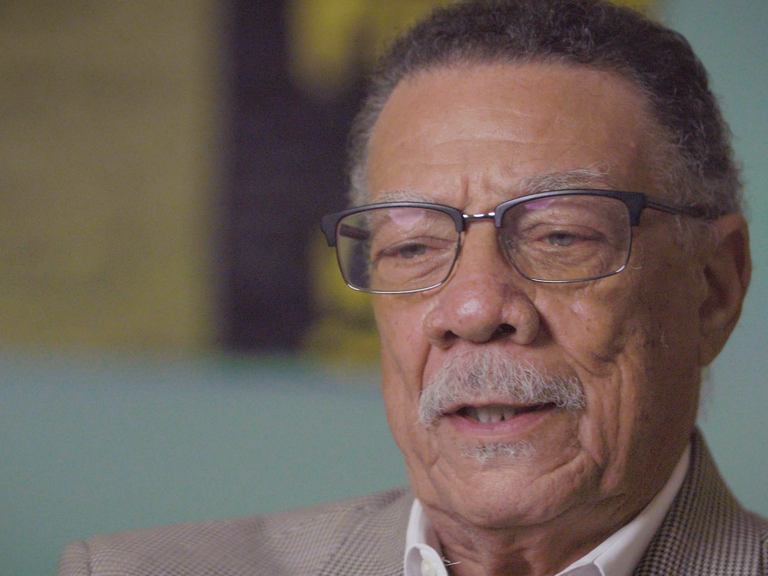
Interview with Reuben Anderson for the Legal Defense Fund Oral History Project,, conducted by Alissa Rae Funderburkin Jackson, Mississippi, Conducted in collaboration with the Southern Oral History Program at University of North Carolina at Chapel Hill.
Copied!
    Legal Defense Fund Oral History Project


Reuben Anderson

Interviewed by Alissa Rae Funderburk

September 8, 2024

Jackson, Mississippi

Length: 01:02:01


Conducted in collaboration with the Southern Oral History Program at University of North

Carolina at Chapel Hill

LDF Archives, Thurgood Marshall Institute, NAACP Legal Defense & Educational Fund,

Inc.


2


This transcript has been reviewed by Reuben Anderson, the Southern Oral History Program,

and LDF. It has been lightly edited, in consultation with Reuben Anderson, for readability

and clarity. Additions and corrections appear in both brackets and footnotes. If viewing

corresponding video footage, please refer to this transcript for corrected information.


3


[START OF INTERVIEW]

 Alissa Rae Funderburk: This is Alissa Rae Funderburk, Margaret Walker Center

oral historian, contracted by the Southern Oral History Program at the University of North

Carolina at Chapel Hill. It is September 8, 2024, and I’m here in Jackson, Mississippi, with

Reuben Anderson in the COFO [Council of Federated Organizations] Civil Rights Education

Center to conduct an interview for the LDF Oral History Project. Thank you so very much for

being here and sharing your story. Do we have your permission to record this interview?

Reuben Anderson: I didn’t hear you.

AF: Do I have your permission to record this interview?

RA: [00:00:32] Absolutely.

AF: [00:00:33] Excellent. So, you grew up in Jackson, Mississippi, right? Can you

tell me a little bit about your childhood, what you remember?

RA: [00:00:43] We are on [John R.] Lynch Street, and Dalton Street is two blocks

ahead. I was born on Dalton Street, and I grew up on Banks Street. And Banks Street now is

a part of Jackson State [University], the house that I grew up in. So, I’m right here where I

grew up. What was Mississippi like when I grew up? I grew up in Mississippi in the [19]40s

and [19]50s, and it was probably the worst place in America to grow up. But I was fortunate

enough and lucky enough to have a great family: six uncles, and three aunts, and loving

parents, and two brothers. So, I had a great childhood.

AF: [00:01:32] Can you tell me a little more about your brothers?

RA: [00:01:34] Both of them are still around. One is 87 years old, and the other one is

86. They’re retired. One was a schoolteacher here for a long time. The other one lived in

California and worked for UPS for a long time, and he’s retired. They’re doing good. They’re

not in perfect health, but they’re doing great.


4


AF: [00:01:57] That’s good. What do you remember? I know you would have been

probably like 10, 11, 12 years old at the time, but do you remember Brown v. Board of Ed.?

RA: [00:02:07] No, I don’t, not when I was a child. In 1954, I was thinking about

baseball more than anything else. But it wasn’t long afterwards that I started paying attention

to what was going on in Mississippi and around the country.

AF: [00:02:28] Is that around about the time you became friends with Jack Young

Jr.?

RA: [00:02:31] No, I really didn’t become friends with him until—I went to the

Catholic schools until I was in the 10th grade. And in the 10th grade, I thought I was an

athlete. And so, I decided to go to the public schools to play football and basketball and

baseball. I wasn’t an athlete, however. But Jack Young was in the public schools, and he and

I became close friends, and that’s how I got to know his daddy.

AF: [00:03:02] Okay, so you were, what, about 15? 16?

RA: [00:03:06] Yes. My growing up was—well, when I was 12 years old, my mother

came down with tuberculosis and they sent her off to a sanatorium, and she was there for a

couple of years. And I ended up going to live with my aunt, and I stayed with her all the way

until I got ready to go to college. So, I spent a lot of time, most of my time, at her house, and

it wasn’t too far from where Mr. and Mrs. Young lived.

AF: [00:03:50] Can you tell me a little more about your aunt?

RA: [00:03:54] She was an exceptional lady. I guess her husband was a successful

[automobile] body and fender person, so she took care of all the business, and she dragged

me around with her. So, she was a big influence on my life, and both she and her husband

were exceptional people.

AF: [00:04:19] That’s beautiful. So, you’ve said in past interviews that you knew

from an early age you wanted to be a lawyer, and you credited that to Mr. Jack Young Sr.


5


RA: [00:04:32] Yes. I was at his house quite a bit. He was, I would say, the premier

civil rights lawyer in Mississippi. He represented James Meredith. He represented Medgar

Evers. He represented the NAACP. And when I was at his house, most of the time, he had

visitors. The whole NAACP family came and visited with him—Roy Wilkins and Ms.

Motley [Constance Baker Motley]—and I met all of them being at his house. On top of that,

his house was next door to Summers Hotel, and that’s where all of them stayed. So, I saw all

of the civil rights leadership, met them. And Mr. Young kind of took me under his wings.

Whenever he was going to get somebody out of jail, civil rights workers, I’d go with him. I

just kind of wanted to be like him. He had a fine car, he dressed magnificently, and he was

just a great guy. He kind of guided me once I told him I wanted to be what he was: a civil

rights lawyer. He gave me a big hand in doing that.

AF: [00:06:02] Wonderful. We actually have a few interviews with Jack Young Sr.

and Jack Young Jr. at the Margaret Walker Center. I’ve listened to a little bit of him talking

about his work and his wife, I think. She was in some of the interviews.

RA: [00:06:19] Aurelia. She was a music teacher at Jackson State, a professor, I

think, and a great lady. I was close to her, too.

AF: [00:06:33] Wonderful. You did one year of law school at Southern University,

correct?

RA: [00:06:39] Yeah, let me back up and explain that to you. Being close to Mr.

Young, he advised me of two things: He said, “Go to Tougaloo College,” although he went to

Jackson State, “and go to Ole Miss law school.” And it was important about going to Ole

Miss law school: They had a diploma privilege, and that is if you graduated from the law

school, you were admitted to the bar, and taking the bar back then for an African American

was iffy. If they didn’t like you, you didn’t pass. I applied to go to Ole Miss, and I was

rejected. I got a letter saying that I needed to have five graduates of the law school to sign my


6


application, and that was impossible for me. So, Mr. Young got me into law school at

Southern University in Baton Rouge. I spent a year there, and the dean at Ole Miss reached

out to me in the spring of [19]65, I guess it was, and asked me whether I was still interested

in coming to Ole Miss. And I told him that I was, and he gave me some kind of scholarship. I

don’t remember what it was, but he was a special guy, Josh Morse. He was interested in law

school being integrated, and he was a big help to me through law school.

AF: [00:08:15] Was he a new dean at that time?

RA: [00:08:17] He was a new dean. He and I came at the same time, and he brought

with him five graduates of Yale Law School to the faculty, and they started a legal services

program in Mississippi. He did a whole lot of things that were contrary to what people

thought, and the legislature fired him because he was too active in civil rights matters.

AF: [00:08:51] Wow. That does sound like Mississippi.

RA: [00:08:57] I’m sorry?

AF: [00:08:58] I said that does sound like Mississippi.

RA: [00:08:59] It does, yeah. And you just think that was 1965. So, Mississippi was a

different place than it is today.

AF: [00:09:12] Do you have any—besides this wonderful Josh Morse, the Dean—do

you have any memories of other folks you met? Teachers, professors, other students at that

time who were significant to you?

RA: [00:09:28] There were about three other law students there that would speak to

me. Nobody would sit close to me in the law school. Yeah, but the faculty members that I

mentioned to you, I became very close to them. We were not far apart in age. Mike Horowitz

was one of them, a guy named [William E.] Holder who took a liking to me and advised me.

In fact, one day he stopped me in the hall and asked me what was I going to do when I

graduated, and I told him I was going to work for the NAACP Legal Defense Fund. And he


7


said, “Well, what are you going to do when you get through being a civil rights lawyer?” And

that was a question I wasn’t prepared for. I thought I’d be a civil rights lawyer my whole life.

And we chatted, and he said, “Well, you can always go to work for the Justice Department.”

And I said, “Well, that’s in Washington, isn’t it?” And I said, “I want to stay in Mississippi.”

And he told me, he said, “I’ll tell you what you do, Reuben. Go and get The Wall Street

Journal and read it, and it’ll expand your view.” And I did. I went and I’d get to the law

school early and be the first person there, and I’d read The Wall Street Journal cover to

cover, as I’ve done ever since then. It’ll give you a world perspective. But it was just four or

five pages then, but now it’s 50 pages or so. [Laughter] But I’ll share with you, everything

other than the opinions, it’s a great paper. I guess the best example I can give you is that

Obama was in office for eight years, and they never said anything positive about him in eight

years, so—but on the business side, it’s an exceptional paper.

AF: [00:11:46] I’ve not read The Wall Street Journal much. A few articles here and

there. I’m more of a New York Times girl.

RA: [00:11:53] I read it, too.

AF: [00:11:55] That’s excellent. So, in other interviews I’ve heard it mentioned quite

a few times that you were the first Black student to graduate from the University of

Mississippi Law School. I’ve also heard you say that being first is just being first. What does

it mean to be the first? You’ve been the first many things. Can you talk a little bit about

whether that means anything to you, or what it means, you think, to others?

RA: [00:12:33] Now, I didn’t go to Ole Miss to integrate it. I went to Ole Miss to get

a diploma privilege to practice law, and those were the two toughest years of my life. If I

could have gone somewhere else, I would have. I just didn’t enjoy it. When I went to Ole

Miss in 1965, there was nothing in Mississippi that was integrated that I knew about, but

Medgar Evers sent his kids to the public school here in Jackson. Gilbert Mason sent his kids


8


to the public schools in Biloxi. And Ms. [Winson] Hudson sent her kids to the public schools

in Leake County. But other than that, Mississippi was totally and completely segregated,

including Oxford. And I didn’t have a car. Wherever I walked, I was on guard. Everything in

the city of Oxford was segregated. In 1965, I think there were just five African Americans on

campus, and the kids in the undergraduate school had a lot tougher time than I did because I

spent all my time at the law school. But that first thing didn’t mean anything to me.

AF: [00:13:54] And what about later in your career? Did that mean something to

people you met?

RA: [00:14:04] Oh, it was a big deal, especially when I became a County Court

judge. It was a big deal, I think. I mean, I was the first County Court judge, and it was a big

step forward. But all of those things happened not because I was aspiring to them, but the

circumstances were that when I became a lawyer in Mississippi, I just think there were five

[six] other African American lawyers. So, they didn’t have to go far to find somebody.

AF: [00:14:44] Right. Do you recall who those other five [six] lawyers were?

RA: [00:14:49] Yeah. Jack Young, Carsie Hall, Jess Brown, Eddie Tucker, and James

Abrams. [The sixth lawyer is not named here.]

AF: [00:14:58] Crazy. Just five [six] for the whole state.

RA: [00:15:01] Yes.

AF: [00:15:03] And were are they all doing civil rights law?

RA: [00:15:05] None of them but Mr. Young and Jess Brown.

AF: [00:15:19] Can you talk a little bit about your memories of the Voting Rights Act

and when it passed? I believe you were in law school at that time.

RA: [00:15:26] It was. You know, I followed it in the press, but I was consumed with

law school. I didn’t skip college, but I wasn’t a scholar in college. [Laughter] And so, I was

behind, and I had to spend a lot of time in the library, catching up. I kept up with all of the


9


civil rights activities, mainly through Mr. Young. But, you know, my thought, just like it was

for Brown v. Board of Education and everything else was, that’s for somebody else, not for

Mississippi. Mississippi’s efforts were to foster segregation, and they did a great job of doing

that.

AF: [00:16:20] I like what you said, “for somebody else, but not Mississippi.” That’s

very true, I think, of a lot of things, not just civil rights.

RA: [00:16:28] Yeah. In 1955, Mississippi started the Sovereignty Commission. I

don’t know if a lot of people are familiar with it, but it was an entity that did more harm to

Mississippi than anybody could have. They were a spy agency. They funded all kinds of

illegal activity. So, they held Mississippi back, just as the leadership in this state, Ross

Barnett, Jim Coleman, and every governor, except we have one, who was a complete racist.

AF: [00:17:13] I’ve heard of the Sovereignty Commission. I’ve interviewed a few

people who had files. Didn’t the Sovereignty Commission keep files on members of the Civil

Rights Movement?

RA: [00:17:25] It was a spy agency. They tapped our phones at the Legal Defense

Fund. When I first went there, I was advised that our phones were tapped. Every meeting you

went to, they had a spy there, somebody, an informant. They did everything they possibly

could to keep Mississippi from being integrated in any respect.

AF: [00:17:54] You also mentioned you weren’t a scholar in college. What was it

about your time at Tougaloo that made you, how to say, less scholarly?

RA: [00:18:07] Well, I was distracted. The Civil Rights Movement was on

Tougaloo’s campus, and I spent a lot of my time following the movement. We had professors

who were committed to making Mississippi a different place. My junior year, I got serious

about studies, but my first two years, [19]60 and [19]61, that was when a lot of activity on the

civil rights front was going on.


10


AF: [00:18:46] Can you talk a little bit about what activity that was?

RA: [00:18:49] Well, the first civil rights activity to happen was the Tougaloo Nine,

who integrated the public library here in Jackson. And all of those, most of them, were my

classmates. Although I was not encouraged to participate, I knew that I couldn’t, but most of

the students were out of state because if their parents were in Mississippi, it would be

dangerous for their families. John Salter and Ed King, two professors, were—I guess the best

way to put it—they were Medgar Evers’ big supporters. They helped Medgar do everything

that he did. And to put it another way, there was nowhere else in Mississippi that white

people and Black people could assemble except on Tougaloo’s campus—you’d be shot or

arrested. But you were pretty secure on Tougaloo’s campus.

AF: [00:20:07] You mentioned that you weren’t encouraged to be super active in

movement activities at that time, and I think you said something along the lines of concern

for parents.

RA: [00:20:20] Yes.

AF: [00:20:21] Can you talk a little bit about your relationship with your parents and

what that concern was?

RA: [00:20:30] My daddy, as the movement went on, he ran a juke joint, and he sold

whiskey and everything that goes on at a juke joint. And he told me, he said, “Son, they

would take me directly to Parchman [Mississippi State Penitentiary] if you got involved.”

And he’s right. He would have been arrested, prosecuted, and everything else. And I

understood that. So, I kind of stepped away from the movement. And Mr. Young likewise

said that it wouldn’t be advisable for me to be involved.

AF: [00:21:06] I suppose Mr. Young was thinking about your future career?

RA: [00:21:09] Yes.


11


AF: [00:21:12] Speaking of your career, what did you know about LDF before you

graduated law school?

RA: [00:21:23] I knew nothing about the Legal Defense Fund until, I think, I got a

letter from Marian Wright or either Jack Greenberg that asked me what I was going to do

after graduation. And I told them I wanted to be a civil rights lawyer. And that’s when they

asked me would I join the Legal Defense Fund office here in Jackson. And I wrote Marian

back and told her yes. I told Mr. Greenberg yes. And so that’s where we are. I spent five

years with them.

AF: [00:21:57] Can you tell me a little bit about those five years? You did a lot of

cases, right?

RA: [00:22:04] Well, I guess the best way to describe it is that I graduated from Ole

Miss law school—I think it was June 3 of 1967—I left my swearing in and went to

Columbus, Mississippi, and tried a lawsuit that Tuesday. The civil rights leaders in Columbus

had been arrested and charged with aggravated assault. So that’s pretty much what I did from

that day for the next five years.

AF: [00:22:42] Wow. So, you mentioned you received a letter from Marian. How did

they know to write to you?

RA: [00:22:55] It could have come from Mr. Young, probably. I think that Mr.

Young was, he got me into Southern Law School. I mean, you don’t get into law school on

six weeks’ notice. And he knew the dean at Southern and got me admitted at Southern. I

think he convinced Josh Morse to reach out to me about going to Ole Miss. So, I think a lot

of my career can be attributed to Mr. Young taking an interest in me.

AF: [00:23:25] That’s wonderful.

RA: [00:23:26] It is.


12


AF: [00:23:28] To have someone who cares enough to shepherd you through all of

that.

RA: [00:23:33] And he did.

AF: [00:23:38] So you started off in LDF’s New York City office. Is that correct?

RA: [00:23:43] Yes. In Jackson, we had an office that—Marian Wright and Paul

Brest and Iris Brest were the lawyers in the office, and I joined the office in June of [19]67.

Fred Banks and John Nichols came in [19]68, and Mel Leventhal was there when I got there,

but he was not a member of the bar.

AF: [00:24:12] So what did Mr. Leventhal do?

RA: [00:24:15] What did he do? He was a lawyer, and we were law partners for about

eight years. He was from New York, came down during the summers and worked in

Lexington, Mississippi, as a civil rights student. His wife was Alice Walker, and they stayed

here in Mississippi until, I think, 1975. He was a great lawyer and still is.

AF: [00:24:53] Wonderful. So, explain it to me. There was a New York City office in

Jackson?

RA: [00:24:57] Yes, we had a Legal Defense Fund. There were three civil rights

entities in Mississippi, all on Farish Street: the Legal Defense Fund, which was the Inc. Fund,

LDF; then there was the President’s Committee; and then there was the Lawyers’ Committee.

And all of us kind of did separate things. The Lawyers’ Committee did mostly voting rights

cases. The President’s Committee did some of everything. But the Legal Defense Fund, we

did primarily school desegregation cases all over the state. And we did, when somebody

approached us about doing something, we didn’t turn them down. So, we did pretty much

everything.

AF: [00:25:42] And I believe at some point you were also living in New York.

RA: [00:25:47] I have to explain that to you.


13


AF: [00:25:50] Yes, please. I hear it’s something to do with the draft.

RA: [00:25:52] Yes, I started with the Legal Defense Fund in June. I got drafted in

September, and that was right at the hot spot of Vietnam. And the last thing in the world I

wanted to do was go fight in Vietnam. We had enough battles here in Mississippi to fight. So,

Jack Greenberg said, “Reuben, I think I got a solution.” He said, “If you move to New York,

change your local board, I think I can convince them to let you stay in Mississippi and be a

civil rights lawyer there.” So, I took his advice. I moved to New York, but I worked in

Mississippi. I didn’t have any New York matters to work on, but I was in Mississippi. Our

office didn’t have anybody to go to court that was a member of the Mississippi Bar but me.

AF: [00:26:51] Because of the diploma.

RA: [00:26:52] Right. And Marian Wright, she left the first of the year, got married

and moved to D.C., so I had to be in Mississippi. Prior to my arrival, Mr. Young and Jess

Brown handled most of the civil rights cases, but when I got there, it was incumbent upon me

to handle them. And the other thing was that Jess Brown, and Carsie Hall, and Mr. Young

didn’t go to law school. They had studied under a lawyer, so they didn’t feel comfortable

going to federal court. So, I would get prepared for federal court. Mr. Leventhal did most of

the preparation, but I did all the arguing, all the appearances. And then Fred Banks came

along, and then John Nichols, then Mel passed the bar. So, we had a force to deal with.

AF: [00:28:01] Sounds good. You mentioned Fred Banks. You mentioned Melvyn

Leventhal and John Nichols. You all took on a lot of cases. What was the process for y’all

deciding which cases to take on?

RA: [00:28:22] Well, everything in Mississippi was broken at that time. Everything

was segregated, so we didn’t have to search for cases. The other thing was that there were

people like Aaron Henry, who was President of the NAACP, and others who identified all the


14


injustices that were taking place, and we would take them on. We’d have to get the approval

from New York to do so, and they approved most of them.

AF: [00:28:54] So Aaron Henry would come to your office and be like, “Hey, this

happened yesterday.”

RA: [00:28:59] Exactly.

AF: [00:29:04] Okay. Now I’m going to test your memory. I hope you’re ready. Do

you recall the Hawkins v. Town of Shaw case?

RA: [00:29:11] I do.

AF: [00:29:12] Okay. Can you talk a little bit about what happened there? I believe I

have my notes, Andrew and Mary Lou Hawkins were the folks?

RA: [00:29:27] They were.

AF: [00:29:29] And it says here, about two months after the decision on Shaw, Mary

Lou was murdered.

RA: [00:29:38] Yes.

AF: [00:29:38] Can you tell us a little bit about the case, how that whole thing kind of

happened, what you remember, and what you remember about hearing?

RA: [00:29:49] I can’t remember the year, but we were handling the school

desegregation case there and got to know Mr. Hawkins, who was the leader in that

community. Mel Leventhal became friends with Mr. Hawkins, and he saw the great injustices

that were taking place in the town of Shaw. I don’t even think they had a single paved road

for Black people and no utilities. And so that struck Mel as, “I’ve got to do something about

this.” And that’s when he filed a lawsuit. But they had their 50th anniversary of the Shaw

decision—I don’t remember what year—but Mel and Fred and I went to it, and it was a very

emotional thing. After 50 years, the town of Shaw still struggles. What happened to the

Hawkins happened in so many communities around Mississippi. You just can’t imagine how


15


challenging and difficult it was for a Black person to stand up as a plaintiff in any kind of

case. Their lives were at stake, and definitely their jobs were at stake, but there were a lot of

courageous people in Mississippi.

AF: [00:31:21] I imagine that must have been really terrifying, not just for the

plaintiffs who stood up and had you try their cases, but for y’all as well, as the lawyers.

RA: [00:31:37] I had some concerns, but after a while, you don’t think about it. I had

a job to do, and I went to work to do it. But the sacrifices that people made—we handled, I

think, 35 or 40 school desegregation cases all over the state of Mississippi. But we couldn’t

get any plaintiffs down in southwest Mississippi—Laurel and places like that—the Klan was

so strong that nobody could stand up to them. But Mississippi was a dangerous place most of

my lifetime.

AF: [00:32:28] Can you talk a little bit about how the deaths, right—because it didn’t

just happen to Mary Lou Hawkins, it happened, like you said, to many people who stood up

for their rights. Can you talk about kind of what impression that might have had on you? Did

it make you work harder? Did it make you, I don’t know, care more for the work that you

were doing?

RA: [00:33:01] I guess the best way to put it was that we had an office that for five

years, we just focused on civil rights work, I guess until 1972. And then we gradually

changed our office to be a general practice firm. Our firm at one time grew to 11 lawyers. But

we still—Mel still did civil rights work, and Fred. I guess I’ve been a lawyer for 57 years,

and I enjoyed those five years more than any in my legal profession.

AF: [00:33:47] Why is that?

RA: [00:33:51] You know, it’s hard to describe the way Mississippi was in the

[19]60s. The public schools in Mississippi didn’t have school in the fall. They started back up

in the winter, after the cotton-picking season was. They didn’t have school in the spring


16


because that was cotton-chopping time. And the schools were —“awful” didn’t describe it. I

mean, it was just neglected, and nobody cared anything about Black folks going to school.

The state of Mississippi was totally segregated. Nobody had a job other than cleaning up or

working in ditches. I can name the first Black police officer in the city of Jackson, Joe Land. I

can name the first Black bus driver, Charles Jones. Now, I can remember because you had to

sue to get all that done, and there were a lot of places that you never could get a plaintiff

because it was just too dangerous.

AF: [00:35:08] So, would you say those five years were your best five years because

of the weight of the work, the things that you managed to change for your state of

Mississippi? Is that why?

RA: [00:35:25] I guess the best way I could put it is that the Legal Defense Fund and

the President’s Committee and the Lawyers’ Committee really changed Mississippi. I don’t

know if the schools would still be segregated, but we sure got them integrated a lot quicker

than they would have.

AF: [00:35:49] You said it “changed Mississippi.” I’m jumping ahead now in my

questions a little bit, but I’m curious about your impression of Mississippi today.

RA: [00:36:05] We are still suffering from the fact that we had a Sovereignty

Commission, a commission that lasted from 1955 until [19]71, whose total purpose was

segregation and to keep segregation in place. We had governors like Ross Barnett, who, if

you can imagine it, Myrlie Evers is on the stand testifying about her husband being murdered

by Beckwith, and Ross Barnett walks into the courtroom and embraces Mr. Beckwith. That’s

the kind of leadership we had, and it didn’t get any better. So, we’re paying for all of that,

and we’ll be paying for it for a long time.

AF: [00:36:55] I think you’re right about that. But to backtrack a little bit, what was

important to you about starting your own firm after LDF?


17


RA: [00:37:08] It was nothing that was planned. It’s just how things evolve. We had

integrated most of the schools by [19]72. It was very, very difficult for a Black lawyer. Our

ice wasn’t as cold as white lawyers’ ice. But I had to work, get out and do what lawyers do.

And I’ll say this, Fred Banks was my law partner, all total, for probably 40 years. He was one

of the most talented men I knew. And same thing with John Nichols and Mel Leventhal: I

was so fortunate to have these extremely capable lawyers around me.

AF: [00:38:00] Where exactly was your firm?

RA: [00:38:02] I’m sorry?

AF: [00:38:03] Your practice—where was it?

RA: [00:38:04] On Farish Street, where all the Black lawyers were, on Farish Street.

AF: [00:38:19] That’s not far from here.

RA: No.

AF: Well, we talked a lot about school segregation and desegregation. Can you talk

about, a little bit, how you think that transformed education in Mississippi?

RA: [00:38:31] How we did?

AF: [00:38:34] The desegregation. So, yes, you and what followed.

RA: [00:38:39] All of the public schools in Mississippi were segregated until 1965, I

think. But as you would happen, the power structures siphoned the money off from the public

schools to the private schools. In fact, we sued them to stop them from sending the books to

the private schools. Mel filed that lawsuit. But the people in power continued to make sure

that white kids got a better education than Black kids.

AF: [00:39:14] So when you’re talking about the private schools, is that a case of

white flight?


18


RA: [00:39:20] Exactly: academies. Academies started. I can’t remember the

numbers, but as soon as the schools were integrated, all the white kids left and went to

academies. And that’s probably close to being true today.

AF: [00:39:37] You look at Jackson, and then you look at Rankin County, for

instance, and Brandon, and you see a huge difference in schools because I think it’s still that

white flight.

RA: [00:39:51] Exactly. But to some degree, that’s true all over America. Public

school systems are neglected. When I grew up, most of my generation aspired to be

schoolteachers. That’s not true today.

AF: [00:40:14] Teachers don’t get paid anything.

RA: [00:40:16] That’s the problem. They’re not well paid and compensated, and not

well thought of.

AF: [00:40:22] Unfortunately. Do you have any reflections or memories about

Alexander v. Holmes County Board of Education?

RA: [00:40:37] That was one of the most important cases we handled. I guess what I

would say about it is that that’s probably the only time in America that the United States

Department of Justice Civil Rights Division stood up with Mississippi to continue

segregation. And luckily, the United States Supreme Court said, “No, we’re going to

integrate these schools the first of the year.” And they did. We handled that case—the Legal

Defense Fund did. Mel Leventhal did most of the work and wanted to argue the case in the

United States Supreme Court, but they wouldn’t let him. Jack Greenberg argued it and won,

but that was probably the most important case we handled.

AF: [00:41:40] Do you remember who the plaintiffs were?

RA: [00:41:43] Yes, from Holmes County, Mr. and Mrs. Alexander. And they paid

for it, just like everybody else that was a plaintiff. They lost their jobs. The mother—I don’t


19


think Black females worked outside of a white house anywhere in Mississippi. They didn’t

have any other job. They were maids and servants. And so, it was so easy for them to suffer,

and they did suffer.

AF: [00:42:14] So it’s a win, but it comes at a price.

RA: [00:42:19] I’m sorry, I missed that.

AF: [00:42:20] I said it may have been a win, but it came at a price.

RA: [00:42:23] It did. A huge price for a lot of people that suffered through it.

AF: [00:42:30] How did you balance the needs of your clients, like the Alexanders,

for instance, with the goals of the movement, the bigger goals?

RA: [00:42:42] You know, I look back on our work, the five years of our work, and

we did some great things, accomplished some great things. And the decision-making about

how we did things was made in New York, which plan to try to push for. If I say one thing

we didn’t do, that is we didn’t keep the Black leadership in the schools. Once the schools

were integrated, Black principals and Black teachers were shifted aside, and we weren’t able

to do anything about it. And that’s tragic.

AF: [00:43:39] Was there any frustration having the plans and the decision-making

coming from New York for you guys kind of here on the ground?

RA: [00:43:50] No, because we were too busy to think about anything else. You

know, I think back on those days and our law firm—the four of us, then we grew. But I’d get

in early at 7:00 and I’d work until 5:00, and Mel Leventhal would come around 5:00. He’d

work all night. You know, we just felt strongly about what our mission was, and we didn’t

worry about the politics of it. We just saw schools that were third-class and the state being

segregated and towns discriminating. So, we had a full plate.

AF: [00:44:38] You were focused.

RA: [00:44:40] Yes, we were.


20


AF: [00:44:42] What about your families and friends and relationships with other

folks?

RA: [00:44:49] I didn’t get married until 1969, so my work schedule kind of backed

off. Like I told you, I spent a lot of my time in New York, and I didn’t enjoy any of it. It was

cold and too expensive. But like I said, I thoroughly enjoyed the time that I did that work.

AF: [00:45:18] Can you talk about the work that LDF did that wasn’t as visible, that

wasn’t in the courtrooms?

RA: [00:45:30] You know, America is so lucky to have had entities like the Legal

Defense Fund, and they were so fortunate to have a guy like Jack Greenberg. He could raise

money. He could tell the story. He could focus on Mississippi. And they did a tremendous job

of bringing to light how bad Mississippi was. You know, they started with Brown v. Board,

and they never took the foot off the pedal. It was always forward, and the Legal Defense

Fund just did a tremendous job in that respect.

AF: [00:46:21] Yeah. I imagine there was a lot of research that went into that. I

believe here at the Margaret Walker Center, even, we have some surveys, like maps of the

ways the schools were segregated. Can you talk a little bit about the research that went into

it?

RA: [00:46:41] You know, I was not involved in that aspect of it. I was a courtroom

lawyer, and I was in court most of the time. And luckily for me, all the law was on my side.

AF: [00:46:54] Yeah, that’s that focus.

RA: [00:46:59] And it was enjoyable to win. We won most of the time because we

were right.

AF: [00:47:04] Amen to that. So, you won most of the time. You were very

successful as a lawyer, and eventually you were approached about becoming a judge. Can

you talk about how that happened?


21


RA: [00:47:22] I forget what year it was, but I guess it was 1975 or [19]76. The

mayor of the city of Jackson, who I knew and supported, appointed me as a Municipal Court

Judge, City Court Judge. I did that for a while—I don’t know how long. Then I was

appointed County Court Judge, and I probably did that for four or five years. That was

Governor Cliff Finch who appointed me to the County Court. My good friend William

Winter appointed me to the Circuit bench in, I guess, 1981 maybe. And Bill Allain, who I

knew, appointed me to the Supreme Court in 1985. He was somebody that, before he was

Governor, he was in the Mississippi Attorney General’s office, and he was responsible for

maintaining segregated schools. That was his job, and he did a good job of it. But he

appointed me to the Supreme Court. I told him I didn’t want to go. I told him I had a great

job, which I did. I had the best job a judge could have. I was a Circuit Court Judge. I was my

own boss, I set my own docket, and I played a lot of golf. And I told him, I said, “Fred’s a lot

smarter than I am. Why don't you appoint Fred?” At the time, Fred was the President of the

NAACP, and he was on the board of the national NAACP. So, Bill Allain said, “No, that

won’t work.” So, I took the job and stayed there as long as I could.

AF: [00:49:14] When you were in law school and you were asked what your plans

were for after being a civil rights attorney, did it ever cross your mind, becoming a judge?

RA: [00:49:26] I thought I’d be a civil rights attorney all my life. It just never

occurred to me that things would change, and they would change in a hurry. I tell this story:

In 1963, I went along with a lot of other students from Tougaloo to register to vote, and that

was an unpleasant experience. But 14 years later, in that same courthouse, I was appointed a

judge. So, things change rapidly. When I walked in that courthouse to register to vote, there

were “colored” and “white” signs everywhere: You couldn’t make a step without a sign

saying “colored” and “white.” But then 14 years later, I was the judge in that courthouse.

AF: [00:50:23] I can’t even imagine what that felt like.


22


RA: [00:50:25] Yeah. Things changed fast in Mississippi, too.

AF: [00:50:31] Slow, slow, slow, and then fast, fast, fast. Can you tell us a little bit

about some of your experiences as a judge? Are there any cases in particular you remember?

RA: [00:50:49] I guess I was on the bench a total of 15 years. The cases that I

wrestled with were death penalty cases. When I was on the Supreme Court, we executed two

people, and I never felt good about that. I say “we” executed: We gave them a thumbs up to

execute. I enjoyed my job, like I said, as a Circuit Court Judge. I left the Mississippi Supreme

Court because the job was too—it was a very difficult job. I worked every night except

Friday night and Saturday night. That was punishing to my family. And I had three kids that

needed to go to college, so I said I need to get out and make some money. If I’m going to

work this hard, somebody is going to pay me. So, I just decided to step away [in] 1991, I

think it was.

AF: [00:51:54] Being a judge wasn’t very lucrative?

RA: [00:51:58] No, not for the work that you put into it. When I was on the

Mississippi Supreme Court, they didn’t have an intermediate Court of Appeals to handle the

cases, so we took every appeal from the trial court. We had law clerks, but there were just

three law clerks for the whole court. So, it was a very difficult job. I was glad to be away

from there, and I was glad that Judge Banks took my position. And he stayed there, I think 10

years, maybe.

AF: [00:52:45] Wow, you got what you wanted. Speaking of Judge Banks, what was

your relationship like with those former colleagues while you were a judge or when you

stepped down?

RA: [00:53:00] Oh we were just friends. We played golf together and kept our

relationship. Our wives were friends. I was really devastated when Mel left our firm in, I

guess, [19]75. But they never tried cases before me.


23


AF: [00:53:26] Can you explain a little bit how the work on the Supreme Court was

different from your work in the trial court level?

RA: [00:53:34] Yeah.

AF: [00:53:39] Besides being so much harder, right?

RA: [00:53:41] Yeah. The cases on the trial court were jury cases, and you didn’t

have to make those tough decisions—the jury did. So, I enjoyed that aspect of it. I thoroughly

enjoyed being right in between good lawyers and big cases. I enjoyed that. On the Supreme

Court, I enjoyed—I guess the six years I was there—I enjoyed the judges that were there, but

the work was just extremely challenging and difficult. And like I said, I didn’t enjoy handling

death penalty cases, and at that time, death penalty cases consumed about 25% of our cases

[25% of our time].

AF: Really?

RA: You had to pay so much attention to them. You had to have oral argument, and

before you put somebody to death, you’ve got to look real close. And we did.

AF: [00:54:42] My father was a corrections officer for 25 years, but that was in New

York. So, I didn’t know about the death penalty until I was in college and reading about that.

RA: [00:54:59] Well, thankfully, we don’t execute a lot of people anymore.

AF: [00:55:02] Thankfully. So, you said you retired and went back to litigation

because if you were going to be working that hard, you needed to be getting paid.

RA: [00:55:14] And I had three kids that needed to go to college.

AF: [00:55:18] So can you tell me a little bit about your kids?

RA: [00:55:23] They’re not kids now. My baby is 50, and she’s a lawyer. I’ve got

two grandkids and just a precious wife and three kids. I’m a very fortunate man.

AF: [00:55:38] But that was your motivation for returning to litigation?


24


RA: [00:55:42] I was worn out. Six years of the way I worked—I wouldn’t be

around. I just couldn’t work that hard. So, I just decided, like I said, “If I’m going work this

hard, I’m going to get paid.”

AF: [00:55:56] So, moving to the present, what would you like the public to know

about the Legal Defense Fund, about the work that it did, that you did, and I guess the work

that continues to be done?

RA: [00:56:26] The Legal Defense Fund, like I said, played a big role in the history

of this country, starting with Brown v. Board all the way up until today. And the sacrifices

that the lawyers for the Legal Defense Fund made. I grew up in Mississippi, and I practiced

law all my life in Mississippi. But fellows like Mel Leventhal, who moved to Mississippi

from New York, and Frank Parker, and I could go on and on—these lawyers who left their

home to come and make Mississippi a better place. I think that the Legal Defense Fund has

been overlooked in what they have done. And I know that they made a huge difference in my

life for the five years that I spent with them.

AF: [00:57:35] Is there anything that I haven’t asked that you would like to speak

about?

RA: [00:57:40] Well, I’m glad you allowed me to talk about what a great family I got

and how lucky I am. But I would just say that people came into my life that helped me out,

like Mr. Young and so many other people, Josh Morse at the law school, and people advising

me—I’ve just been fortunate.

AF: [00:58:11] I have two more questions for you and then we’ll be able to wrap up.

When you look at Mississippi today—you were born and raised here, lived here almost your

whole life, except for a few years in New York, I suppose—what concerns do you have

regarding the rights and welfare of Black people or Black Mississippians?

RA: [00:58:34] Say that again. I didn’t hear.


25


AF: [00:58:36] What concerns do you have regarding the rights and the welfare of

Black Mississippians?

RA: [00:58:45] I think I said this previously: Mississippi suffers from a lack of

leadership. The people who have led Mississippi and who lead it now don’t care about 39%

of the population. In fact, they try to do more harm than they do good. And although it’s

different than it was when I grew up in the [19]40s and [19]50s, Mississippi is still a place

where race is the major focus for most people.

AF: [00:59:22] Lastly, is there anyone you recognize as continuing the work that you

started in the [19]60s and [19]70s, either in the field of law or maybe education? Anyone you

want to recognize for kind of combating that poor leadership you talked about?

RA: [00:59:47] Somebody that’s here today? You know, I’d hate to do that because I

would omit so many people who are doing great work. There are a lot of people in

Mississippi who are taking on the big challenges that we have: health care, education, I could

just go on and on. But Mississippi is 50th for a reason, and that is that race still plays a major

portion in its life.

AF: [01:00:22] I will say one last thing regarding that is I really think that the Civil

Rights Museum does such good work in showcasing the way race has played such a huge

role in Mississippi’s history up until today. So, I think you served on the board for that, right?

RA: [01:00:45] On the board of what?

AF: [01:00:47] For the Civil Rights Museum.

RA: [01:00:48] Yeah, I was Chairman of that since its inception.

AF: [01:00:55] Wow.

RA: [01:00:56] It’s important that—you know, Governor William Winter, who

worked on the Civil Rights Museum with me for so many years, put it this way: He said that

the Civil Rights Museum is the largest classroom in Mississippi. And that’s true. It’s for this


26


generation of young people coming along to see all of the mistakes that generations of the

past have made. And we need to get as many young people through that museum to see all of

the mistakes and fumbles that Mississippi made.

AF: [01:01:37] Well, thank you very much. Thank you for answering all of my

questions so thoroughly. And as I said earlier, I’m sure we’ll be getting you a copy of the

interview and hopefully a transcript of it for you to review as soon as possible. So, are there

any questions you have for me?

RA: [01:01:56] No, ma’am.

AF: [01:01:57] All right. Thank you so much.

RA: [01:01:58] Thank you. Thank you.

[END OF INTERVIEW]