Charles Stephen Ralston Transcript
Oral History
56 pages
This item is featured in:
-
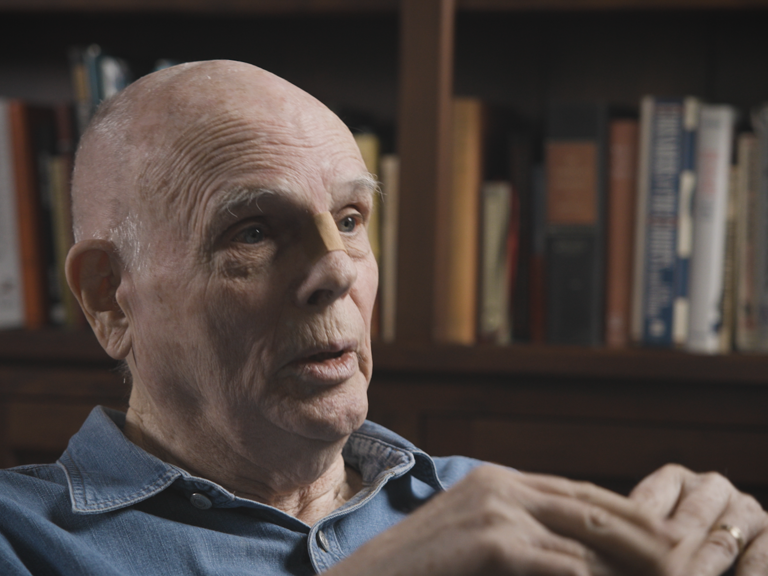
Interview with Steve Ralston for the Legal Defense Fund Oral History Project,, conducted by Danita Mason-Hogans Conducted in collaboration with the Southern Oral History Program at University of North Carolina at Chapel Hill.
Copied!
    Legal Defense Fund Oral History Project


Charles Stephen Ralston

Interviewed by Danita Mason-Hogans

November 9, 2024

Mi Wuk Village, California

Length: 02:53:57


Conducted in collaboration with the Southern Oral History Program at University of North

Carolina at Chapel Hill

LDF Archives, Thurgood Marshall Institute, NAACP Legal Defense & Educational Fund,

Inc.


2


This transcript has been reviewed by Charles Stephen Ralston, the Southern Oral History

Program, and LDF. It has been lightly edited, in consultation with Charles Stephen Ralston,

for readability and clarity. Additions and corrections appear in both brackets and footnotes. If

viewing corresponding video footage, please refer to this transcript for corrected information.


3


[START OF INTERVIEW]

Danita Mason-Hogans: [00:00:00] This is Danita Mason Hogans for the Southern

Oral History Program at the University of North Carolina at Chapel Hill. It's November 9th,

2024, and I'm here in Mi Wuk Village, California with Steve Ralston, to conduct an interview

for the NAACP Legal Defense Fund Oral History Project. Thank you so much for being here,

and agreeing to share your story with us today, Mr. Ralston.

Steve Ralston: [00:00:26] I am happy to be here, and good to meet you.

DMH: [00:00:29] San Francisco is beautiful, and could you talk a little bit about

growing up here? I'm really interested in what it was like attending schools here, what kind of

conversations you may have had with your parents about civil rights.

SR: [00:00:45] Okay. Well, I was born in San Francisco in 1937, and I'm actually a

fourth generation San Franciscan. One of my great grandfathers is actually a 49er. And we

lived most of the time in a house up next to Sutro Forest. It was practically the center of San

Francisco, but it was almost like living in a small town. I had to walk down the hill to go to

grammar school. I went to grammar school and high school in San Francisco public schools.

The high school was Lowell High School, which is an all-academic school, which both my

father and his brother and sister and my two brothers all went to the school. San Francisco, at

that time, had just become a very strong labor city. In 1934, there had been a general strike in

San Francisco headed by the Longshoreman's Union out there, and it really had a lot to do

with kind of radicalizing politics in San Francisco. And my family, we were politically very

progressive, kind of out there on the left. But on civil rights, my family and I had been

basically brought up in the standard public school education, which the history was

dominated during that whole period of time by what's known as the "Southern chool" of

history, which had totally twisted and distorted the Civil War and Reconstruction.

Reconstruction was presented as full of corruption, and it was a good thing to stop, and very


4


little was taught about the realities of slavery or the realities of really the history of California

with regard to race, which at that time didn't involve African-Americans because the Black

population of California was not very high at that time. It really rose up a lot during World

War II because folks were brought from Alabama and elsewhere to work in the shipyards

around San Francisco and the Bay Area. So, in my schools, there were very few Black

students. The main history of race and racism in California was directed first against the

Indigenous people, who the first governor of California gave a speech as to "What were they

going to do about the Native Americans," and they decided to basically eliminate them. And

the census in 1850, there were 150,000 Indigenous people in California. By 1900, there were

only 17,000 left. And California literally had a bounty for scalps, you could get $5 for a scalp

of a Native American, who are actually very peaceful. They weren't like the Plains Indians,

where there was a lot of warfare going on between Indian tribes and of course against the

federal government when the whites started moving west. There was a very large Indigenous

population in California. They were mostly small tribes that didn't have warfare. They were

trading people, but they were in the way of the people coming for the Gold Rush. And it was

decided the best thing to do was to just get rid of them. Well, the next great piece of racism in

California was against, first, Chinese, and then the Chinese and Japanese, because the

Chinese came in first because of the Gold Rush. And a lot of them stayed to help work on the

western part of the Transcontinental Railroad because then they took jobs that whites didn't

want to take, which involved blasting tunnels through the Sierra Nevada mountains and a

high level of injury and death by the workers in the western part of the railroad. And that was

mostly the Chinese. Then the Japanese came in later, and the Japanese were excellent,

efficient farmers. And the people, white folks who were farming, particularly in the Central

Valley, didn't like them because they were better farmers. And so, in World War II--well,

first of all, there were the Chinese Exclusion Acts passed by the federal government, but it


5


was mainly pushed by California people in the federal, in the legislature, in the Congress.

And then, for example, Chinese immigrants were not eligible for citizenship. And it's

interesting that one of the issues brought up by Mr. Trump, is he doesn't like the idea of

birthright citizenship, and wants to do something about it, supposedly, even though it's right

in the Constitution. And the first case that dealt with that involved a Chinese American, a

young man who was born in the United States to Chinese parents, who were immigrants and

could not become American citizens. And it was argued that he was not eligible to be a

citizen of the United States. And the Supreme Court held, "No, [the] 14th Amendment said, if

you are born in the United States, you're an American citizen." And that was it. And that's

been the law since the 14th Amendment. And by this decision in the 1880s by the Supreme

Court of the United States. But it's popped up again after all that time.

DMH: [00:07:50] Well, you are such an adept litigator. And I know you went to

undergraduate and graduate school at [University of California at]Berkeley Law school.

SR: [00:07:57] Right.

DMH: [00:07:59] And were you very active on campus? And were you involved with

student movements while you were there? And did that inform your decision to become a

litigator?

SR: [00:08:10] Yeah, when I first went to Berkeley, I was majoring in physics, but I

decided after two years, that really wasn't for me, because I was getting decent grades, but

physics at Berkeley you had to be out in the stratosphere someplace, but I wasn't. So, I

decided to switch to history, which was something I had liked all my life, and so I finished

the history major. And during the time, I started at Berkeley in 1955, and that was right about

the time that the student movement had started in Berkeley. I was not really involved initially

in the student movement, but I became interested in it because of the sit-ins and the Freedom

Riders down South, and people were raising money for that. So, I got involved somewhat in


6


that, but it was really a little later. I was involved when I was in law school, because part of

the student movement was to question and try to get the administration to change some of the

rules it was setting up restricting free speech, and particularly about Communists being able

to come and give speeches on the Berkeley campus. So, I went on a committee headed by the

student chapter of the ACLU, and it was a number of other student organizations, to go talk

to the administration to try to convince them to end these rules. And we talked to them for

about a year. When I was in second year of law school, which would have been [19]60-61.

And it didn't go any place because, for example, for the communists ban, they said, well, they

knew it was unconstitutional, but the legislature would be upset. So, they couldn't change it.

And we warned them that things were going to blow up at Berkeley. They didn't change some

of these rules, and if they stopped trying to restrict things even more and they didn't pay any

attention. And sure enough, two years later, [19]64, after I left, graduated from law school,

things did blow up. But I really learned a lot about the thinking of administrators. And it was

clear that the administration at Berkeley was such that they didn't want the students to do

anything except sit in class and be quiet and behave themselves. Even though over half the

student body at Berkeley was actually over 21. So, at that time that was before the right to

vote was lowered to 18. They were fully functioning citizens, but that didn't matter to the

administration. They weren't interested in hearing from the students as to what the

administration shouldn't do or should do. So, they ignored us. And that was one thing that

convinced me that when I was in law school that I needed to broaden my scope rather than

just going to teaching in law school, which was really my first reason I started law school.

DMH: [00:12:01] Well, I want to know how you became involved with the Legal

Defense Fund.

SR: [00:12:05] Sure.

DMH: [00:12:05] What did it mean for you to become involved with them?


7


SR: [00:12:08] Well, I really learned about the Legal Defense Fund— After I

graduated from law school, I had to go into the Army for six months because they still had

the draft and that was facing me. So, after that I spent a year at Columbia Law School doing

graduate work and also teaching legal writing and research to first year law students. About

four or five of my classmates from Berkeley Law School had gone to work for the Civil

Rights Division of the Department of Justice. So, I was thinking about doing that. I actually

had interviewed with them before I went and decided to spend time at Columbia. And I

happened to run into a professor of mine who had asked what I was up to, and I told him I

was interested in civil rights work. He said, "Well, do you know about the Legal Defense

Fund?" I said, "Well, Jack Greenberg had come and given a talk at the law school.” I said, I

heard about them, and I was interested in them, because I wasn't too eager to work for the

federal government because of my upbringing. And being sort of on the left side of the

spectrum, I was generally not an enthusiast of the federal government or any other

government. So, he said, "Why don't you come into my office and I'll call Jack Greenberg?"

So, he did, and I went and talked to Jack and I was offered a job with Legal Defense Fund,

because I think this professor had talked to Thurgood Marshall about getting Jack Greenberg

a job at the Legal Defense Fund. So, that's how I went to work for the Legal Defense Fund.

So, I wanted to do civil rights work, but I really wasn't wild about working for the

government.

DMH: [00:14:11] I'm very curious because, you know, you were a kid from

California. And you mentioned that you were very interested in the Freedom Riders. So, I'm

interested in knowing how a kid from California, what was your perception of the movement

in the South? And then when you started to work there? How did that perception change, or

did it change?


8


SR: [00:14:31] Well, you know, I had grown up—in school we didn't learn much

more than what my parents had learned, which was not anything truthful about the South,

really. And my parents were not tuned in really to the whole problem of racial problems in

the South. Now actually, I spent a year, when I was between 7 and 8, in Texas. My father had

gotten an offer. He was a college professor. He was teaching physiology, and he got an offer

to teach at the University of Texas Medical School, which is in Galveston. So, we went down

there. Fortunately, we kept our house in San Francisco because we weren't sure how we

would like it in Texas. We didn't like it in Texas at all. And I actually attended a segregated

school for one year in Galveston, although I didn't realize it at the time. But one of my chores

where we lived was to take our dog for a walk. This is when I was about seven and a half,

and I’d walk our dog down the street aways, about four blocks down from where we lived,

take a turn and do a big circle and come back. I took a turn, I wound up walking along the

street, which was all the houses were like shacks, and all the people who lived there were

Black. And I remember thinking, at seven and a half [years old], that something was wrong.

We lived in a white area, which was nice houses, and all these Black folks were living in

shacks, rundown. And why was that? And my parents—I think I mentioned my parents, they

didn't have a very good idea because they grew up with standard prejudices and ideas about

Black people. And even though they were progressive politically, they were not progressive

on the issue of civil rights. And then when I learned more about the treatment of particularly

the Chinese and the Japanese—I had an aunt who was about 15 years younger than my father.

So, she went to Lowell High School during the War, and her best friend was a Japanese-

American girl named Yoshiko. And one day the proclamation was published that all the

Japanese people, Japanese-Americans, had to pack up all their stuff and in 48 hours be ready

to leave San Francisco. And they were put in what are called internment camps, but they were

really concentration camps. They weren't death camps, but they were concentration camps.


9


And so, my aunt and her friend Yoshiko went to talk to their civics teacher. And ask, "How

could this be? How could this happen?" And I had him also as a teacher when I went to

Lowell about 15 years later, and he told me it was the hardest day he ever had in his life

trying to explain to these two young women how this could happen. And that sort of tuned

me in and also in regard to the way that Native Americans were treated, that there's

something wrong with the whole picture we were painted in history about, you know, the

United States being exceptional and a beacon to all. And it became clear to me, it was fine if

you were white, but if you weren't, it wasn't as nearly as wonderful and great if you were

Black, or Asian, or Native American, or whatever. And I learned more and more about how

different other groups were treated when they first came to the United States, including the

Irish and Italians, and how the law, the immigration laws trying to exclude people from

southern and Eastern Europe were enacted in the 1920s, and they were still in effect until the

1960s. So, it was clear that with the Civil Rights Movement that was going on in the South,

that this might be the first step in doing something about what seemingly was basically wrong

with the United States. Because I believed in, and I still believe in, the ideals of the United

States on the Declaration of Independence and the Constitution, as amended by the Civil War

Statutes. But the reality was far from what the ideal was.

DMH: [00:20:46] Well, you said before that when you started at LDF, the attorneys

were focused more on geography than case type. And you were focused, really hyper-

focused, in Alabama.

SR: [00:21:00] And Georgia.

DMH: [00:21:02] And Georgia. So, what was it like to move between so many

different types of cases in one place?  How did you navigate that?

SR: [00:21:12] Well, I did it because we didn't have really very much of a mentoring

system. At that time, Legal Defense, they had 12 lawyers, and everybody was just very busy


10


with all these cases. And I got my mentoring mostly from lawyers in the South that I worked

with, particularly C.B. [Chevene Bowers] King, who, if you know anything about him, a lot

of folks went down from the North and worked with him. And he was really one of the great

men that I worked with. And I learned a lot. I also worked with Fred Gray, who at one

hundred [years old] is, I think, still practicing law down in Montgomery. And he was actually

the first lawyer that I went actually into federal court with. I was sent down to help him on

something on the Montgomery school case. And we wound up going before Judge Frank

Johnson in Montgomery, who was one of the great figures in the South. He was white; he

was a federal judge. He came from a county in the northern part of Alabama that had tried to

secede from Alabama, when Alabama seceded from the United States—or tried to secede—

because he was an old-time Lincoln Republican. A lot of the judges who were appointed,

who were in the South, both in the district courts and in the courts of appeals, had been

appointed by President Eisenhower. And they were old-time Lincoln Republican judges. And

this is before the Southern Strategy, where all the racist Democrats switched over to become

racist Republicans. Well, Frank Johnson was, I think, the best judge I ever appeared before.

And it was sort of bad to be the first judge I appeared before, because I assumed that all the

other federal court judges would really be like that, too, and they weren't. Nobody was quite

like Judge Johnson. But I got my mentoring from those local civil rights lawyers, who were

all Black, and who were very few. I mean, the first Black admitted to the Alabama bar ever

was Arthur Shores in Birmingham, and he was still around when I started going down there.

Now, there were about five or six Black lawyers in Alabama, and that was it for all of

Alabama. Most of them were concentrated in Birmingham. There was one or two in Mobile

and a couple in Montgomery.

DMH: [00:24:25] Let me name some people. You mentioned C. B. King and Fred

Gray. You also worked with Jack Ruffin, Howard Moore, Peter Hall, Demetrius Newton, and


11


Oscar Adams. And you mentioned that you learned a lot from these local folks, and the local

attorneys. Could you talk a little bit about maybe how they helped you move around and

navigate the legal system that they were so familiar with?

SR: [00:24:55] Right. Well, they helped me in a lot of ways. I mean, we went to the

federal court. All of our cases were in federal court with very few exceptions. And I learned a

lot about how federal court worked, particularly in all those emergency situations where there

is some long standing case--like some of the school cases. Like I said, I went and helped with

Fred Gray, there were some discovery problems because they were trying to get information

from the School Board as to some issues that had come up, and the school lawyers were

being very uncooperative. That's why we went before Judge Johnson. And I noticed that

Judge Johnson was very receptive to Fred Moore [correction: Fred Gray]. The school board

lawyer was literally almost shaking with fear because Judge Johnson did not take any stuff

from anybody. And when Fred Gray described the problems we were having, Judge Johnson,

he wore his glasses sort of like this--he looked at the school board lawyer over the top of his

glasses--I forget the school board lawyer's name, it was like Jones or Smith or something, he

said, "Well, Mr. Smith, I'm sure we're not going to have any more of these problems, are

we?" And Mr. Smith said, "No, no, your Honor, we won't!"  And we didn't. That was the end

of it. And you know, Judge Johnson was totally ostracized. Actually, his stepson eventually

committed suicide because of the isolation and difficulty he had. But Judge Johnson, he took

an oath as a federal judge to do something and to enforce the laws of United States. And he

did it. So, that's one thing, a big thing I've learned. But I also learned--the South was

something of a shock to me, I guess because I came from California. California, practically

half the people have just gotten there a couple of days before. So, you're used to all these

people coming into California and settling, and the South is totally different. Particularly the

Deep South. If you weren't a Southerner, if you weren't almost four or five generations in the


12


same town, you were looked at as an outsider. And in California, even if you weren't

American, even for an immigrant, you weren't treated that way. You know, I grew up in San

Francisco, which is a huge, tremendously diverse city. And then, when I worked for the Legal

Defense Fund, I lived in Manhattan, New York, which is in the Upper West Side, which was

probably the most diverse place you'll find on Earth. I'll be surprised if there are very many

places that are more diverse in any and all ways. So, the notion of a whole area of the United

States where if you weren't from there, you were regarded as an outsider and a troublemaker.

I think that a lot of the problems, particularly with me. And they didn't like Black lawyers,

because they were stirring things up. Most of the white lawyers that I worked with who came

down there were Jewish. And they were sort of, "Well, that's the way they were, they’re

troublemakers." Well, I was neither Black nor Jewish. In fact, I was at least as white as they

were. So, I think they sort of had a problem figuring out what I was up to and why I was

there. I wound up not liking white Southerners very much. I try to always try to keep an open

mind about people, but that's the problem when the whole thing that's happened now with the

most recent election and even the 2016 election, it didn't surprise me how the South voted.

Because I never really believed this notion that, "Oh, now that a Black president had been

elected that we didn't have to worry about racism anymore. It was a new age." I never bought

that because I spent too much time down there dealing with the white folks in the South. And

it didn't surprise me that they all flipped to the Republicans. Lyndon Johnson predicted that,

particularly when he signed the Voting Rights Act. He said, "Well, that's, you know, we're

going to completely change things down South." And he was right. And it did. And it's still

there. I mean, we still see—and that's unfortunate that's still there but, I try to feel love for all

people, but the white folks down South—except for some, a lot of significant exceptions to

that rule, a lot of white folks who—white lawyers, particularly later and other folks who

change or who never were like that. The mass of people down there were white. I don't want


13


to be too harsh on them, but I wasn't surprised, and I'm not surprised what's still going on. It's

racism is too much of it was ingrained in them. And the folks in power down there used race

as a way to drive a wedge between poor whites and Black folks. Because the message was,

no matter how poor you were as a white person, downtrodden, you're always better than

Black folks. And there was an active Populist Movement in the South in the last part of the

19th century, and a lot of the segregation laws were passed then to drive this wedge between

white poor whites and Blacks, again, because they were beginning to unite against what the

real problem they faced was, which was the white power structure was perfectly happy

having a large number of poor folks, white and Black, to do the hard work while they had the

power and the money.

DMH: [00:32:37] We're going to go into talking a little bit about strategy.  Before we

do that, I want to check in with you. How are you feeling? Are you going to take a little sip of

your tea?

SR: [00:32:49] This is my pomegranate and water.

DMH: [00:32:54] Do you want to take a little break?

SR: [00:32:56] No, I'm okay.

DMH: [00:32:59] So, you talked earlier in some interviews about how your early

work at the LDF representing demonstrators involved cases on short two-week timelines as

you arrived in an area, and removed prosecutions out of state court and got demonstrators out

of jail in time for them to return back to a march. And then later in your career, you worked

on cases that had years time lines. What did you learn from the early cases that informed your

work later on? And how did working on cases like that, like the one in Selma, the Selma

March. How did that influence how you handled major civil rights litigation throughout your

whole career?


14


SR: [00:33:48] Yeah, it was actually a problem switching from emergency type

litigation to long-term, which employment discrimination cases and school cases, before then,

were more long term. But the fast cases were helpful because you had to learn quickly and

learn how to deal with how you put together a case and how you structure a case and the best

arguments to be made on an accelerated basis. So, one of the advantages of working for the

Legal Defense Fund was that you were thrown into it. You know, you didn't have a lot of

time to learn how to do things. Like you work for a big law firm, you spend two or three

years basically carrying somebody else's briefcase. Well, the Legal Defense Fund, you were

expected to hop on a plane, get down there and do what had to be done working with one of

our cooperating attorneys. And I can give you a quick example. Oscar Adams, who was

working out of Birmingham, called the office and said that he'd gotten a call from Greene

County, Alabama, which is way off in the sticks someplace in Alabama. And people were

trying to demonstrate up there, and they were having a lot of trouble from the sheriff and they

wanted some help. So, I got on an airplane and got down to Birmingham around midnight,

met Oscar at the airport and drove off literally into the dark to Greene County, Alabama. And

he said to me, "It's in the glove compartment." And I ask, "What's in the glove

compartment?" Turned out, the gun was in the glove compartment! I didn't like guns at all. I

said, "Oh." Fortunately, there's no [problems] because I found myself riding shotgun, which I

hadn't expected. We didn't have any problems. No need for the gun, which was good.

Anyway, off we went and got to Greensboro, which is Greene County. And Oscar had

arranged to have one of his secretaries arrive there. And back in those days, we didn't have

Internet, fax machines, and computers, any of that stuff. We had to type up papers to go into

court basically on mimeograph machines, that blue paper and print so we could print off

multiple copies, put it together and file it all by hand. So, we did that, filed the next day in

federal court up there. Wound up with a reasonably good federal judge, had a hearing in a


15


couple of days, basically involved putting some of the people who had been demonstrating on

to describe how the sheriff had acted. Got the sheriff on the stand and cross-examined him,

which I realize had a really incredible impact on the community because sheriffs down South,

and this is true, I think in a lot of rural places all over the country, are practically the law.

They're the most powerful force, of course, and back in those days they were all white, and

part of their major job was to keep the Black folks in line. And they were never held

accountable. So, it was a huge impact, I think, on the Black community to have the sheriff of

this county on the witness stand being cross-examined by Oscar, who was Black, and made to

explain why he was doing what he was doing and be accountable for what he was doing.

Well, the judge issued an order basically stopping him interfering with the demonstrations

and put down some rules so the folks could demonstrate again to vote, which is also, I think,

a shock to a lot of people in the North and West when they saw the films from people getting

beat up in Selma, that what was the issue in there was just being able to register to vote. I

don't think people had any idea the lengths to which people were kept from just doing that,

which everybody in the Northwest thought, "Well, sure, you can always go register to vote."

Well, you couldn't down South. And they didn't realize what we had down South was really

apartheid. And that's why I think seeing what was going on in Selma, that one Sunday when

people were being tear-gassed and beat up, had this incredible impact. And that was another

case, we put stuff together literally overnight, filed it on Monday, and had our hearing

beginning on Thursday that week. And it was a big hearing. And it was a matter of getting

witnesses together, interviewing them, getting exhibits together on a very short schedule. So,

it's the sort of long answer, but when we went to other kinds of litigation, it was an entirely

different timeline because it was like other kinds of federal litigation. You filed your

complaint. You did sometimes lengthy discovery, and the issues were in a lot of ways more

complex in voting cases, in employment cases. Some of it was fairly straightforward because


16


there were still places where there were no Blacks hired at all, and that was pretty easy,

because zero is a hard number to explain. But when things were more complex, it took longer

to establish, to look at statistics and examine the reasons why people were not either hired or

allowed to progress, for example, and it involved marshaling a larger body of evidence and a

different kind of evidence, than federal judges were really used to in civil rights cases.

DMH: [00:41:11] Well, that brings me to another question, and one of the reasons I

was so looking forward to talking with you again, Mr. Ralston, is because your work in the

mid [19]50s was in a way between the litigation strategy of the Southern Black Baptists,

which was, as you said, like a little bit more focused on a particular--it was very litigious.

And then the demonstrators in the early [19]60s, it was completely different. And I know that

there was tension at one point from these young people who were using up all the good

attorneys because they were getting put in jail for demonstrating! I was looking forward

because you were right in the middle of those things. I'm really interested in your reflection

from the change in strategy in the Legal Defense Fund, albeit forced in some ways. I'm very

curious as to what you thought about that.

SR: [00:42:16] When I came in, we were really beginning to act, and were acting, as

essentially the legal arm of the Civil Rights Movement. And the Legal Defense Fund was,

this is before I got there, was involved in Freedom Riders. It was involved in sit-inners. And

some of that had shifted, because the Civil Rights Act of 1964 basically ended the sit-ins as

necessary because it made illegal [the] discrimination that the citizens had been attacking.

Actually, my first job at the Legal Defense Fund was to try to help local lawyers clean up the

dockets of all these cases because there were something like four [thousand] or 5,000 people

who had been convicted under the sit-ins. The [19]64 Civil Rights Act had essentially wiped

out all those convictions or the basis for those convictions. But you had to refile to get all

those convictions vacated. So then we, as a legal arm of the Civil Rights Act, we were getting


17


involved in, first in Florida, then in Mississippi, there's a lot going on in North Carolina, and

Georgia, and Alabama, and to some extent in South Carolina because the demonstrations

were going on. Once the sit-ins had been taken care of, a lot of it shifted to the whole issue of

voting, which had been a longstanding problem. And that involved also, not only us,

practically all of our lawyers were involved in that, at the same time trying to pay attention to

the school desegregation cases. Because we were geographically, I was on the Alabama and

Georgia case. That involved working not only demonstrations, but also on the pending school

litigation. Again, I worked on the Montgomery School case with Fred Gray. I worked on the

school case coming out of Albany, Georgia, with C.B. King and some on the Atlanta school

litigation with Howard Moore. So, those cases still had to proceed. But so much of our work

was taken up in representing all of the demonstrations everywhere. And again, just our main

function was not to tell people what to do, but to support them with what they wanted to do.

And when they were all arrested in the morning, like Selma, everybody'd be arrested in the

morning and thrown into jail. We would go to the federal courts and get them out of jail that

afternoon, so that they could go back the next morning and continue to demonstrate and bring

actions against people like Sheriff Clark in Selma and elsewhere, to stop them from doing a

lot of the things they were doing.

DMH: [00:45:54] Part of your early work at LDF and your strategic methodology

involved bringing statistics into discrimination claims, and you used statistics to determine

the discrimination. So, what was it like to bring that methodology into your practice and how

did you bridge those experiences? And what other tools did LDF use to assess the state of

race or racism in the civil rights issues in the U.S.?

SR: [00:46:30] Well, the statistics started out being used in jury discrimination cases.

Because for years and years and years there were no Blacks on juries. And that was easy for a

court to deal with. But as the South began to sort of respond to some things, you got


18


situations where Blacks were on jury rolls, but they still weren't getting picked very much for

the actual juries. And all sorts of explanations were being brought up by the jury people as to

why that was. None of which were of any validity. But they tried to defend that: "Well,

people are on the jury rolls. So, it's just sort of a matter of chance that they weren't actually

picked for the jury." Well, a law professor, I think it was at Columbia, named Mike

Finkelstein, who also had a background in statistics, wrote a whole big article on the

probability, using a statistical methodology, of no Blacks being selected for juries when

they're actually on jury rolls or in the population. And he came to us with his methodology,

and he had some sessions. We had usually training programs that we carried out, and he gave

sessions on probability on that. And the first probability was pretty easy. It was, again, like

you had 10% on the jury rolls, but zero ever picked. And what was the probability of that?

And you could do that pretty much by straight [math], you know, if you had 100 balls in a

bag and ten of them were Black and the rest white, what was your probability of always

picking white balls out of the bag? You know, if you just threw it in blindly and never getting

any Blacks, you could show that the probability was such that it was very improbable that

you would never pick Blacks. But things got more sophisticated. We had to go to more

sophisticated methods. And one of the first cases that came up as far as the Supreme

Court ,on this using probability, was a case that I worked on and actually argued before the

Supreme Court coming out of Louisiana, called Alexander v. Louisiana, which was a case

where it was a county that was about 20% Blacks, only 10% on the jury rolls, and this is

picking people for grand juries and nobody on the juries. And so for the Supreme Court, we

got this case up to the Supreme Court. And as part of our presentation to the Supreme Court,

we consulted with the statistician and put into the appendix a demonstration using one of the

more sophisticated kinds of statistics how the probability of this happening was very, very

small, that something else was going on. And it turned out that the Supreme Court was


19


interested in this. And in their decision, they talked about how this was interesting, but they

didn't really have to rely on because it turned out that the cards—they made up cards on all

prospective jurors—and they'd put "C" on all the cards for Black jurors. So, they knew when

they were supposedly picking by chance, they knew when they had picked a Black juror. And

the Supreme Court said, because it had an earlier case involving this, that the mere fact that

they could identify who was Black and who was white on the selection process, and they

wound up with no Blacks, that was enough. That established a violation. But they did talk

about the fact that we had also done up more sophisticated methodology. And they said

again, "That was interesting," but they didn't have to rely on it. But it got the Supreme Court

to recognize the validity, potentially, of this kind of methodology. So, we worked with a

number of statisticians. And one of the first big projects was one that I wasn't directly

involved in, but involved the work of “Tony” Anthony Amsterdam, who was really a brilliant

lawyer. He's a law professor and one of his colleagues in the University of Pennsylvania

attacking the death penalty. And they go to get all this information and then analyzing it

because the—and particularly looking into the death penalty for rape. Because back in the old

days of slavery, it was in the statutes, the only people who would get death penalty for rape

were Black men. Well, they had to take that out of the statutes, but they kept the death

penalty for rape. But it wasn't in the statute that it was only for Black men. They just only, in

fact, only Black men ever got the death penalty. And the work that Tony did was to use a

very sophisticated method, which allowed you to look at all the different factors which

supposedly explained the death penalty and see if they could explain the fact that only Blacks

got the death penalty for rape and show that they didn't explain. And the only thing they did

explain it was the use of race.

DMH: [00:53:08] Let me ask you about another strategy. I found this very interesting.

Most of the job discrimination [cases], or many of them, involved you suing both the


20


companies and the unions for being complicit with discriminatory practices. From the

truckers in the Teamsters Union, to the Steelworkers. Can you talk about how complex that

was to navigate those cases when you were suing them both?

SR [00:53:47] Yeah, that did add in a significant complication. Because well first, a

lot of the places, we first went after employment [in] some specific industries in the South

which we knew were kind of upcoming industries where Blacks were either excluded or kept

in positions where they really couldn't advance. And a lot of those were not union because the

South had all these right-to-work laws so they wouldn't be unionized. So, when we went after

furniture, carpets and things like that, which had moved from the North down South because

of the right-to-work laws. So, a lot of our first line of employment discrimination cases

involved just the employer. But then we began to litigate cases involving the employer and

the unions. Again, trucking, as you mentioned, and the steelworkers, particularly in Alabama,

because you had a lot of steel production in Alabama historically, particularly around

Birmingham. And I was involved in a case in Georgia which involved trucking, and where

we showed that the union—what was going on [was] the union, complicit with the employer,

basically restricted the trucking routes for Blacks to in-city, local trucking, where the big

money was over-the-road trucking. And we actually had a big case where I became involved

in a little later, coming out of New York City, where it was the trucking union that covered

all the distribution of newspapers coming out of New York City and involved all the major

newspapers, The New York Times, The [New York Daily] News, The [New York] Post, and a

lot of newspapers which are no longer there. Where, again, the long-haul trucking was

virtually all white. And actually, when we came into the lawsuit, there were no Black drivers

of the trucks at all. Because this is a union which had a whites-only clause in it. This was in

the North until the 1950s when they realized that that couldn't work anymore. So, they put in

a provision which restricted new employees to either sons or nephews of existing union


21


members. Well, since all existing union members were white because of the closely

exclusionary “Gee, by some strange chance,” all of the new employees, the sons and

nephews—they didn't even allow daughters or nieces—were also white males. And they

finally had to give that one up. But they continued, despite supposedly eliminating those, to

still employ virtually only white males and only virtually family members. So, we got

involved in that lawsuit and had to get a very good federal district court judge in New York

who issued, early on, injunctions requiring the union and the employers not to continue

restricting Blacks in either initial employment, but also in limiting them to lines where they

basically would wind up doing the local distribution, but not the over-the-road distribution.

And that was broken down. And our lead plaintiff in that case got the job driving from New

York City to Albany, New York. This is back in the early 1970s, mid 1970s. He was earning

over $100,000 a year in that job, which was exactly why the existing white folks were pretty

much running the union. [They] wanted those jobs for their sons and nephews. Now they had

to give it to a variety of people. But there's a whole lot of issues getting adequate back pay.

And so, getting every broad spectrum of people into those high-paying jobs, that was difficult

because you were dealing with having the opposition of the employers as well as the unions.

And sometimes it was hard figuring out who was most at fault, because they were working

together to keep people of color out of the work totally or into the jobs that didn't really get

you everywhere. [In] the steel industry in Alabama, it [employment discrimination] was

through the use of different lines of progression. So white workers could get in and get all the

way up as high as blue collar workers could get in the supervisory positions. Whereas Black

workers could only get so high and then they would get blocked. So, the job was to merge

these lines of progression so the Blacks could get access to the higher positions. And this was

really… the employers, I don't think, down South seemed to care so much about that. But the

white unions did, and they had a lot of opposition to that. And there was actually language in


22


the Civil Rights Act which had to be gotten over. You had to establish that lines of

progression were intentionally set up and kept for the purpose of maintaining, basically,

lower paying jobs for Blacks. It wasn't enough that they just naturally had that effect, but

there had to be more shown. So, it was more complicated.

DMH: [01:01:35] So I'm going take a moment and do a little check.

SR: [01:01:39] Okay.

DMH: [01:01:40] You doing okay?

SR: [01:01:42] Yep.

DMH: [01:01:42] All right. You need a drink or anything?

SR: [01:01:45] Well, I will sip my [drink].

DMH: [01:01:46] Okay.

SR: [01:01:47] How are you doing?

DMH: [01:01:50] I'm great. I'm doing great. You doing okay, Edgar? [addressing

videographer Edgar Garcia]

Edgar Garcia: [01:01:50] Yep. We’re good.

SR: [01:01:55] But yeah, I would like to talk a little bit more about the statistics,

because this became very important because the Court of Appeals for the Fifth Circuit once

said that when statistics talk, courts listen. And the most eloquent number was zero, which

was right. If you had zero jurors or zero workers, that was pretty straightforward. But when

you began getting some Blacks as jurors and some Blacks employed, it became more difficult

for courts to figure out exactly why that was. And the use of these kind of more complex and

sophisticated statistical proofs became very important in both jury discrimination and

particularly in employment discrimination. And this is one of the reasons why Griggs became

so important because, Griggs, the numbers were pretty easy.


23


DMH: [01:03:19] Well, we're going to go into Griggs. What I would love for you to

do, if you're about to go into Griggs if you are going to tie in the statistics, talk a little bit

about the Griggs case and what that was, okay?

SR: [01:03:31] The Griggs case was one of the earlier cases in Title VII. And the case

in Griggs was, the employer had all white foremen, and other supervisory positions. When

the Civil Rights Act was passed, Title VII, they all of a sudden started using the requirement

that you had to have a high school diploma to get foremen and other supervisor positions.

What's interesting is they never had this requirement when all their supervisory positions

were white, which was an advantage to us winning the case. But what we did was use

statistical data, which was basically we used census data, which was what we also used in

jury discrimination cases—and which we've been using that in discrimination cases for a long

time—to show that the requirement that you had to have a high school diploma would

adversely affect Blacks [at a] much higher rate than whites, because whites had statistically

different higher rate of having high school diplomas than Blacks did. So, a requirement like

high school diploma automatically excluded Blacks from getting these higher-level positions.

And what Griggs held was, that once you've shown that kind of statistically relevant

difference, which we began to show by, again, these more complex uses of types of statistical

analysis, the employer then had the burden to demonstrate that the requirement that was

having this effect was related to the requirements of the job. And in Griggs, it was hard for

them to show that since virtually none of their white foremen had high school diplomas and

they’d never had to have them until Title VII came along. So, we won that case under the

standards that the Supreme Court set up. But that formulation of what had to be shown by us,

was a statistically significant difference. And then, the burden shifting to the employer to

show a relationship, we began using that against tests that were used in, like, fire

departments, police departments. It was particularly used in public employment basically as a


24


device, a convenient device just to have a cut off so that they had a number of people

applying who were manageable. But the problem was that they would have a cut off just to

get rid of a lot of people. But the cut off they used cut off Blacks or other minorities at a

higher level. And they couldn't demonstrate that the high level they used was really related to

the ability to do the work. You could use a much lower cut-off, which would not cut off so

many minorities, but still produced people who could actually do the work.

DMH: [01:07:56] Did you work with Julius Chambers? And how did y'all use that

approach?

SR: [01:08:02] Well, we'd use that.

DMH: [01:08:05] How did you come up with the planning?

SR: [01:08:07] Yeah well, the plan was to first look at the job distribution and a

particular employer. And most employers, it was you'd have whites in the higher positions,

and Blacks not hired at all, or being able to get in the initial hire but not ever get higher,

significantly higher than that because of a test or other requirement that was used that

excluded Blacks but allowed whites to get into them. And when you had that pattern, we

would bring a lawsuit, and we would use first a statistician to establish that the difference was

statistically significant. And whatever device was being used was not relevant to the ability to

do the job. And one of the areas where we became particularly involved in this was when we

got involved in federal employment litigation, which started after the Congress amended Title

VII in 1972 to include the federal government. And they showed when they decided to enact

Title VII, that in agency after agency, you had a distribution of people: White males at the

top, then Black males, then white women, and then Black women down at the bottom level of

positions in both the G.S. level, which were professional positions, and the W.G., which were

wage grade, which were basically blue collar positions. So, we went after [them], and Julius

fought one of the first lawsuits against the postal department, the Post Office. The Postal


25


Department was a very important employer for Blacks in the South, because historically

Blacks could get employed by the Post Office even when there was general discrimination

elsewhere in employment. But even if they could get employed, they couldn't get at a very

high level because of the use of all the system setting requirements for jobs that had the

impact of excluding Blacks, but which had never been tested by the Griggs type of test

showing they were really necessary to do these higher grade jobs. So, you had these patterns

of Blacks who had college degrees getting jobs in the Postal Service, but because of this kind

of artificial rules were set up, they couldn't get higher than a certain level. And I remember I

was involved in a case, myself and one of my coworkers at Legal Defense Fund, Gail Wright,

who was the other person who worked particularly with regard to federal employment

discrimination. You had an attitude with the white supervisor, who had not had a college

degree or even a college education. But I don't know to exactly describe it, unpleasant, nasty,

something; they really kind of liked lording it over the Black employees who had college

degrees but could never get higher positions. A white supervisor, who only had a high school

diploma, who was enjoying of lording it over Black employees who had college degrees.

Well again, we were successful. Julius had this big case up in, it may have been in

Charlotte—I don't remember—against the postal Service, which won a case. We had a case

down in Jacksonville, Florida that Gail and I worked on. Unfortunately, we got a not good

federal judge, district court judge we had to go up to appeal but winning on appeal, where we

used both statistical showing of mail distribution of people, and then an expert who could

testify as to the lack of relevance to a lot of these rules to be able to have these higher level

positions. And that the people were stopped at like this G.S. 7 or 9 or similar wage grade

positions because of which were really artificial rules and hadn't been really demonstrated to

be necessary for the job.


26


DMH: [01:13:54] Let me ask you what you think these employment cases, what

impact do you think they had on the larger labor movement in this country?

SR: [01:14:05] Well, it was kind of mixed because you had, I think for the Postal

Service, which was a significant employer nationwide. I mean it’s maybe one of the largest

employers, I think maybe now with the exception of Walmart in the country, has been the

Postal Service. And being able to open up higher level jobs to the Black community through

litigation and then other reforms was helpful with regard to federal government [jobs]. We

also had a number of cases involving state and local government, like police and fire

departments and other positions which had the same impact. With regard to private

employment, it's a little harder to say. Because there were some unions, in particular in the

North, which were much better, like the autoworkers, the industrial unions, which were the

CIO unions, historically were better in terms of being more inclusive than the craft unions,

which tended to be very limited and exclusionary. Now, I don't know if that changed when

they merged the AFL and the CIO, but certainly there was quite a bit of success in the

industrial unions and that had a shift. But the labor movement, at least on paper, was always

in favor of the civil rights cases. It was some of the local unions who didn't like it when the

effect of Title VII was going to break open their structure. But I think it helped at least

somewhat in kind of reforming the labor movement. Again, later it had some short-term

effects, but long term I'm really not sure of. Now, one of the things we did in the federal

government, which I think had helped, was they used to have in the federal government what

they called the PACE exam, which Civil Service used across the board, regarding almost all

federal professional G.S. positions, and particularly getting into some of the higher levels.

And this had an enormous exclusionary effect on both Black and Latino workers, because it

had a big impact on getting in the higher positions and had never been properly tested. It was

supposed to be under the Civil Rights Act to show those requirements really were job-related.


27


And we, along with the Lawyers Committee for Civil Rights in Washington, DC, brought an

action challenging the Pace Exam. And eventually it was settled under the Carter

administration, which took a much more progressive view in terms of federal employment,

and we settled it. And instead of having the Pace Exam used, generally, each agency had to

develop their own standards for, particularly for employment and promotion and demonstrate

that those requirements were actually job-related.

DMH: [01:18:24] It seems like to me that there is a nice kind of connection between

jury discrimination, voting rights work, the work that you know to really kind of paint the

picture, whether it's statistics or talking about the many methods that you use. Do you see a

connective tissue between all of this discrimination, ways in which people were able to

participate in that whole process in the work that you do?

SR: [01:18:56] Yeah. I mean, voting, for example. The Voting Rights Act had an

enormous effect in terms of registering people, because you had counties in like Alabama.

This one county had 60% or 70% Black residents in the county and zero Blacks registered. In

fact, there was one county like that who had no Blacks registered to vote, and 120% of the

eligible whites registered to vote. Now how that was possible, was hard for people to

understand. They just didn't even take whites off the rolls when they died. So, you look at the

voting rolls, you have over 100% of the whites supposedly registered and no Blacks at all.

Well, those are pretty easy cases for the courts to deal with. And when the Voting Rights Act

was passed, the first thing that happened was federal registrars went into these counties, and

the federal government actually took over the registration of Blacks. But the next biggest

problem came with was an offshoot related to gerrymandering. Where a local—or it could be

at the statewide level—they would realize Black voters, once they were registered to vote,

you had the Southern strategy where [whites switched to Republican]. Black voters [went]

over to the Democratic Party. Even though a lot of them [Black voters] had been Republicans


28


before because the Republican Party was still the party of Lincoln down South until the

1960s. The Southern strategy of Richard Nixon et al. So, they realized, when they were

putting together voting districts either for Congress or for state legislatures, that one way to

minimize Black impact and also lessen the number of Democrats who would be elected, was

to pack Blacks into one district. Even though it resulted in very strangely formed districts and

maximized the number of white Republican voting districts. We challenged that though,

particularly after the Voting Rights Act was amended to have the same disparate impact rule

as employment discrimination cases had. Saying that it wasn’t just intentional discrimination,

but if the result of redistricting was to reduce the number of districts where Blacks would

have a fair chance of electing a representative of their choice. Wasn't necessarily a Black

representative but somebody that they wanted to represent them. If they either packed Blacks

or spread Blacks out so much that Blacks were as minority in virtually all districts. So that if

they would put back into one district they would have a chance of electing somebody. But the

idea was to set up districts so that there would be a maximum a number of districts where

Blacks would have a fair opportunity to elect somebody of their own choice.

DMH: [01:23:13] So you argued cases before the Supreme Court quite a few times.

And would you talk a little bit about the cases that Justice Thurgood Marshall recused

himself from and why?

SR: [01:23:27] Well, when he initially came on the Court—well, actually, this is

some even later than that. He had been personally involved, particularly in school cases, so as

a lawyer.

DMH: [01:23:41] I'm sorry. Let's start that one over, Mr. Ralston, and say, "With

Thurgood Marshall—.” Because they won't hear my question. They'll just hear you. Can you

answer the question again?

SR: [01:23:52] Sure.


29


DMR: [01:23:53] Okay. So, you argued cases. We're talking about the cases that you

argued before the Supreme Court and Justice Thurgood Marshall recusing himself. Could you

talk a little bit about that, and why [he] may have done that?

SR: [01:24:09] Well, Justice Marshall recused himself from cases if they started in

the past when he had been working at the Legal Defense Fund as a lawyer. He would take

himself off the case when it got to the Supreme Court, which was standard. Any justice

should do that. But he was also, so there were some cases, particularly school cases, that

came up, that were like that. I don't think there were any employment cases that came up,

because our employment cases really got started after he had left the Legal Defense Fund,

and the demonstration cases, the same thing. I don't recall any of those. The only other case I

remember him recusing himself [from] was a case that I had argued where the Legal Defense

Fund had to sue the United States Civil Service Commission in order to get admitted to the

Combined Federal Campaign, which is the charitable campaign of the federal government,

which raised a lot of money at very low cost, but was very exclusionary. It was mostly

funded towards United Way and a couple of other organizations. And a number of

organizations, like ours, thought that we should be able to get into it because free speech

covered charitable solicitation. And we also felt it could be a good source of revenue for us.

So, we brought a lawsuit, and it went all the way up to the Supreme Court. And we were the

lead plaintiff, and Justice Marshall took himself off the case, even though I don't think you

really had to. Because even though he had worked for the Legal Defense Fund, that had

ended 20 years before. But he was very rigorous in that way, making sure that he was not on

any case where any question could be raised as to his being neutral. It’s strikingly different

than the approach of certain other justices of the Supreme Court who aren't nearly as rigorous

in taking themselves off cases as they should have.


30


DMH: [01:27:01] I just think it is incredible that you have such a long and wonderful

history with the Legal Defense Fund, and from your first year as the 12th person on staff, to

your eventual work as a consultant, LDF has grown pretty substantially. And I'm just

wondering how that impacts the day-to-day operations and goal-setting. I'd like to know what

you might think about that. And what was it like to witness all of this growth, you know, and

to have a hand in steering this growth?

SR: [01:27:41] Yeah well, it was interesting. I don't know what the number of

lawyers is now at the Legal Defense Fund since I've been away for quite a while. But at one

point, we had gotten up to over 30, and we decided that was too many. And we went back

down to, figured about 25 worked well, because that way we could really keep track of what

everybody was doing. One of the big differences that happened was that, when I started,

people basically worked in almost every phase of litigation that we handled. I was involved in

jury discrimination, employment discrimination, school segregation, capital punishment. I did

some, particularly when I came out to the San Francisco office, but also after I got back,

some other criminal cases, mostly at the appellate level. We really didn't do any trial, hardly

any trial work in criminal cases; it was mostly appellate. And then we took on poverty law

cases, which we set up the subsidiary National Office for the Rights of the Indigent. I was

involved in welfare cases, fair housing cases, and public housing cases, the right to public

housing cases. That I found very helpful. I like handling so many different kinds of cases.

One thing, it kept things very interesting. And then in 1972, when they expanded the Civil

Rights Act, the Title VII to the federal employment cases, it opened up a whole new phase.

Because in order to handle those cases properly, you not only had to be knowledgeable in the

law of Title VII Civil Rights Act cases, you really had to become very knowledgeable in how

the federal civil service worked. It was interesting because we started out doing cases first in

the District of Columbia where the judges there were familiar with the civil service system


31


and were receptive to the notion that it wasn't this absolutely pure system based on merit that

it appeared to be. Judges outside DC—and I found this in both San Francisco and in cases

down South we were involved in—still had this notion that most people had, I think, that the

Civil Service Commission workers get in there on merit and proceed on merit. And in some

ways that was right. But unless you understood the system, you didn't realize the extent to

which it could be manipulated by people who understood the system. Like, for example, the

ability to get promoted depended on this rather complex system, which started out by

developing a job description of the case and then basing the requirements supposedly on the

job description. And you could, if you wanted to promote a particular person, you could write

the job description and the requirements of the job pretty much to fit that particular person.

So, they would be the ones who would eventually get the job. And again, unless you

understood how the whole thing worked and how it could be jiggled around by somebody

who had been in the system for quite a while, you wouldn't understand that. So, that was

another part that I found very interesting is getting in and understanding how the whole

system worked and how it was vulnerable to manipulation, and how you could attack that. In

the case of Blacks in particular, being denied; being able to get in the lower ranks, but always

hitting a ceiling around G.S. 6 or maybe 9 where you could get into jobs that would

automatically lead to promotions to the higher level of positions.

DMH: [01:32:36] Well, I mean, I'm really curious about how you took some of the

lessons that you learned in the South with you when you opened up the LDF office in the

West Coast in 1968. Can you talk a little bit about how that went, and what were some of the

challenges? What were you prepared for? What was different? I’m very curious about that.

SR: [01:33:03] Well, it was certainly enjoyable to get back to my hometown of San

Francisco where all my family was. So, in that sense, it was terrific. I was there establishing

things and helping it get going. I had to swear in blood to Jack Greenberg that I would come


32


back after two years. So, I did that. So, the office got bigger and took on more stuff after I

had left. Myself and my co-director really of the office, Oscar Williams, who's African

American, kind of started things up. So, it was part of the challenge was really get to be

known that we were there and ready to become involved. Now we had offices in a building

on Market Street, and in the same building was one of the leading poverty law offices set up

by the federal government through the Office of Economic Opportunity, I guess. They set up

these legal offices throughout the country. And ours, we called it the SnifLaf, it was [San

Francisco Neighborhood Legal Assistance Foundation]. I could never quite remember what it

stood for because saying "SnifLaf” was easier. And so, we had contacts with them and our

cases that they were involved with that we could help on, which was one way we got

involved in litigation over at San Francisco State involving student demonstrators.

DMH: [01:34:53] Talk a little bit about that?

SR: [01:34:54] Well, they started demonstrating against problems and issues on

campus, which was sort of related to some of the demonstrations that had gone on over in

Berkeley. I really can't remember now all the details of the problems. It was mostly just an

administration, which was just very frozen in what they were doing and really pushed things.

The resistance, as it had at Berkeley, really created the problems that led to students

demonstrating because there was so much frustration at the administration not being receptive

to what they wanted. And the chancellor—I forget what the title was, but the head of the

system at San Francisco State was [S. I.] Hayakawa. I cannot remember his first name now,

who later became a senator, who took a very, really adamant objection to what the

demonstrators were looking towards. And the whole thing was very upsetting to people, the

superstructure of San Francisco including some of the people who had been supportive of us.

The case we brought particularly was because, the student demonstrators, particularly those

of [inaudible], were simultaneously being kicked out of being at school and being subject to


33


criminal prosecution, basically for trespass and other things. And they were in a bind because

if they testified before the school administrative proceeding for expulsion, they might have to

testify, give evidence, that could be used in the criminal prosecution. And so, you know, in

the criminal prosecution, they could refuse to testify. But in the expulsion, they almost had to

testify to explain what they were there for. So, they're really caught in a very difficult

position. So, we brought this action in federal court saying that they shouldn't have to be in

that position, and they had to have protection so that they could testify to try to get back into

school, but their testimony could not then be used to expel them. And unfortunately, the

district judge was not receptive to that, and we didn't prevail in that. It was kind of an unusual

case, and we're making arguments that weren't usual or normal in the case as to the interplay

between these two things. But I guess the people in the San Francisco hierarchy didn't think

we should be involved at all. And we thought, you know, somebody had to do it. And we

were asked to do it. And it involved a lot of Black students. It was across racial lines. It

wasn't just Black students involved, but the Black students were heavily involved. And they

were some of the leaders, and they were some of the ones who were getting really caught in

this problem of the case involved. So, we thought it was completely appropriate for us to get

involved.

DMH: [01:39:15] You know, there was a perception that the LDF lost funding

because Terry Francois and others were unhappy that LDF was doing work with the death

penalty. Could you clarify?

SR: [01:39:29] Yeah, my information, and I think is true. Their unhappiness is related

to the San Francisco State case. I wasn't aware that people were unhappy about us getting

involved in a death penalty case. Because first, that was really kind of limited. There weren't

that many people facing execution directly in California. Eventually, what happened was the

death penalty in California was stayed through the action of the California Supreme Court.


34


We have one case, I know. There is a prisoner on Death Row over in San Quentin, which is

right across in Marin County. It's right near San Francisco. And he had become a Black

Muslim, and he did not believe his appeal should go forward because Allah would not allow

him to be executed. So, Oscar Williams, who is Black, went over to talk to him and try and

convince him that he was going to be executed unless he proceeded in the courts. Well, this

prisoner really wouldn't even talk to Oscar Williams. So, Oscar went back to San Francisco

and talked to the top minister of the Nation of Islam in San Francisco, who agreed to go over

and talk to this fellow and convince him that he could, it was all right to appeal. So, this

minister did go over and talk to him. And this prisoner said that "No," unless Elijah

Muhammad himself appeared before him, and not just coming through the gate, but if he

appeared before him, and told him it was all right to proceed with the appeal, he was

convinced he was going to be saved. So, that's the only thing that would convince him

otherwise. Well, there's no way we could arrange for that to happen. So eventually, the

warden who is against death penalty generally, which was not uncommon. It was really a

kind of a horrible experience for everybody involved, giving the death penalty. So, a lot of

wardens are against it. Anyway, he [the prison warden] was convinced this prisoner was not

mentally competent to make this. You know, what he was say was whether he was insane or

not, he was not thinking clearly. So basically, there was a proceeding you could go through in

California state court where the warden could become involved in, to raise the issue of mental

competency of prisoners facing the death penalty. So that's what the warden did. And his

death penalty was put off, or delayed, and he was never executed. But there was another case

that I was involved in, where there was a fellow in Nevada who was a bad actor, and he was

facing the death penalty. And I went over and worked with a lawyer who was his counsel and

went to the Northern Nevada Supreme Court, and they wouldn't stop the execution. Even

though the United States Supreme Court had taken a case, a couple of cases in which they


35


could basically outlaw the death penalty, period. The Nevada Attorney General was

adamantly opposed to stopping the death penalty. They wanted to execute this guy, and the

Nevada Supreme Court, I think divided and voted [that] they wouldn't stop it. So, we had to

go to federal district court. It was interesting because one of the justices of the Nevada

Supreme Court was the brother of the local federal district court judge. But anyway, we filed

in the federal district court. This was on a Friday, and our client was due to be executed on

Monday. And filed federal habeas petition. And the federal district court judge asked the

Nevada Attorney General, wouldn't he be upset or something if our client was allowed to be

executed and then the Supreme Court three months later held that the death penalty was

unconstitutional. And the AG said, "No, that wouldn't bother him at all." Anyway, the federal

district judge was bothered by that. And so, we got a stay of the execution from the federal

district court judge that evening. And we were all ready to go all the way up to the Supreme

Court if we had to. I got involved in the death penalty cases in the Supreme Court,

subsequently to that. But that was about the only direct death penalty case I was directly

involved in. And it was not for me. My wife said I would wake up in the middle of the night

talking about how we had to get to the court, the Supreme Court. And fortunately for me, that

was the last time I had to do that. But that was as close you could get to being like a surgeon,

dealing with somebody if you didn't do things right, you had a dead patient. That's how it was

in death penalty cases. And a few more did for a while outlaw the death penalty. Then the

state started fiddling around and came up with the formula the Supreme Court later said was

alright. So, death penalty were allowed to go on, but never at the level they had before, in

some cases, they still do, but—

DMH: [01:46:38] Well, you mentioned earlier about the case with the man in the

Nation of Islam. And how you had to navigate his personal feelings with your need to defend

him. And in your time at LDF, you touched cases with a lot of high-profile players, Bobby


36


Seale, Muhammad Ali, the people who led the march in Selma, and writing the legal

memorandum for Julian Bond's case, as well as people who were not known by the public.

And so, how did you approach relationships with these clients and how did you navigate the

clients who might be more or less inclined to interact with the press? And how did you

balance those individual needs of the clients with the broader goals of the Legal Defense

Fund and the movement?

SR: [01:47:30] Well first, usually it was the local attorneys who had the firsthand

dealings with the clients. I would, for example, or Legal Defense Fund lawyers would, come

later into it and also get involved to some extent with a number of clients, but not necessarily.

But our role, to me always, and I think this is true of most Legal Defense Fund lawyers, and I

felt very strongly about this—our role was not to tell people what they could or couldn't do or

should or shouldn't do. Our role was to provide legal support to inform people what the

possible legal consequences of what they wanted to do would be but make it clear to them it

was their decision. That we would provide legal support to defend them or to bring lawsuits

in federal court that would allow them to do what they wanted to do. But we would never try

to tell them, "You couldn't do that," or "you shouldn't do that." Our role was to provide

backup, legal help, and also legal advice, which sometimes they took; sometimes they didn't.

And even when they didn't take it and the consequences of it, [they] would be arrested under

circumstances that made things difficult, we would still go into court and do all we could do

to defend them. I mean, I guess the most prominent example of that was in Birmingham. I

wasn't involved personally. This was a little bit before I came to the Legal Defense Fund.

Where the demonstrations were going on and the local state court judge issued an order,

ordering no demonstrations. And Martin Luther King and the others decided they had to do it,

and they were arrested and charged with contempt of court. And we took that case, although

all the way up to the Supreme Court, although we thought it was going to be difficult if they


37


went ahead and marched in the face of this injunction, and unfortunately lost that case. I think

the Supreme Court was wrong, but you have to take that with you. That whole issue came up

also in Selma because we went in after Bloody Sunday. Which we learned about, a number of

us were at one of one of the members, our Legal Defense Fund staff member's house. We had

formed sort of this Legal Defense Fund book club where we would meet on Sundays and

[inaudible]. And so, we were there, and I don't remember whose house where we were. But

after we had had our little session, we were going to have dinner and eat something. And

somebody turned on the TV and saw what was going on at Selma. So, we realized that we

were going to have to get involved. And so, we phoned up Jack Greenberg ,and some of us,

myself and Norman [C.] Amaker, who was one of the more senior staff lawyers, went to the

Legal Defense Fund office and put together all the papers to get filed in federal court.

Norman flew them down to Montgomery, to Fred Gray. He got them filed before Judge

Johnson. Some others did other things. But what we had asked Judge Johnson to do was not

only take the case and hear the case but [also] to issue an immediate temporary restraining

order stopping further interference with the march, both by Sheriff Clark and by the Alabama

State Troopers. And Judge Johnson, not surprisingly, refused to do that. But he did set the

case for an immediate hearing starting on Thursday. But he also issued an order to just hold

things and issued an order against any further demonstrations or attempts to march until he

could have the hearing. Which was actually, I think, a reasonable thing to do, because if

you'd issued an immediate order allowing the march, then it would be really deciding the

whole case before he had a chance to really have a record. Because he wanted have the march

go, but he wanted to have a full record of what had happened. Well, a lot of the people, most

of them, wanted to go ahead with the march in face of Judge Johnson's order, including Dr.

King, [he] wanted to. So, it was kind of worked out—the Department of Justice by then

intervened in the case. And it was sort of worked out that Dr. King would march up to a


38


certain point on the bridge, stop for a prayer, and then turn around and go back. And there

were people who didn't like that. People in the Movement who didn't like that. They wanted

to have a confrontation which could lead to further violence by Sherriff Clark et al. And it

also would violate Judge Johnson's order. But I think the wiser course was to do what Martin

Luther King decided to do. Again, we didn't tell him that he shouldn't or couldn't, but we did

advise him that we thought Judge Johnson would—I don't know, I'm not going to try to read

Judge Johnson's mind—but it would be better to wait until the hearing before Judge Johnson.

That was one of the few cases we really had a--it was difficult to work out what [was] the

best solution to do. Other people, we didn't tell them they couldn't hold a press conference, or

you do other things. We got involved with the Bobby Seale case, not during the trial at all,

but on the appeal from his being held in contempt. Tony Amsterdam came in on that. I wasn't

directly involved. I think I was involved in helping on the brief on one of the issues. But we

took that case, and it was successful as [the] Seventh Circuit reversed what Judge Hoffman

had did, which was just ridiculous what Judge Hoffman did. And as part of, well they

basically reversed everything Judge Hoffman did. So that was successful. The Earl Caldwell

case, which I don't think I've talked about yet, but which was, I think one of the most

important cases that came out of the San Francisco office, at least while I was there, because I

was there for such a brief period of time.

DMH: [01:55:50] So tell us about the Earl Caldwell case.

SR: [01:55:52] Yeah, I was much more directly involved in the beginning and

working with the client. Earl Caldwell was a reporter for The New York Times who was

assigned to San Francisco and particularly to write stories on what the Black Panthers were

doing in that area, because they were very active, and there was a lot of interest in what they

were doing. Earl, he was Black. He worked with the Panthers, and they were very willing to

talk with him about what they were planning to do and their problems, and a lot of issues. But


39


they did not want to be identified by name in any of his newspaper reports, because that could

open them up to prosecution and interference. And in fact, the Department of Justice was out

there. The FBI, they were trying to build a case against [them]. I guess, I'm trying to

remember, one of the leaders of the Panthers out there, whose name I don't remember right

now. Sometimes my age catches up with me, particularly on names, but it may come to me

while we talk. They wanted Earl Caldwell to come and testify before the Grand Jury as to

what he was learning from his contacts with the Panthers. Well, he didn't want to, because if

he revealed people's names, which is what they really wanted, because he'd written some

stories, they were particularly interested in what the Panthers said they were going to do and

possible threats against federal officials. I don't remember exactly the details, what they said

they wanted. And so, they needed him to testify, and he didn't want to. So, The New York

Times came to Legal Defense Fund in New York and asked them if we could help with the

litigation. And Jack Greenberg said we would. And got Tony Amsterdam, who was at

Stanford University, teaching at that time, to work on the case. And I was assigned to help

him on the case. It was very interesting working with Earl because he was really kind of

caught in the middle of all of this. And Tony Amsterdam, in particular with some of my help,

but mostly Tony developed this incredible record. You got affidavits or declarations from

people like Walter Cronkite and all the top people on TV and on news saying that, "Yes, it

was absolutely essential under these kinds of circumstances to be able to keep your

informants anonymous," because they could be subjected not just to criminal prosecution, or

being asked by prosecutions to cooperate with them by giving them names, or by public

officials who wanted to know who whistleblowers were and have their sources all cut off. It

was essential that we [journalists] have this. And the case went up to the Supreme Court with

this wonderful record, and Tony argued it. And I was at the Court there to kind of back up

Tony if he needed it, which he generally didn't. And the argument went reasonably well, but


40


the Supreme Court ruled against us on a close division, written by Justice White, who

basically totally ignored our record. And essentially said they weren't going to have provided

immunity for a newspaper reporter, like the kind of immunity a priest or a lawyer would

have, because they didn't really see the need for it. But even though the record demonstrated

there was a need for it, but the Supreme Court can ignore what's in records if they want to get

some place. And clearly a majority of the Court wanted to get [inaudible]. What’s interesting,

because a lot of states, after this case, started amending their statutes to provide this kind of

immunity for reporters. And even though they won the case, the federal government never

did ever try again to bring Earl Caldwell before a Grand Jury. So, he never had to give this

testimony. [02:01:32] But it was interesting, you know, working directly with Earl because he

wanted to be able to keep on writing his stories and work with the Panthers, but he didn't

want to be completely stopped. We had to kind of advise him, he had to kind of take it easy at

first. And we did get a good order from the local federal judge, but that was stayed all the

way up to the Supreme Court.

DMH: [02:01:58] Well, speaking of Supreme Court, one of the things that you did as

Deputy Director -Counsel was to set up procedures and policies for the Legal Defense Fund

to take up cases to the Supreme Court. And I wonder, how did you consider if a case, and

how did you establish consideration for a case, being taken to the Supreme Court? What was

it like to evaluate the potential of reaching the Supreme Court? You know, for the long-life

span [of a case]?

SR: [02:02:31] Well, I was the Deputy Director-Counsel really in charge of the

litigation program generally. And part of my duties was to deal with this whole issue, both

appeals, and particularly submissions to the Supreme Court. Because unfortunately, over

time, the Supreme Court had shifted. When I first started there, it was a Warren Court. Justice

Douglas was still there. Justice Black was still there. We had more cases before the Supreme


41


Court than anybody else besides private parties, except maybe the American Civil Liberties

Union. The Department of Justice had more than anybody. And the Supreme Court took more

cases back then, over 100. And they were very actively involved. And generally, we were

successful before them. There were some cases where we weren't, but it was a Court which

was very tuned in to the whole issues of civil rights and human rights generally. Well by the

time I got there, the Court had shifted. You had appointments where, by the time I took on

this particular responsibility, the court hadn't gotten quite to the point where we were inclined

to try to keep cases away from them, than we were to get cases taken to them. It was

somewhere in between. So, we had to be much more careful in what we asked the Court to

get involved in. And there are a number of considerations to be taken in. The Supreme Court

gets thousands of requests to review cases a year. And these days, they're down to somewhere

like 80. They used to take more, but they just take a very small number of cases. And usually,

the cases where they're most likely to take are cases where you have a split in the federal

courts of appeals. Like one circuit has decided one way, and another circuit has decided

another way on an issue of federal law that sits on a significant issue of federal law. And the

Supreme Court is the only one who can resolve that split between circuits. And so that's the

first thing you look to. The next thing is an issue that there may not be a split in circuits, but

it's an important issue that needs to be resolved by the Supreme Court, particularly if there's

been a new law passed. For example, in the area of Title VII as applied to the federal

government, because they're operating through the Civil Law Division of the Department of

Justice and not the Civil Rights Division. So, they were defending cases brought against Title

VII, as opposed to bringing them.

DMH: [02:05:48] Talk a little bit about Title VII.

SR: [02:05:51] Yeah, well, Title VII is a section of the Civil Rights Act of 1964 that

established for the first time a comprehensive set of laws by the federal government against


42


employment discrimination against private, particularly private companies. It was limited to

companies of a certain size that could be presumed to be involved in interstate commerce.

That was the basis for the federal government getting involved. Now. In 1972, the court

amended Title VII to make clear that it covered state and local governments, under the

Fourteenth Amendment, and also applied to federal government agencies. And that opened

up a whole new area of litigation for us, which I was involved in for almost the rest of the

time I was at the Legal Defense Fund. And one issue, you have the Civil Division taking

positions, defending Title VII cases, which were inconsistent with the [positions] Civil Rights

Division would take, when they were bringing civil rights cases. We tried to work with the

Department of Justice to stop doing that. But in the meantime, there had been raised a very

important question, under Title VII, of whether or not if you brought an action under Title

VII against the federal government, you got what was called a "trial de novo," a new trial that

covered everything about the case. It started the case from scratch against a private employer.

Because the federal government, they're arguing that because you had this administrative

process within the federal government before you brought a case against the federal

government, you didn't need a trial from scratch. You just review the in-house decision by the

Civil Service Commission. And our position was: "No, you are entitled to the same trial de

novo as you were under if you were bringing an action against the state government or

private employer." And there was some split in the circuits, but it was just an important issue

under a new statute. Did you really need the Supreme Court to take on and decide, so the law

was clear under this new statute? And that's what they did. They took the issue. It was

actually under a case brought by the Lawyers Committee. But we filed an amicus brief, and

we'd been litigating the issue. And the Supreme Court ruled in the right way in that case. But

that was sort of an example of the new statute that really impacted, did you want the Supreme

Court to look at it? So, we were taking fewer and fewer cases to the Supreme Court when I


43


was involved in the decision-making process. That was one of the reasons we wanted to set

up a more formal process where everything had to go through, first, myself. And I set up sort

of a memorandum setting up what the procedures were and what kinds of issues were proper.

And then it would go through Jim Nabrit, who was the Associate Director-Counsel. And then

at that point—Jim was still there—then it would go to Julius Chambers, who was the

Director-Counsel. And that three-person group makes a final decision whether or not to

proceed with the cert petition. And I was supposed to review all appellate court briefs and

also Supreme Court briefs. And again, to make sure they raise the right issues and were

properly presented. And generally, that worked pretty well. Occasionally, we'd have

somebody who decided to do something on their own, and those generally didn't go so well.

But those were few and far between, fortunately.

DMH: [02:11:02] Well, you know, I think about your career and your involvement

with the Legal Defense Fund and how foundational a lot of the decisions and some of the

work has been. I wanted to talk just a little bit about your involvement with the National

Office for the Rights of the Indigent.

SR: [02:11:24] Sure.

DMH:  [02:11:24] And when you took that over. And, you know, we still are feeling

some of the effects of the litigation and the work that you did. And I was wondering if you

would just talk a little bit about that office, and what were some of the—

SR: [02:11:37] Well, we divided the Legal Defense Fund in sort of two parts. One of

those two was to do kind of traditional kinds of litigation. And the other one to do issues that

involved issues of poverty law and the rights of people who were poor, which mostly still

involved Blacks because the incidence of poverty among Blacks and minority groups

generally is much higher than whites. Although there's a very substantial number of whites

who are in poverty. Also, the capital punishment phase of our litigation, which involved a lot


44


of work by this relatively small group of lawyers, was also under the National Office for the

Rights of the Indigent, which was, we always refer to as NORI, N-O-R-I. But it was sort of

independent in and of itself. But we were looking to cases and most of them came out of the

South, but not necessarily, involving, for example, welfare rights. A big problem everywhere

under the welfare system was the "man-in-the-house" rule. So, the origin of the federal

welfare system was during the Great Depression. And [it] originally had as its primary focus

the problem of families where there is no breadwinner. And back in the 1930s that was in,

certainly the white community primarily it would be the husband. So, the idea was the focus

of welfare would be to provide help with income for families where there was no

breadwinner, which generally came to there was no "man-in-the-house," which, I don't know

if that really worked even for white families. But it presented a real problem for Black

families where there might be a man there, but no jobs and no income, and it required that

you'd be able to have federal help just as much as one where there is no father, or father

figure, or man to hold a job. And this system was being interpreted, particularly in the South,

and the North also, through regulations for, if there's any man, just even temporarily in a

house, or sort of around, the welfare could be cut off entirely to the family. And we found

that this was not only just wrong generally, but [also] was used particularly in the South, in a

way that was very, very harmful. For example, particularly in Georgia, a number of Georgia

counties, which were where the cotton and other crops were being grown, families would be

thrown off welfare right at cotton picking time. So that somebody, in order to get any income,

usually the woman in the family, but maybe even older children, would be forced [in order]

to get any income, to go work in the fields. And that way they could get enough money until

there was no more harvest and they could get back on Aid to Families with Dependent

Children [AFDC Program]. But it was still, even in other cases, where it wasn't that obvious

what was going on. There were just general problems with the way it was and the way it was


45


administered. The problem with Georgia is, Georgia had an incredible number of counties,

which came out of the old county unit system of voting, where it was as a way to minimize

the strength of Atlanta and other urban centers. And once redistricting, well once the "one

man, one vote" rule was imposed, that wasn't as much as used to these little counties, but they

remained. And so, every county had its own welfare department, police department, sheriff's

office, school system. So, you had to litigate these cases almost one by one, because each

county had different rules. So, we brought with C.B. King a number of cases involving

welfare in Georgia. We had one big one in Alabama. Well, they started changing the welfare

laws. We were able to get some successes, but eventually, particularly during the Clinton

administration, they really did the welfare laws where it impacted on families. The "man-in-

the-house" rule became, I think was still around, but it became sort of less relevant because it

made people work no matter what. So, we had other cases involving public housing, because,

the problem public housing had was they wanted to be able to get rid of tenants who were any

kind of a problem, like tenants trying to organize tenants. And the federal government back in

the [19]40s and [19]50s had issued a memorandum to all public housing offices everywhere,

that advised them that if they had tenants on a month-to-month tenancy, they could get rid of

people that they wanted to get rid of very easily, just by not renewing their tenancy at the end

of a month. We got involved with Julius Chambers in a case coming out of, I think it was

New Bern, North Carolina [correction: the case was in Durham, North Carolina], where this

particular woman, her name was Joyce Thorpe, had gotten involved. She was sort of the

leader of an organization trying to get better conditions. And well, I guess it was just a range

of a whole lot of problems they were having at the local public housing office. And so, they

just summarily evicted her at the end of her tenancy. And we got involved in the case that

was brought, urging that she was entitled to basically some due process. All people in public

housing, you shouldn't be able to just evict them at will. It was a public benefit. And this


46


should apply in housing as well as welfare and other public benefits, some kind of a process

where you get a hearing, you have to have reasons given for evicting somebody; you just

couldn't get rid of anybody you wanted to. And that went up to the Supreme Court, and on its

way, when we were getting ready to write our briefs, Jim Nabrit and I went down to the

Federal Department of Housing, which had now, all this public housing had been transferred

to it. And this was cooperative. We were going through files and looking at memos. And this

is what we discovered, this memorandum from the Public Housing Authority that had given

this advice practically directed to local housing authorities, that they should put in this 30-day

lease rule. This is actually something that came from the federal government itself. So, we

convinced the Federal Housing Authority that this shouldn't be the rule, and we brought this

all to the attention of the Supreme Court. I'm trying to remember the exact, well we found out

about it, brought it to the attention of the Supreme Court. The first time, they remanded the

case to see if this could be taken care of through this directive. And eventually it went back

up to the Supreme Court. And they did decide that there was a right to some kind of

procedural process, and this rule was also then around the same time applied to welfare

recipients. So, they couldn't just be terminated from welfare just at will without being given a

reason or opportunity to contest it.

DMH: [02:22:26] So what year was this?

SR: [02:22:27] This was in, let me let me look. I can give you the year of the public

housing case, the Thorpe case it was called. Thorpe was in [1968 until] 1969. And then it was

around the same time—I was looking for welfare cases—when the same kind of rule was

then applied to welfare. I don’t have this. It was around that same time.

DMH: [02:23:42] So, would you say that in the sentence, you know, about the time

and stuff? It’s very fascinating, I'm sure. Okay, you go ahead.


47


SR: [02:23:54] I was just going to say that, we hoped that HEW [U.S. Department of

Health, Education, and Welfare] reversed its position and sent out a new directive saying that

people had to be given due process, and [HEW would] set out the basic standards to all public

housing authorities all over the country. Now, how that all worked out in practice, I don't

know for sure. Hopefully in some places it did, and people could not just be kicked out no

problem. I think it did in a number of places. To what extent housing authorities figured out

ways to kind of get around that and still kick people out pretty easily I'm just not sure. But at

least it was a beginning of giving people, getting federal benefits like this, some right to some

kind of process.

DMH: [02:24:52] Well, let me ask you, Mr. Ralston, what it was like to move to

being an cooperating attorney with the LDF in 2002? And did the work feel different to you

from your perspective? And what did you learn?

SR: [02:25:07] Well, it wasn't that different because the main cases where I was

directly involved as a cooperating attorney was continuing to work on a case that I began

work on while I was still at the Legal Defense Fund. So, I was working in the status, but I

wasn't really working with somebody at the Legal Defense Fund. I was basically acting as

sort of as a Legal Defense Fund lawyer but in the private capacity. I mean, there was there

was a difference in that. Well, let me tell you about the case, because it's sort of an interesting

case. It was a case coming out of New York. It was a Title VII case brought on behalf of

Black workers—I think I mentioned it, I described it before—against all of the newspapers

and the union. And after the initial injunction had been granted, which broke open the system

and required the hiring of people, there still were the claims for backpay for a significant

number of people against the company and also the union because the union had been

involved in the process of discrimination. And I had been involved in litigating a bunch of

those individual cases while still at the Legal Defense Fund, specifically against The Daily


48


News. There's a whole other set of cases against The New York Times, which actually, my

wife was handling as a cooperating attorney. And those are what I took with me when I came

back to California. That was the main, I'm trying to remember. So, I basically handled the

eventual slowing down and finishing of that set of individual claims. And it was mostly

writing briefs and things, with some support from the Legal Defense Fund. Not a whole lot

because I was the one who kind of knew from scratch a lot [of] what the issues were. There

are a couple cases that I'm trying to really remember that I was involved in some

organizations here that we saw some assistance from Legal Defense Fund in which the Legal

Defense sort of did get involved, but I never really continued working on those cases. So, I

did a limited number of cases in private practice, some involving federal employment, some

involving regular employment, quite a few working with Howard Moore, who I'd gotten to

know back in the beginning days when he was working in Georgia, in Atlanta. He had come

out to work on the Angela Davis case, and he'd just decided to stay out here. And I worked

with him on the case involving Julian Bond, where I worked on the legal memorandum for

when that case got it to the Supreme Court. So, I worked with him on a number of cases. But

again, as a private attorney, we really didn't work for the Legal Defense Fund. There were

cases involving private employment mostly, against Bayer Company, and a couple of others.

And I got to know not only Howard, but he referred me to an attorney in Oakland who was,

and this is where my memory really goes bad. She subsequently is now the district attorney in

Alameda County and in Oakland. She's been in the newspapers because they've tried to recall

her. Her name is Pam [Price]. I’m losing her last name, it will come back to me, on a couple

of class actions involving the California prison system. But again, those were not with the

Legal Defense Fund. But it gave me a taste of what it was like working as a private attorney

on these cases and how helpful it is to have the support of a larger organization, particularly


49


those costs. But I don't think I really worked very much more as a cooperating attorney,

except in that particular case, maybe in some periphery of some other cases.

DMH: [02:30:46] Well, Mr. Ralston, you have worked with the Legal Defense Fund

for a large part, a significant part of your life. And I'd love to talk with you about some of the

relationships that you developed and what they have meant to you. I hear you had lunches

and book clubs, all that kind of stuff. So, tell me a little bit about the relationships that you

developed while you were working with the Legal Defense Fund and what they’ve meant to

you.

SR: [02:31:13] Well I developed, I mean particularly since the Legal Defense Fund

was—when I started there were 12 lawyers. I shared an office with one of them, and because

of our work schedule, this to a large extent became the circle of friends. You didn't have a

whole lot of time to—I worked a lot of Friday nights and Saturdays and Sundays. I didn't

have a lot of friends who developed a whole lot of friendships outside your work. Also, as I

worked more with the Legal Defense Fund, I did become sort of a mentor to a lot of the

younger lawyers who came in later, which there's one lawyer who's, again, a good, good

friend who's passed on, and more and more of my people I knew, and worked with, have

passed on. She complained that I had ruined her legal skills because instead of having to

figure out at the library where something was, she just came and asked me, and I'd be able to

give her the answer. So, she totally lost her ability to do too much legal research. I think she

was exaggerating somewhat, but I became the source of help, I think, to a lot of the younger

lawyers that way and friends. We’d always go out to lunch in varying sized groups together.

We did the book club for a number of years; and then we had a smaller group, but people

kind of left and people came, things changed. The Bridge-playing was pretty short lived

because the guy who was particularly in charge of that and is a very good Bridge player, he

left and went to teach at Rutgers Law School, first. A number of our lawyers did go and have


50


academic careers after Legal Defense Fund. Now, I went into doing federal employment

litigation. That's sort of a whole new, younger people, particularly a young lawyer, her name

is Gail Wright [Sirmans], came on. And she and I handled a lot of cases down South and

elsewhere involving the federal government agencies. And we just became very close friends.

I’m still in touch with her. I was just talking to her, I guess it was yesterday, about the

election. And we were commiserating with each other. She's still back in New York. But

again, it’s hard. I mean, I saw her for the first time in, gosh, 11 years I guess, this last year

when she was out here. And again, more and more of the people I knew, particularly people I

started with, have either completely lost touch with [them] or they've gone on to, I hope, a

better world.

DMH: [02:34:54] Let me ask you, Mr. Ralston, what do you want the public to know

about your work with the Legal Defense Fund that they don't know?

SR: [02:35:02] Well. What do I want them to know? Well, a lot of us went on to

some prominence. Like one of our people who worked as a law student was Eric Holder, who

was Attorney General under President Obama. Other people have gone to become law

teachers and fairly prominent in other ways. Another one was, and I remember he was

Governor of Massachusetts. I'm blanking on his name also [Deval Patrick]. I saw myself as

sort of as a worker in the vineyards more. Legal Defense Fund was a great place to work at

because you were doing something that I think was important in way that a lot of people who

become lawyers don't get to work at. I mean, there's a lot of jobs that have to be done. But I

would always run into people at various meetings who said that even though they're making a

lot more money than I ever did, [they] were kind of envious because I was able to work in

some area of the law that I really wanted to do. And when I first went to law school, with the

intention of teaching eventually, and I found doing legal work in the area of civil rights was

always much more interesting and appealing to me because it had the opportunity of really


51


changing things. This is why I was really so not happy at the Trump presidency, the new one.

Because I really saw a lot of the shifts going backwards, which I hoped would never happen.

But you know, Gail and I were just talking about, I guess I said it in a text to her, it was

almost as if the South finally won. And we have to just start doing a lot of things all over

again.

DMH: [02:37:51] Well, I want to say on that, first of all, I would offer that you did

get to do both, you got to litigate, but you also, I would argue, have been a tremendous

teacher for so many people. So, you actually have done a lot of teaching too. And I just

wonder particularly in this time, how can the Legal Defense Fund continue to do meaningful

work? And what would you offer to young people as we approach the time now where this

work might be more meaningful? And what do you think about the 21st century?

SR: [02:38:36] Well, I think one area where it's still become very important is in

voting rights. Because unfortunately, the Supreme Court has done serious damage to the

Voting Rights Act. And Justice Roberts, when he was at the Department of Justice, was

against the Voting Rights Act. It had to be renewed every five years or so many. And he was

against it being renewed. He was in the Department of Justice during the first Bush

administration, and he was against the whole thing. And the second Bush administration is

when he got put in as Chief Justice. And he was the one who authored the decision that just

really destroyed that part of the Voting Rights Act which required states to submit legislation

through the Department of Justice that had anything to do with voting, for their approval.

And if that hadn't been destroyed, things would have been a lot different in the last three

elections because of the gerrymandering and other things that were done to really deter

people or cut back on voting, repress voting rights, wouldn't have made it past the

Department of Justice. And then they did a later decision which made it very much harder to

prove a voting rights violation. And one issue that's come up now, because of some of these


52


organizations which have been behind the cutting back of rights generally, have argued that

only the Department of Justice can bring voting rights actions; private parties can't. Well, the

vast majority of voting rights cases have been brought by private parties and a lot of them by

the Legal Defense Fund. I'm sure that's an issue that's going up to the Supreme Court because

I think now there's a conflict and at least in district courts. Maybe it will all be resolved at the

court of appeals level, but that could eventually get up to the Supreme Court. And that's

going to be very important because if the Supreme Court agrees with that, that'll almost

totally end voting rights litigation because the whole point of private parties being able to

bring [cases] is a whole idea of the private attorney general's, In instances where it's just

beyond the power of the federal government at the Department of Justice to take on all the

cases. You have to have a private party be able to bring it. So, voting rights cases, many more

of them have been brought by private parties and a lot of them by us, by the Legal Defense

Fund and the Department of Justice were able to do. And that's a vital issue that I'm sure

Legal Defense is involved in. I guess a preservation of some of the victories have been won

in the past. I'm not that familiar with what's been going on in employment discrimination, but

my feeling is that the volume of cases is less than it used to be. And that's an area where

organizations, or the LDF itself, and other organizations can be much more active in,

ensuring that the law stays as it has, which has been a powerful avenue. Because the whole

issue of education has become more and more serious with the funding of more and more

private sources of education. And really this most systematic undermining of public

education, really it goes back to the Reagan administration, and it has continued. Because,

you know, it has been said by people all the way from Socrates to Thomas Jefferson that,

education is vital to a democracy functioning properly. And I don't think that people on the

right of this country want effective education because the less well-educated the populace are,

the easier it is to manipulate them. I mean, just the fact that the teaching of Civics has


53


apparently almost been totally abandoned in the high schools is really astonishing to me,

because people are coming out with so little understanding of how our system is supposed to

work, how the Constitution works. I mean, you then get it from members of Congress who

have no idea—like who's the Senator, the former football coach, from Alabama who's now,

who stopped promotions of generals for a long time because he didn't want any abortions

done by the military [Tommy Tuberville]. I know his name, but again. Anyway, he was asked

about the system of government, he said the three parts of the federal government were the

House, the Senate and the Executive. He didn't realize that the Judiciary is one of the parts of

the federal government. And some other of the brilliant members of this of the House of

Representatives have just clearly no idea how the system is supposed to work or care. I don't

think that our incoming president has any idea or cares because the whole Constitution just

gets in his way of being able to do whatever he wants to.

DMH: [02:45:24] Well, Mr. Ralston, let me ask you, as an oral historian, how

important do you think it is for people to understand this history, this project of talking with

litigators and people associated with the Legal Defense Fund? How important do you think

that is for the fight in the future to provide equity? And how important do you think it is to

factor into a historical understanding?

SR: [02:45:56] I think it's vitally important because so much was accomplished

through litigation, by organizations like the Legal Defense Fund, the American Civil

Liberties Union, and a number of others to make what's written in the Constitution really

realities. Because even though, you know, equal protection was put in, in fact, in 1866,

statutes that were passed during the Reconstruction by Congress were totally gutted by the

Supreme Court. And it was, you know, the whole program of first the NAACP and the Legal

Defense Fund under the leadership of Charles Houston and then Thurgood Marshall, that led

to really this enormous shift in both not only schools but voting and the whole social structure


54


of the South, and other places, in terms of the ending of legalized discrimination. And the

support to the Civil Rights Movement and organizations could be given. Part of the problem

is not getting across to people, the voters, and I mean, you know, people who are liberal and

progressive voters, the importance of the judicial system and particularly the Supreme Court

to voters. Because you look at the 2000 election, where unfortunately; I'll take Florida, which

again proved crucial know with Bush winning by like 500 plus votes. Something like 35,000

votes were given to Ralph Nader. And President Bush eventually appointed Chief Justice

Roberts, who was responsible for gutting the Voting Rights Act and Justice--This is where

things my mind goes completely blank--You know the “wonderful” Justice [Samuel Alito]

who wrote the Dobbs, overruling the right to abortion. He was appointed by second President

Bush. And you look at the appointments of President Trump in his first [term], not only to the

Supreme Court, but to the whole federal judiciary. And that's going to have to be undone to a

large extent to allow a renewal of what one of the things that has be done, which is an

effective program of litigation to support what's going to have to be done on the ground and

grassroots, like people who want to defend what has been established and push things

forward. Because unfortunately, you have too many people and too many institutions in this

country who basically are against practically anybody or anything that's different from what

they're used to. And unfortunately, that means being white, and to a large extent being a

white male. And the rights of Blacks, Brown, all People of Color and the rights of women,

the rights of immigrants, people to come into this country, are all on the knife edge. And

organizations like Legal Defense Fund could help and be supportive. But they've got to have,

it's got to be a rising from the grassroots and ground level. These legal organizations can

support and help, but it's got to be things that a majority of the people in this country want to

happen. So, one of the problems with the rights, sort of, [of] the people who are in the system

of poverty, was that, that's where the Supreme Court sort of backed off. Because if you really


55


look at issues, for example, the death penalty, which is largely imposed on people who are

poor and who are people of color, the Supreme Court backed off on declaring [the] death

penalty unconstitutional when we provided this incredible statistical showing that it was

largely reserved to Blacks, and particularly where whites were the victim. Because to really

acknowledge that would mean opening up the entire system of justice. Which throughout

favors people who are rich and disfavors people who were poor. And that means disfavoring

people of color, who tend disproportionately to be poor, but people who are white who are

also poor. And the whole system, not just the criminal law system, but the whole system

really is, that's the way it functions. And unfortunately, too many people who are poor but

white don't understand that or don't want to understand that. And with what's happening in

the public education, aren't going to be educated enough so that they have the critical

thinking to look at themselves at how the system really works. And that's what's most

discouraging to me. Things have to be gone after sort of at the ground up. By enough people

who are not happy with how things are going.

DMH: [02:52:54] Mr. Ralston, thank you so much for sitting and talking with me. Is

there anything that I left out that you might want me to know?

SR: [02:53:01] I don't think so. But hopefully, organizations like this—I know the

history of the Legal Defense Fund is that it’s thinking—and other organizations are going to

take a hard look at what they can do given what's going to happen in this country. But the

legal system can do a lot, but only so much. It's got to have the support of a majority of the

people.

DMH: [02:53:34] I think that's a poignant way to put a period on what you said.

SR: [02:53:38] Yeah.

DMH: [02:53:38] I just really can't thank you enough for this.

SR: [02:53:42] Sure.


56


DMH: [02:53:43] It's been fascinating. Thank you so much for all of your long work

towards justice. You are quite an incredible man. And you and your wife are an incredible

pair. So, thank you so much.

SR: [02:53:56] Well, thank you.

[END OF INTERVIEW]